


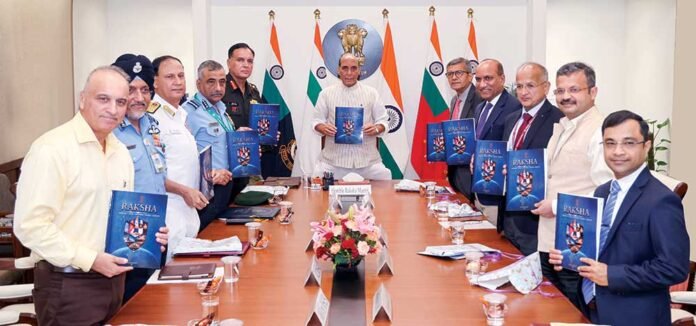
Union Defence Minister Rajnath Singh recently released the ‘RAKSHA’ document on India’s defence diplomacy. The comprehensive blueprint outlines a strategic ten-year roadmap aimed at expanding military partnerships, defence capacity building, indigenous manufacturing, arms exports and maritime security.
Defence diplomacy refers to the use of defence institutions for military-to-military cooperation as instruments of foreign policy to build trust, strengthen partnerships, enhance interoperability and promote regional stability without resorting to force.

It is a ten-year policy framework that formally codifies defence diplomacy as a central pillar of India’s foreign policy. The RAKSHA document marks a shift from a historically cautious and non-aligned defence posture towards an assertive and proactive global role—as an anchor of regional stability through diversified partnerships based on converging interests.
A first of its kind for India, the document signals that the country can both project power and offer stability in a world of geopolitical uncertainties. RAKSHA brings together diplomatic and security goals. It serves as a coordinated, actionable vision integrating the objectives of the Ministry of Defence (MoD), the Ministry of External Affairs (MEA), and the National Security Council Secretariat (NSCS).
RAKSHA seeks to transform India from primarily a defence equipment importer and security partner into a stronger defence producer, exporter and strategic security provider. It also complements India’s objective of Aatmanirbhar Bharat, connecting indigenous defence production with international partnerships and markets.
The framework can enhance interoperability among armed forces, facilitate technology and knowledge sharing, strengthen supply-chain resilience and expand India’s strategic influence. Defence diplomacy can also support India’s wider Indo-Pacific vision and contribute to a stable, secure and rules-based maritime order.

Let us look at the highlights of this blueprint:
Strategic Partnerships: India is seeking to deepen bilateral and multilateral security cooperation with friendly, like-minded global and regional partners to counter shared geopolitical threats and ensure collective regional security. India’s defence diplomacy will have to navigate intensifying geopolitical competition and balance relations among major powers.

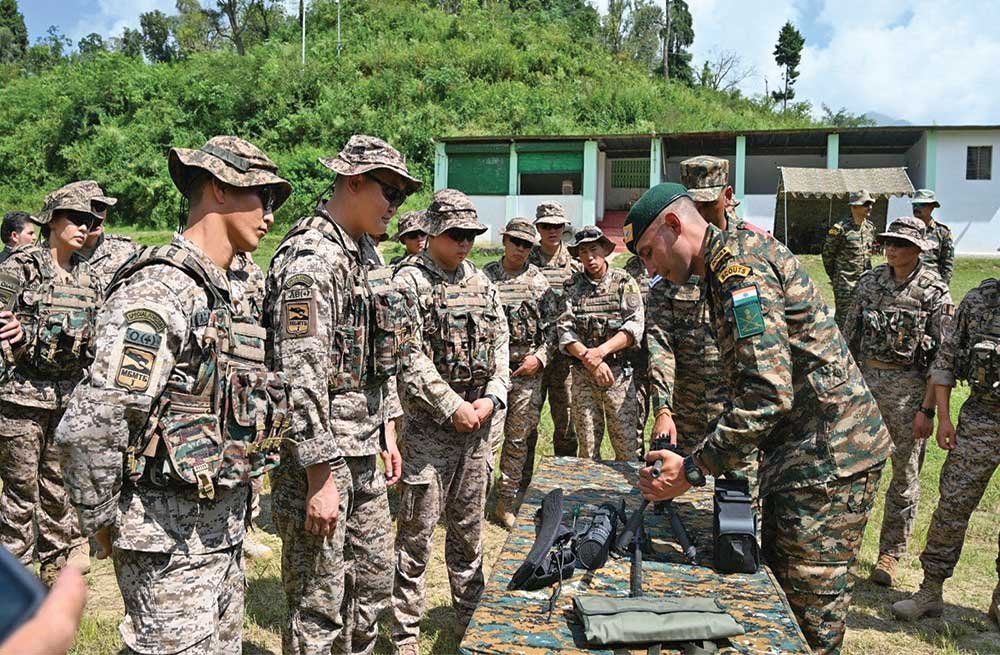
Recent bilateral and multilateral engagements like Exercise Yudh Abhyas 2026 and Exercise Nomadic Elephant 2026 highlight India’s active military diplomacy, joint counterterrorism readiness, and strategic partnership. To strengthen defence diplomacy, these continuous engagements serve as key confidence-building measures that cement political and strategic ties across the Indo-Pacific and neighbouring partner nations.
In Exercise Nomadic Elephant 2026, the 18th edition of the India-Mongolia joint exercise commenced on September 21, 2026, at Pithoragarh, Uttarakhand, running until October 3, 2026, focusing on counter-insurgency operations under a UN mandate.
India’s military cooperation with Armenia has expanded significantly in recent years. In August 2026, the two countries signed a memorandum providing for cooperation in research, development, innovation and joint production in defence. As both countries navigate complex regional dynamics, they can benefit from a strategic alliance that supports mutual interests in stability and security.
Capacity Building and Training: The roadmap places heavy emphasis on strengthening joint military exercises, operational training, and intelligence-sharing mechanisms to counter illegal maritime activities, maritime pollution, and terrorism. The government is promoting specialised military training programmes, exchanging institutional cooperation and assistance, and sharing best practices with partner countries.
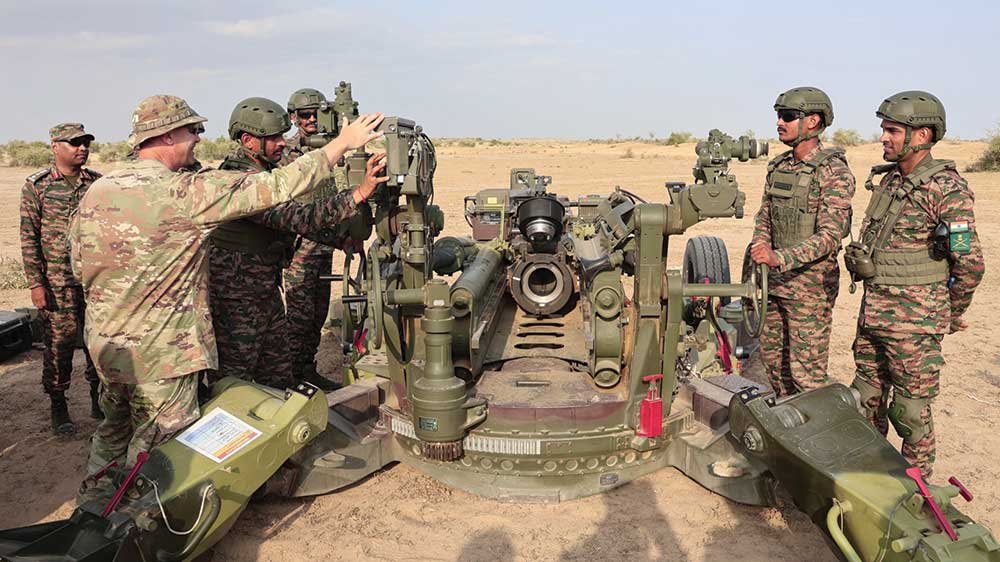
India is encouraging specialised training programmes with friendly foreign nations, particularly in the Indian Ocean Region (IOR). India seeks to enhance joint military exercises, targeted training programmes, and the sharing of operational best practices with allied nations, particularly focusing on the Global South.
Through the “RAKSHA” defence diplomacy roadmap, India is actively expanding strategic support, military capacity building and defence exports to friendly neighbouring countries like the Maldives and Sri Lanka.
Indigenous Defence Exports: India is expanding its indigenous defence manufacturing and promoting ‘Make in India’ defence equipment in international markets. India actively promotes ‘Make in India’ and Aatmanirbharta in defence by shifting from a traditional buyer-seller model towards co-development, co-production and technology sharing.
The RAKSHA document aims to transform India from a net arms importer into an exporter of advanced strategic technologies. Highlighting India’s self-reliance in shipbuilding (where 97 per cent of Indian Navy and Coast Guard vessels are built domestically), India is increasing the export of indigenously manufactured warships and patrol vessels to partner nations including Mauritius, Sri Lanka, Vietnam, and the Maldives.
Maritime Security: The maritime security pillar focuses on strengthening India’s role as a ‘Net Security Provider and First Responder’ in the IOR. India is reinforcing its commitment to safeguard secure sea lanes, ensure freedom of navigation, and provide immediate Humanitarian Assistance and Disaster Relief (HADR) across the region.
Under HADR, joint exercises regularly integrate disaster response protocols and humanitarian aid frameworks (seen in regional cooperation models like Mitra Shakti and Dharma Guardian) to ensure rapid joint deployment during crises.
It builds on the Navy’s sustained operational presence in the region, including mission-based deployments, anti-piracy operations and humanitarian assistance and disaster-relief missions. Interoperability and readiness drills focus on jungle warfare, joint artillery, air defence, and small-unit tactics to handle complex regional challenges.
Maritime security is very significant because of India’s geographical position in the Indian Ocean. RAKSHA focuses on protecting critical sea lanes of communication (SLOCs) and ensuring freedom of navigation. This also aligns with India’s Indo-Pacific vision of a free, open, inclusive and rules-based maritime order, consistent with the SAGAR (Security and Growth for All in the Region) vision.
Takeaways
The RAKSHA framework complements the Defence Forces’ Vision, which seeks to transform India’s armed forces into a modern, integrated and technologically advanced military capable of supporting the vision of Viksit Bharat by 2047.
Through recent military exercises and HADR operations, India is strengthening relations and offering help to countries like the Maldives, Sri Lanka, Vietnam and Armenia.
As an economic force multiplier, India’s defence exports promote indigenous platforms such as BrahMos, LCA Tejas and artillery systems, generate export revenue, strengthen the domestic defence-industrial base and help to open new markets through Government-to-Government (G2G) engagements.
By securing the global commons as a first responder in HADR and participating in anti-piracy operations, India builds diplomatic goodwill, strengthens trust and enhances operational interoperability with littoral states in the IOR.
RAKSHA marks a shift from conventional defence cooperation towards a more proactive and strategic defence diplomacy. By combining strategic partnerships, capacity building, indigenous defence exports and maritime security, India can convert its growing defence capabilities into greater strategic strength.
Ultimately, the RAKSHA framework provides an actionable vision for the next ten years and seeks to transform India from a cautious observer into a proactive architect of regional and global security. But aligning domestic industrial self-reliance with international military cooperation is one thing; delivering it is another. The next decade will test India’s capacity to turn its strategic vision into an enduring reality of peace and stability.

The author retired as a Senior Technical Officer at the Central Salt and Marine Chemicals Research Institute, Bhavnagar (Gujarat), and currently contributes articles to research journals and magazines. The views expressed are personal and do not necessarily carry the views of Raksha Anirveda.






