


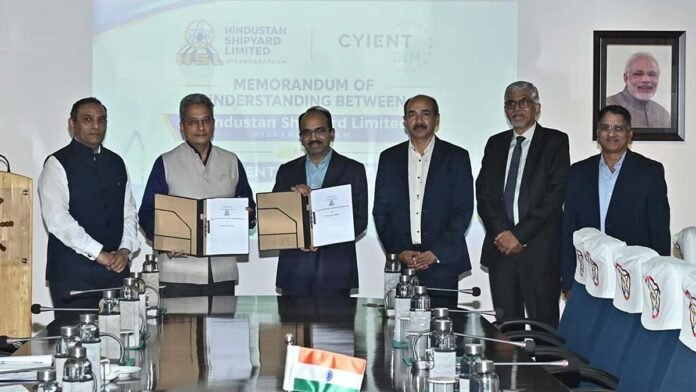
New Delhi. Hindustan Shipyard Limited (HSL), a defence public sector undertaking, has signed a memorandum of understanding (MoU) with Cyient DLM to establish a joint venture for designing and manufacturing ship electronics in India. The proposed partnership aims to reduce reliance on overseas suppliers for equipment used aboard Indian Navy vessels.
The planned product range includes navigation and solid-state radars, Electronic Chart Display and Information Systems, autopilots, Global Maritime Distress and Safety System equipment, Fleet Broadband communications and voyage data recorders. Weather-reporting systems and helicopter landing aids are also among the technologies identified for development.

Under the arrangement, the companies are expected to identify priority systems, form teams to design and test them, and pursue naval and classification approvals before equipment is installed on selected vessels. Reportedly initial platforms are expected to include 18 Next Generation Fast Patrol Vessels (NGFPVs).
The agreement addresses a gap in the domestic shipbuilding effort: India has expanded its capacity to build warships, but some advanced electronics and equipment fitted inside those vessels continue to come from foreign suppliers. Bringing design and manufacturing of such systems into the domestic supply chain could increase Indian content in ships and give the Navy and shipyards more options for procurement, servicing and upgrades.
HSL said the collaboration would bring more indigenous technology to its vessels. Cyient DLM chief executive Rajendra Velagapudi said the partnership would help develop India’s technology and manufacturing base in the maritime and defence sectors. The companies have not publicly detailed the proposed joint venture’s investment, production capacity, schedule for the first equipment deliveries or the precise terms for selecting systems.
The focus on locally supported equipment has practical implications beyond the initial purchase. Dependence on overseas suppliers can affect delivery schedules, access to spare parts and maintenance planning. A domestic supplier base could shorten procurement and repair cycles, although those benefits will depend on the equipment passing demanding naval qualification and reliability tests.

The equipment list spans several functions central to a ship’s operation. Radar and navigation aids help crews detect and locate objects, while electronic charts and autopilots support route planning and vessel control. Communications equipment supports contact between ships and shore-based operators; voyage data recorders preserve information about a vessel’s operations. The proposed scope therefore reaches from navigation and communications to safety and helicopter operations.
The NGFPV connection places the plan within a wider programme of domestic vessel construction. In January, Hindustan Shipyard emerged as the lowest bidder in a competition for 18 Next Generation Fast Patrol Vessels for the Indian Coast Guard, with the project estimated at about ₹3,000 crore. A later report said HSL had secured the contract. The vessels are intended for duties including coastal and exclusive economic zone patrol, fisheries protection, anti-smuggling, search and rescue and interception of suspect vessels.

The electronics collaboration is consistent with the government’s broader effort to expand domestic defence production and procurement. The Defence Ministry has described indigenisation and a stronger domestic industrial base as central to its defence policy, while encouraging participation from private firms as well as public-sector manufacturers. Such partnerships can connect shipyards with specialist electronics and manufacturing companies, potentially widening the pool of suppliers.
The proposed venture still has important steps ahead: selecting the first systems, developing prototypes, testing them and securing approvals before installation. Those milestones will determine whether the agreement translates into equipment ready for service, rather than remaining a framework for cooperation.
For India’s naval-industrial strategy, the ambition is clear: build not just the vessel, but more of the technology that enables it to navigate, communicate and operate. The partnership’s impact will ultimately depend on whether its products meet performance requirements, arrive on schedule and can be maintained reliably throughout a ship’s service life.







