


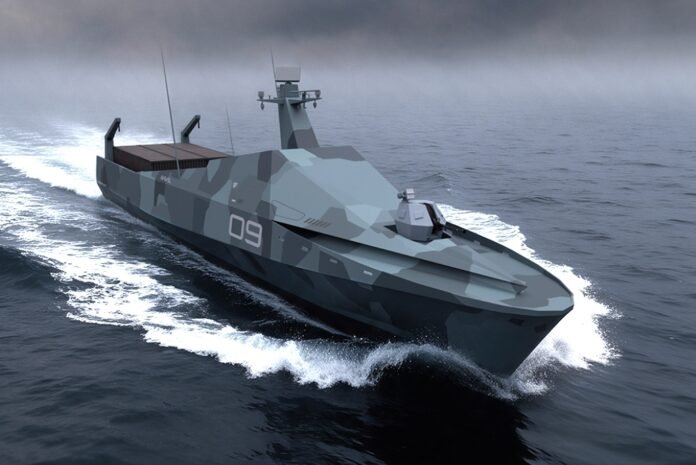
bAE Systems has introduced a family of naval weapon systems that gives operators different levels of sensor integration and deployment flexibility while retaining a common 40mm gun foundation. The systems were presented at Euronaval 2026 in Paris, where the company highlighted options ranging from an electro-optically guided mount to a self-contained, radar-equipped close-in weapon system.
The family comprises the Bofors 40 Mk4 Naval Gun, Sea Tridon, containerised Sea Tridon C and Sea Trinity. Sea Tridon combines the 40mm gun with an integrated electro-optical fire-control system, while Sea Tridon C packages the system in a shipping container for temporary or mission-specific installation on military, government or commercial vessels.

Sea Trinity is the most self-contained configuration. It adds radar fire control to the Bofors gun, enabling the system to detect and track targets and direct engagements without relying on a ship’s wider combat-management system for the full terminal-defence sequence. BAE is developing the radar-equipped configuration as a close-in weapon system against fast-moving threats, including anti-ship missiles, drones and aircraft.
The radar integration required structural changes to the gun’s carbon-fibre cupola to support the additional sensor weight and the demands of operating in rough seas. BAE is also exploring radar panels mounted on the cupola to provide 360-degree coverage. The system is described as sensor-agnostic, with radar and electro-optical partners involved in integration work.
The standard Bofors 40 Mk4 is already in service with several navies and has been selected by nine countries, according to reporting on the system. The Royal Navy ordered 10 Mk4 mounts in 2020 for its five Type 31 frigates. The gun can fire at 300 rounds per minute and has a baseline mount capacity of 100 ready rounds.
A common element across the new family is Bofors’ 3P programmable ammunition. The round can be configured immediately before firing, with six fuse modes designed for different target types. BAE says the shared ammunition and platform are intended to simplify training, logistics and support across the four configurations, while allowing customers to select the capability suited to each vessel.

The containerised Sea Tridon C is aimed at ships that may need a defensive system for a particular mission but lack a permanently installed gun or the infrastructure to integrate one. Its container format is intended to make the package easier to move and install, while also accommodating ammunition and control equipment. That flexibility could appeal to operators seeking temporary protection for commercial or support vessels, although the system’s availability and adoption by customers remain to be established.
Sea Trinity, by contrast, is aimed at ships requiring a dedicated last line of defence. Its integrated radar and fire control could make it an alternative or complement to existing close-in weapon systems, including Phalanx. The announcement describes a product offering, not a confirmed order or deployment; BAE has not publicly identified customers for the new configurations.

The launch reflects a broader effort to adapt proven naval weapons for changing maritime risks, particularly the proliferation of drones and other low-cost aerial threats. BAE’s pitch is modularity: a shared gun and ammunition base, with sensors and packaging varied to suit vessels ranging from smaller ships to commercial platforms.







