


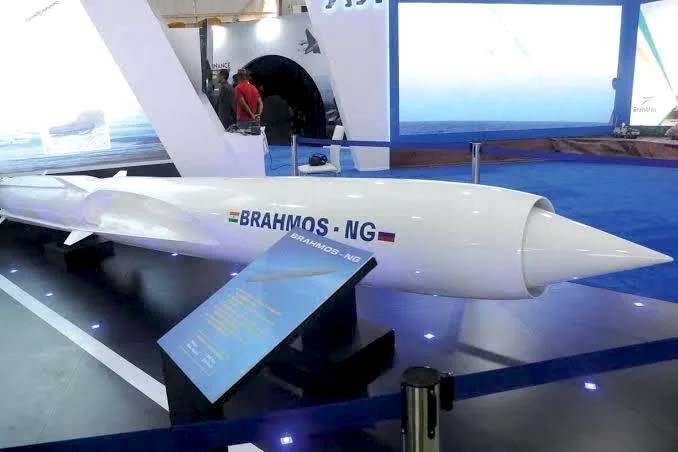
BrahMos Aerospace is developing the BRAHMOS-NG, a next-generation version of the supersonic cruise missile, with the first prototype expected in 2027 or 2028, Chief Executive and Managing Director Jaiteerth Joshi said. The 1,500-km-range missile, meanwhile, is part of the company’s longer-term roadmap and has not advanced beyond the conceptual stage, he said in an interview with a TV channel.
Joshi said BRAHMOS-NG would incorporate higher indigenous content, new technologies and advanced materials, requiring extensive research and development. The company has drawn up development plans and is progressing with the programme, he said, without giving further technical details or a production timeline. The missile is expected to be developed first in an airborne configuration.

The lighter, next-generation system is intended to broaden the range of aircraft that can carry the missile, compared with the existing BRAHMOS. Joshi said countries operating the Sukhoi-30 had expressed interest in integrating the air-launched BRAHMOS into their air forces. Some countries had also shown interest in BRAHMOS-NG, and the company was in discussions with potential customers, he said. No export agreements were announced.
The company is also pursuing a phased range-extension programme. Joshi said test firings from ground, sea and air platforms had validated capabilities beyond the missile’s original 290-km strike range. A 1,500-km variant, however, remains conceptual, with discussions under way with the Russian joint-venture partner on further upgrades. He provided no schedule for development or testing of that proposed version.
The distinction between the two programmes is central to the announcement: BRAHMOS-NG is under development, with a prototype target, while the 1,500-km concept is a future possibility. The company has not indicated that the longer-range variant is ready for testing or deployment. The announcement therefore signals a development ambition rather than an imminent addition to the missile’s operational inventory.
BrahMos Aerospace is a joint venture between India’s Defence Research and Development Organisation and Russia’s NPO Mashinostroyeniya. The partnership’s development plans combine Indian and Russian participation, while the company says the new missile will have a higher level of indigenous content. That emphasis aligns the programme with India’s broader push to strengthen domestic defence manufacturing, although the company has not specified what share of BRAHMOS-NG’s components will be produced in India.

Joshi said BrahMos Aerospace’s immediate priority is to complete orders placed by India’s armed forces. Production units in Hyderabad, Nagpur, Pilani and Lucknow are working to fulfil those orders, he said. The company also intends to accelerate research and development and establish specialised “Tech-bricks” for technologies needed to develop and test future systems.
Supply-chain expansion is another stated priority. Joshi said the company wanted to increase the number of industry sources supplying systems and sub-systems, from one or two partners for each area to as many as 45. A broader supplier base, he said, would help strengthen production capacity and encourage competition on quality and price. These efforts are intended to support both existing commitments and future demand.

The company is also seeking to build export interest. Joshi said foreign militaries had become more inquisitive about BRAHMOS’s operational characteristics after its performance in combat, and that interest extended to both the air-launched missile and BRAHMOS-NG. Such interest does not itself establish a sale: prospective buyers would still need to address aircraft integration, procurement and other requirements before any agreement could be concluded.
For now, the clearest milestone is the anticipated BRAHMOS-NG prototype in 2027-28. The proposed 1,500-km missile remains a concept, while production priorities, research and a stronger supplier network occupy the company’s near-term agenda. The timelines and scope of both future programmes will depend on the technical work and decisions that follow.






