


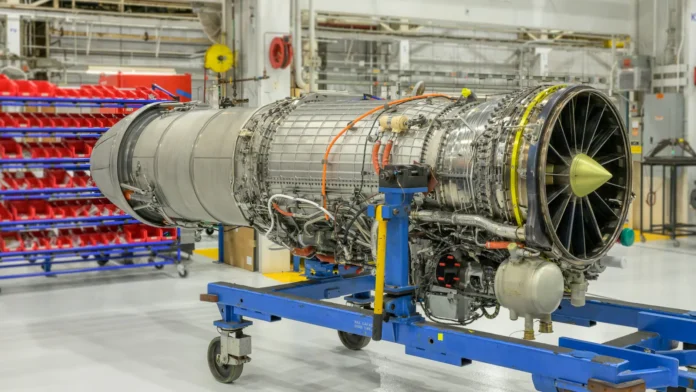
The forecast, announced by GE Aerospace South Asia chief executive Vikram Rai at the NDTV World Summit 2026, underlines the scale of the company’s expectations for India’s airline market. Rai said nine out of every 10 aircraft delivered in India over the coming decade would be powered by GE or its joint ventures. The projection points to a substantial role for the company and its partners as Indian carriers expand fleets and routes.
Rai described India as central to the development of next-generation aviation technology, arguing that the country’s growth creates both an opportunity and a responsibility for aerospace companies. He identified four foundations of GE’s partnership with India: engineering depth, manufacturing capabilities, skilled talent and trusted partnerships. He pointed to the company’s Bengaluru technology centre and its long-standing partnership with Hindustan Aeronautics Limited (HAL) as examples of that collaboration.

The delivery projection comes amid strong demand for air travel and aircraft in India. Rai said domestic passenger traffic had reached 340 million and could rise to 2.1 billion by 2040. He also cited domestic airline revenues of approximately $19 billion in FY2026. These figures were presented in his summit remarks as evidence of the market’s growth and the need for reliable engine supply and servicing.
GE’s presence in India extends beyond delivering engines. The company says its Bengaluru technology centre, established in 2000, has generated 1,000 patents and is working on a next-generation hybrid-electric engine programme. Its Pune facility manufactures components, while Indian suppliers contribute to GE’s global supply chain. The company said earlier this month it intends to nearly double its in-country supplier spending between 2025 and 2030, linking the planned investment to rising aviation demand.
The manufacturing and supplier agenda is significant because aircraft growth depends on more than purchases. A larger fleet requires maintenance, repair and overhaul capacity, dependable component supply and trained workers. Rai said GE’s joint venture, CFM International, would help IndiGo establish and operate an engine maintenance, repair and overhaul facility. If implemented, the project could strengthen local servicing capabilities and help airlines manage the operational demands of an expanding fleet.
CFM International is a 50-50 joint company between GE Aerospace and Safran Aircraft Engines. In July 2026, IndiGo announced a memorandum of understanding with CFM for more than 1,000 LEAP-1A engines to power 510 Airbus A320neo-family aircraft, according to GE. The agreement also included support for IndiGo’s planned engine MRO facility. The order illustrates how engine supply, airline expansion and local maintenance infrastructure are increasingly being planned together.

Safety was a central theme in Rai’s remarks. He said aircraft engines operate within a global network of engineers, manufacturers and suppliers working to a common standard, and that safety was GE Aerospace’s top priority. His comments reflect the high stakes of the delivery commitment: the company will need to supply engines reliably while supporting maintenance and operational performance across a rapidly growing fleet.
GE’s expanding role also raises the importance of building local capability alongside importing advanced equipment. The company said it has more than 1,400 GE Aerospace and partner engines in service in India, and that its engines power major Indian airlines. Its defence engines and systems also support Indian military platforms, while its Pune manufacturing base and Bengaluru engineering workforce connect Indian operations to the company’s global network.

Rai’s 3,200-engine forecast therefore represents more than a sales target: it signals the anticipated scale of GE’s involvement in India’s aviation ecosystem. Meeting it will depend on airline demand, timely deliveries, skilled maintenance capacity and resilient suppliers. The company’s promised investment and proposed MRO collaboration indicate an effort to build those foundations locally. But the full impact will be measured not only by engines delivered, but by how much engineering, manufacturing and servicing capability grows alongside them.






