


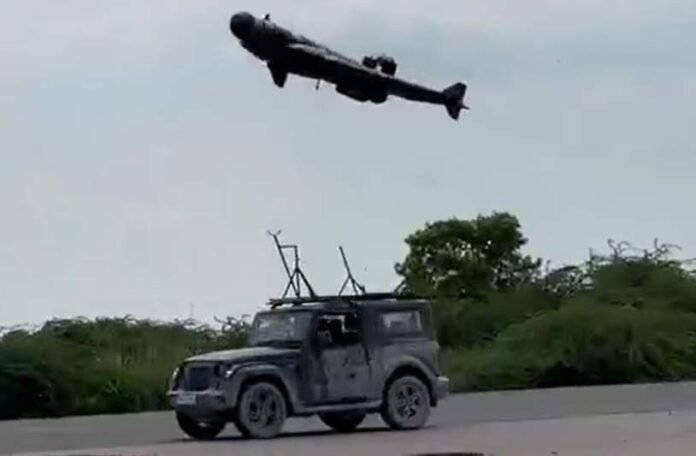
the Indian Army is set to conduct field trials at the Pokhran range in Rajasthan for its proposed Jet Based Kamikaze Drone System (JBKDS), a programme seeking 540 high-speed loitering munitions. The acquisition is estimated at about ₹2,000 crore and is being pursued through the Fast Track Procurement route. The trials will assess competing systems before any final selection or contract award is made.
The competition is restricted to Indian firms. Around 60 companies responded to an Army Request for Information issued in July 2026; 18 later submitted bids, and 11 reportedly qualified for the field evaluation. Named contenders include Bharat Forge with VEDA Aeronautics, Adani Defence, NIBE, SMPP with NewSpace Research and Technologies, Tonbo, Munitions India Limited and Apollo Micro Systems.

The contenders are expected to demonstrate more than an aircraft. Reportedly the requirement includes a complete operational package, with transport vehicles and specialist vehicles for mission planning and briefing. That approach makes the trials a test of an integrated system and its support arrangements, not simply of flight performance. The Army has not publicly announced a winner, a delivery schedule or a final contract value.
The programme follows an Acceptance of Necessity granted by the Defence Acquisition Council on October 26, 2026, according to news reports. AoN is an important step in the acquisition process, but it is not the same as a procurement contract. The field trials are intended to help determine which systems meet the Army’s stated requirements; the procurement’s eventual scale and timing will depend on the evaluation and subsequent decisions.
Jet propulsion is central to the programme’s rationale. Reporting puts the expected speed of the proposed systems at around 450 kilometres per hour, compared with approximately 150 to 200 kilometres per hour for propeller-driven loitering munitions. Higher speed may reduce the time available to detect and respond to an incoming aircraft, although performance will depend on each system’s design and operating conditions. These figures describe broad comparisons reported in the coverage, not independently verified results for every candidate.
The wider strategic context is a growing reliance on unmanned aircraft in conflicts, where they can be used for surveillance or strike missions. India’s proposed programme also comes as the country seeks to strengthen domestic defence manufacturing. The Army’s requirement for local suppliers and a complete support package could offer participating firms an opportunity to develop production and integration capabilities, but the trials will show whether those capabilities meet military standards.

A separate development may support India’s broader propulsion ambitions. In July, the Defence Research and Development Organisation’s Gas Turbine Research Establishment developed an indigenous expendable turbojet engine in the 350-kilograme-thrust class, with Hyderabad-based Azad Engineering involved in manufacturing and assembly. The Defence Ministry described the engine as suitable for platforms including cruise missiles, unmanned aerial vehicles and drones. Public reporting has not established that this engine will power any of the JBKDS trial candidates.
The immediate test, therefore, is not simply whether a jet-powered drone can fly fast. The Army must evaluate candidate systems against its requirements and decide whether they can be supplied and supported as an integrated capability. With 11 firms reportedly advancing to trials and 540 units planned, the competition marks a substantial proposed acquisition, but it remains a selection process, not a completed order.








