


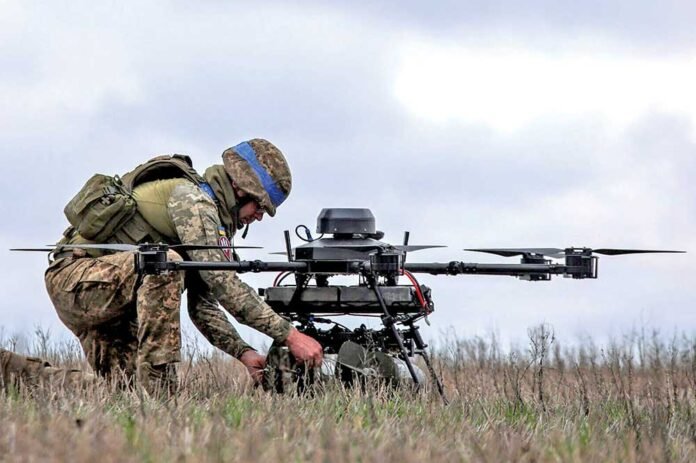
On September 25, 2026, Britain announced that up to twelve companies would gain access to a Ukrainian resource that no defence factory could manufacture, i.e. observations gathered on a real battlefield.
The resource was data. Ukraine’s Avengers AI Labs database contains imagery and video from drones using daylight and thermal sensors, with information from more than six million object detections. British developers would use it to build AI for advanced drone swarms, including systems intended to function when communications deteriorate or satellite navigation becomes unavailable.

For India, the announcement deserves attention beyond the familiar fascination with autonomous weapons. It reveals how the experience of war is acquiring a second life, inside the systems being built for the next one.
A combat recording can answer questions that a successful demonstration leaves untouched. What did the sensor see before it lost the target? Which background confused the software? Did an operator intervene because the machine was wrong, or because its recommendation was impossible to verify?
These details rarely make it into the dramatic clips circulated online. Yet, they may be the most useful part of the recording.
The Footage After the Headlines
Watch a drone video on social media and the eye follows the explosion. An engineer studying the same footage may be interested in the seconds before it: a change in visibility, an object partly hidden by trees, a target seen from an unfamiliar angle.

The difference matters. A weapon can perform well in a controlled trial and still encounter conditions its developers have never adequately represented. Training data helps a recognition model learn what to look for. Carefully separated test data helps establish whether it can recognise something it has not already been shown.
Ukraine has begun organising access to this experience. In January 2026, its defence ministry announced Brave1 Dataroom, a secure environment built with partners including Palantir. Its initial focus included detecting and intercepting hostile drones, using structured visual and thermal datasets collected by service personnel. Developers would undergo security checks before receiving access.

While dramatic explosions capture online attention, engineers focus on the crucial seconds prior – analysing sensor data and background noise to overcome real-world failure scenarios
By June, the ministry reported that more than one hundred Ukrainian companies were using the platform. Its datasets covered aerial targets observed under different weather conditions, at different times of day and through different sensors. These are official accounts of the programme, rather than an independent verdict on every model’s effectiveness. They nevertheless show a deliberate effort to bring developers closer to operational reality.
The British agreement adds another dimension. Battlefield experience can become something a country offers its partners, with access negotiated alongside technology cooperation.
That creates difficult questions about ownership. Who may retain the resulting models? Can the original provider inspect them? What happens when a partnership changes? Governments negotiating these arrangements should treat the answers as seriously as they treat access to sensitive equipment.
India’s Lesson Cannot be Downloaded
India should study Ukraine’s approach without assuming that Ukrainian data will prepare an Indian system for every Indian mission. An aerial target observed against a European landscape presents a different problem from one seen against Himalayan terrain or a crowded urban background. Sensor characteristics matter. So do weather, altitude and the equipment an adversary uses. A model’s performance in one setting offers evidence to examine, not a guarantee to carry into another.
For the Indian Air Force, this makes the collection and interpretation of its own experience an operational priority.
A sortie produces more than a mission report. Sensor recordings, equipment behaviour and crew observations may contain lessons that future software needs. Exercises can generate valuable material too, provided their limitations are recorded honestly. Simulations can help cover rare situations, but should be checked against observations from actual systems.
The danger is that these records remain useful only to the unit or team that collected them. A finding discussed in a debrief may never reach the engineer working on the relevant software. A failed detection may be explained locally, then disappear from the material used to evaluate the next version.
Closing that gap requires some unglamorous work. Records need consistent descriptions, reliable timestamps and a clear account of what was observed and what remains uncertain. Someone must be responsible for deciding which material can be reused and under what restrictions.
Retain the Failure Scenario
India could begin with a tightly bounded programme for counter-drone detection and airbase protection, bringing together the IAF, defence researchers and approved domestic developers.
The first task should be to assemble representative data and establish a common test process. Companies should demonstrate performance on material they have not used for training. Results should distinguish missed threats from false alarms, because each imposes a different operational cost.
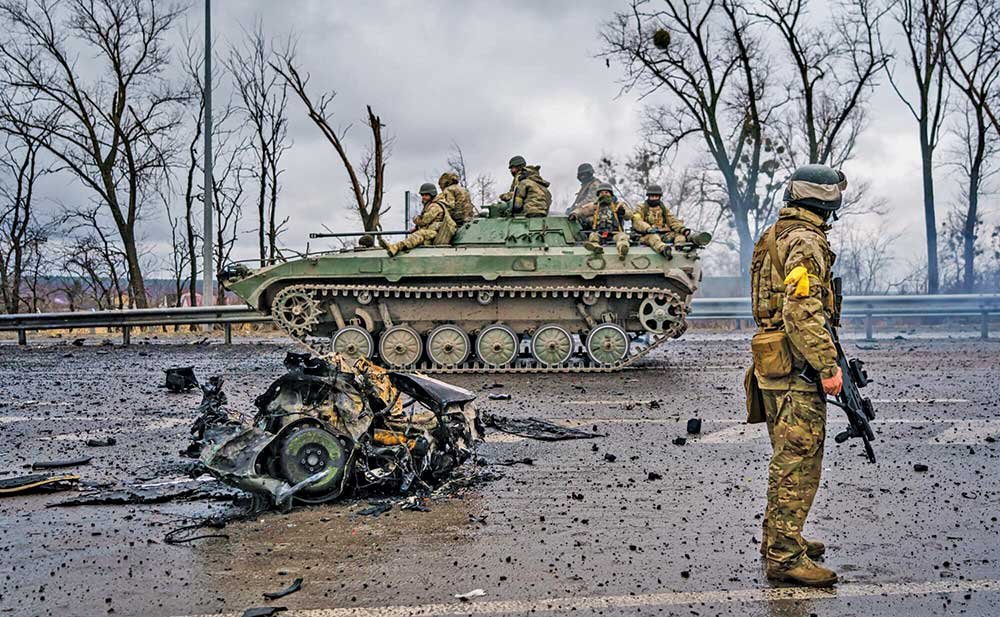
The archive must include difficult and unsuccessful cases. A dataset dominated by clear views and confirmed successes may leave developers poorly prepared for the moment a system struggles.
Retain crew accounts beside the recordings. An operator may know that a track was unreliable, that two sensors disagreed, or that an apparent equipment failure had another explanation. Losing that context can turn a precisely labelled record into a misleading one.
Access would need to be controlled. Selected developers could work within secure environments, with restrictions on copying and a record of how information was used. Contracts should settle rights over derived models, updates and evaluation results before those questions become obstacles.
As battlefield data becomes a key diplomatic currency, nations must strictly regulate data access, retain model ownership rights, and accelerate the loop between operational findings and software updates
The pilot should also measure the time between an operational finding and a tested improvement. Collecting a failure achieves little, if the people able to fix it cannot act.
The Next Sortie
None of this removes the need for capable aircraft, trained crews or adequate weapons stocks. It helps those investments work better and gives India more freedom to adapt them.
The ambition should be practical. When a sensor misses something important, the next software release should reflect what was learned. When crews repeatedly encounter the same weakness, procurement and testing should respond. Evidence from operations should travel far enough to change the equipment that returns to them.
Ukraine’s experience comes at a terrible human cost. Its value to other countries should never obscure that. But India can learn from the institutions being built around that experience, and start organising its own observations before urgency forces the issue.
The explosion is the part of the video everyone watches. The seconds before it, may help determine what happens on the next sortie.

–The writer is an independent journalist based in APAC region. He covers global conflicts, geopolitics, counterterrorism, OSINT and data-based stories. He is also a Data and AI Strategist for leading corporations in the region. His X handle is https://x.com/saikirankannan






