


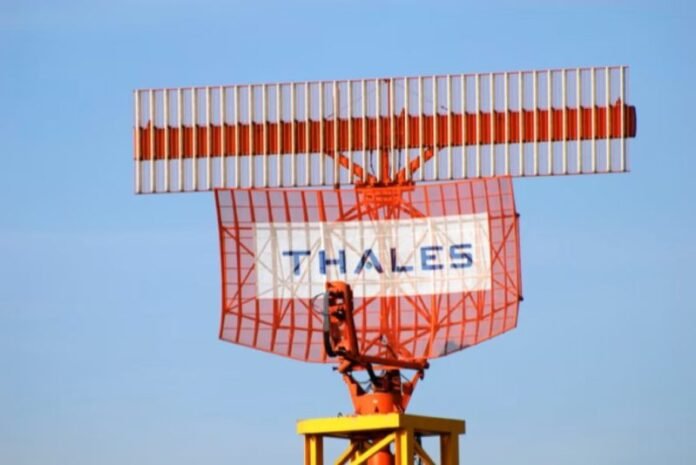
French defence company Thales has agreed to deliver two Ground Master 200 Multi-Mission All-in-one (GM200 MM/A) radar systems to Romania earlier than initially planned, the Romanian defence ministry said. The schedule will be advanced by several weeks for one system and by several months for the other, following discussions between Romanian Defence Minister Stefan Radu Oprea and Thales’ representatives. The ministry did not specify revised delivery dates.
The accelerated deliveries form part of a Romanian order for 12 GM200 MM/A radars, valued at about €247 million and financed through the European Union’s Security Action for Europe (SAFE) programme. The first system had been expected around April 2027, with deliveries scheduled in stages through 2030. The faster arrival of two units is intended to give Romania’s Air Force earlier access to modern air-threat detection.

The radars are designed to detect and track threats ranging from low-flying drones to aircraft and missiles at higher altitudes. Described as “gap fillers,” they can help identify targets that may evade or fall beneath the coverage of longer-range radar systems. The GM200 MM/A is a mobile, medium-range system in Thales’ Ground Master family; company materials say it can track targets at distances of up to 350 kilometres and can be deployed in less than 15 minutes.
The delivery acceleration comes as Romania faces heightened concern over airspace security along NATO’s eastern flank. The country shares a 614-kilometre border with Ukraine and has repeatedly reported Russian drone incursions since Russia launched its full-scale invasion in 2022. Romania has also begun shooting down drones that enter its airspace, according to earlier reporting.
The 12-radar purchase is part of a wider effort to expand Romania’s surveillance capabilities. In October, the defence ministry selected Thales to provide four additional radar systems for civil and military airspace surveillance, including approach and landing operations. Those systems are intended to support operations from alternative sites and reduce the Air Force’s reliance on fixed airbase infrastructure; deliveries are planned to four locations by 2030. The four-system order is separate from the GM200 contract.
The contracts address distinct needs: the GM200 systems are intended to strengthen detection of air threats, while the October order supports surveillance and aircraft operations around airfields. Together, the programmes point to a broader Romanian investment in radar coverage, mobility and operational resilience.

The July GM200 agreement was signed through cooperation between Romania’s General Directorate for Armaments and France’s Direction Générale de l’Armement. Thales has said the programme will also include a Radar Competence Centre in Romania, supporting local expertise and industrial cooperation. The company has operated in the country for more than two decades and employs more than 850 people there, according to its announcement.
SAFE is an EU financing instrument intended to support defence investment and joint procurement. Romania’s radar programme illustrates how member states are using the initiative to acquire equipment through partnerships with other European countries. The procurement is also part of closer defence cooperation between Romania and France, as NATO allies seek to strengthen military capabilities on the alliance’s eastern side.

The earlier delivery of the first two radars will not complete the 12-unit programme, whose remaining systems are expected to arrive in phases through 2030. But bringing forward the initial equipment should allow Romanian forces to begin integrating the systems sooner, while the wider procurement builds out coverage over the coming years. The ministry said the accelerated delivery would help the Air Force detect threats earlier; it did not disclose the operational locations for the two systems.







