


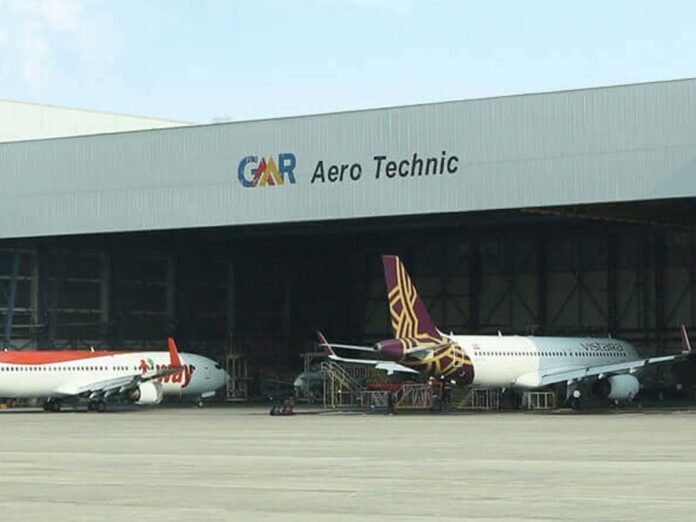
GMR Aero Technic’s planned investment will expand its maintenance, repair and overhaul (MRO) facility at Rajiv Gandhi International Airport in Hyderabad, strengthening its ability to serve a rapidly growing aviation market. The company aims to increase capacity to around 18 maintenance lines by 2029, including three additional lines for wide-body aircraft. Once expanded, the facility is expected to accommodate up to seven wide-body aircraft, according to a senior company official.
The project will also introduce wide-body aircraft painting services, which the company says will be a first for India. GMR Aero Technic plans to use the investment to expand infrastructure and broaden its service capabilities. It is also considering opportunities to serve overseas customers from Hyderabad, potentially drawing work that currently goes to facilities outside India.

The move targets a long-standing gap in India’s aviation maintenance market. While domestic MRO providers have built airframe maintenance and other services, much of the detailed maintenance work on wide-body aircraft is still carried out overseas. Local capacity could help airlines reduce reliance on foreign facilities, although the extent of that shift will depend on the availability of specialist skills, parts, regulatory approvals and competitive turnaround times.
The expansion comes as India’s aircraft fleet and passenger traffic are forecast to grow substantially. Airbus projected in January 2026 that India’s commercial fleet could reach 2,250 aircraft by 2035, about three times its 2025 level. It also estimated that the market for airframe, engine and component maintenance could triple to US$9.5 billion by 2035. These are forecasts, but they underline the potential demand for local maintenance capacity as airlines add aircraft and expand international services.
Government measures have sought to make the sector more competitive. In July 2024, India introduced a uniform 5% IGST rate on aircraft and aircraft-engine parts, replacing a range of rates that had reached 28%. The government said the change was intended to reduce costs and address tax-credit complications for MRO businesses. Policy changes alone, however, do not create capacity: operators still need facilities, trained technicians, tooling and reliable access to parts.
GMR Aero Technic already operates as a third-party airframe MRO provider at Hyderabad airport. Its expansion follows a broader effort to strengthen its technical offering. In October 2026, the company signed a memorandum of understanding with France’s UUDS Aero to develop aircraft cabin-interior services, including design, modification, repair, refurbishment and installation. That partnership points to a strategy of adding specialised work alongside hangar capacity.

The company has also pursued international technical partnerships. In September 2026, StandardAero announced an agreement with GMR Aero Technic to support engine operators in India through an on-wing support network. The partnership is separate from the ₹600-crore airframe expansion, but illustrates how local infrastructure and overseas expertise may be combined to broaden services available to airlines.
Industry growth will bring operational challenges as well as opportunity. India’s MRO providers faced pressure from supply-chain disruption, long spare-parts lead times and a shortage of domestic engine-maintenance capability, last year.

Those constraints can affect aircraft turnaround and limit how much work can be retained locally. GMR’s planned wide-body lines and painting service address part of the airframe side of the market; they do not, by themselves, resolve the wider requirements for engine shops, components and skilled labour.
The expansion is therefore a significant capacity commitment, but its impact will be measured by execution: when the additional infrastructure becomes operational, how quickly it wins airline and lessor work, and whether it can deliver reliable turnaround times. If those pieces align, Hyderabad could capture a greater share of maintenance activity as Indian and international fleets grow.







