


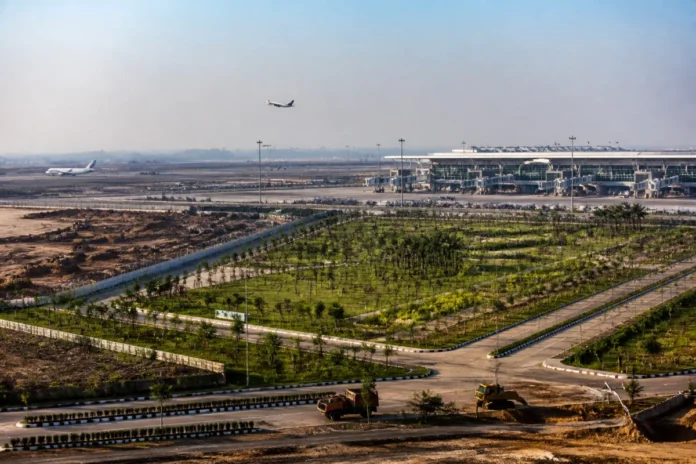
The project, described by Rao as an “aviation city”, was announced at the Confederation of Indian Industry’s Partnership Summit in Visakhapatnam on November 12. He said the planned ecosystem would be developed alongside an airport, but did not identify its precise location, disclose an investment figure or provide a construction schedule. No tenant commitments or job targets were announced.
“Besides the airport, we are developing an aviation and aerospace ecosystem in 500 acres in Andhra Pradesh,” Rao said, according to reports of his address. He argued that airports are increasingly becoming centres of economic activity, much as ports, railway stations and city centres once shaped commercial growth. He also said Visakhapatnam would be the “Bombay of the East”.

The proposal comes as Andhra Pradesh seeks to attract investment across manufacturing, infrastructure and technology. The CII’s 31st Partnership Summit was scheduled in Visakhapatnam on November 12-13, bringing business and government representatives together for discussions on investment and development. Rao praised the state government, led by Chief Minister N Chandrababu Naidu, for moving quickly on initiatives, saying investors had seen that pace firsthand.
An airport-centred aerospace cluster could potentially bring together aviation services and industrial activity, including aircraft maintenance, component manufacturing, logistics, training and related businesses. But GMR has not yet specified which of those activities the Andhra Pradesh development will include. The announcement also does not say whether the 500 acres refer to land already secured, a planned development footprint or a phased project area. Those details will determine how the headline proposal translates into concrete infrastructure and investment.
GMR has experience building airport-linked industrial and aerospace developments elsewhere. At Hyderabad’s GMR Aerospace & Industrial Park, a 277-acre site, the group says it has attracted aerospace manufacturers, engineering firms and logistics operations. The park includes maintenance, repair and overhaul (MRO) activity and training facilities, while its proximity to the airport cargo terminal supports the movement of parts and equipment. That experience offers a possible reference point for the Andhra proposal, though the company has not said the two developments will follow the same model.
The Hyderabad Park is also home to a major Safran engine-maintenance project. The facility, spread across 23.5 acres within the airport ecosystem, is designed to service aircraft engines and is expected to strengthen the region’s aviation supply chain. The example illustrates how airport-adjacent industrial land can support specialised operations beyond passenger travel; however, it does not establish that similar tenants or facilities are planned in Andhra Pradesh.

Andhra Pradesh already promotes aerospace and defence as investment sectors, highlighting industrial parks, incubation support and centres of excellence among its initiatives. A GMR-led aviation hub could complement those efforts if it secures companies, skilled workers and supply-chain partners. The state will also need to ensure reliable transport links, utilities and approvals, while investors will look for clarity on costs, land readiness and access to customers.
For now, the project remains a high-level development announcement rather than a detailed investment plan. Its prospects will depend on further information about the location, development phases, financing, anchor tenants and the airport’s relationship to the site. GMR’s experience in Hyderabad shows one possible pathway for an integrated airport economy; whether Andhra Pradesh’s 500-acre vision becomes a comparable aerospace cluster will be clearer once the group and state government publish those specifics.








