

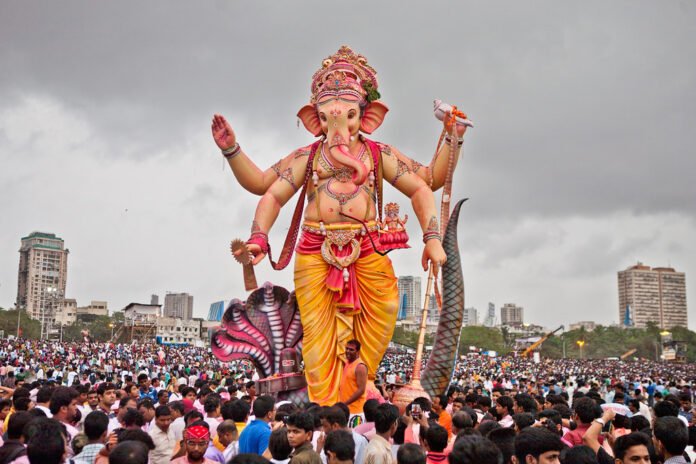
The claim itself was modest. It named a festival – Ganesh Chaturthi – a time window, and a general caution: implement comprehensive security measures, don’t underestimate the risk, given the scale of celebrations in Mumbai. It did not name a specific city beyond Mumbai, a specific procession route or a specific group. One line in the sealed record referred to “sleeper cells,” but that phrase is never decoded or interpreted here – it is quoted, not unpacked and this article makes no claim about what it actually referred to.
That restraint matters, because it sets the terms for everything that follows. This is not a story about a prophecy that came true. It is a story about a generic, low-specificity alert – the kind any department half-expects every festival season – and whether such an alert is still worth acting on.

Restraint matters, because it sets the terms for everything that follows. This is not a story about a prophecy that came true. It is a story about a generic, low-specificity alert – the kind any department half-expects every festival season – and whether such an alert is still worth acting on
What Actually Happened
The festival’s main day fell on September 7, 2024. In the days around it, India saw a documented spike in procession-linked communal and security incidents spanning more than a dozen states. The clearest example landed not in Mumbai, where the original warning had focussed, but nearly a thousand kilometers south, in Mandya district of Karnataka.
On September 11, a Ganesh immersion procession in Nagamangala passed near a mosque and set off a clash. About twenty shops and eight vehicles burned. Fifty-two people were arrested. The district administration imposed a Section 144 prohibitory order – banning public assembly – and a police inspector was suspended over how the incident was handled.
Twenty-six days separated the warning from the outcome. No one is on record as having acted on this specific alert. The connection here is a counterfactual, not a documented causal chain – and this article treats it that way throughout.
Set aside how the warning arrived. Treat it simply as an item landing on a district police chief’s desk, twenty-six days before a major festival, naming a heightened-risk window. What was actually within that officer’s power to do with it – and what would it have cost?
Four Things a Superintendent Could Have Done
Set aside how the warning arrived. Treat it simply as an item landing on a district police chief’s desk, twenty-six days before a major festival, naming a heightened-risk window. What was actually within that officer’s power to do with it – and what would it have cost?

Reposition patrols and surveillance. Deciding how many officers to post along a procession route and where to place cordons or CCTV, is a routine duty-roster call – no new budget, no new approvals, just a reassignment of staff already on payroll. Twenty-six days is ample time to plan this properly rather than scramble it together at the last minute.
Pre-draft the prohibitory order. Section 144 orders were issued at Nagamangala only after the violence started. A superintendent holding advance warning could have had the legal paperwork drafted and pre-approved, cutting the gap between “trouble begins” and “order in force” from hours to minutes. This is a legal-review task, not a spending decision and it sits comfortably within existing authority.

Meet community and religious leaders early. Liaison meetings along a procession route are a standard, inexpensive way to defuse friction before crowds are already moving. This doesn’t require knowing exactly where trouble will occur – departments routinely use their own judgment to identify sensitive stretches of a route. Twenty-six days allows for more than one such meeting before the festival begins.
Task local intelligence units. Even without decoding what the sealed warning’s “threat” language referred to, an officer could simply direct local intelligence staff to specifically monitor chatter around procession routes and communal tension during the flagged window – an instruction, not a new capability.
The costs of not acting are visible and already on the record. An inspector’s suspension after the Nagamangala clash is a real reputational and career cost – though this article does not claim advance positioning would have prevented it, only that the same authority used to suspend him afterward could, in principle, have been used to staff differently beforehand
None of these four steps needed new funding or authority beyond a superintendent’s own desk. Together, they form a low-cost posture that can be weighed against two alternatives: doing nothing or overcommitting resources on a maximal security footing.
Counting the Costs – On Both Sides
No public figure exists for what reassigning existing officers to a known route would have cost; by definition, it required no new spending. Strategically, a dated warning lets a department plan its festival posture on a calendar, rather than reacting to whichever district makes headlines first.
The costs of not acting are visible and already on the record. An inspector’s suspension after the Nagamangala clash is a real reputational and career cost – though this article does not claim advance positioning would have prevented it, only that the same authority used to suspend him afterward could, in principle, have been used to staff differently beforehand.
The unrest also wasn’t confined to one district: incidents spanned more than a dozen states in the same window, meaning any single-district response plan understates the scale a state or national coordination body was actually facing.
There’s a human and legal ledger too. The Nagamangala clash produced property damage but no reported fatality. It also produced fifty-two arrests and a prohibitory order – consequences that followed the incident, not preceded it.
The Obvious Objection
Any working police officer will say: Ganesh Chaturthi is already a fixed high-alert date on every relevant district’s calendar, every year. Why should a generic warning naming a festival everyone already watches carry any special weight?
This remains a single case, and the counterfactual is unprovable. No department is known to have received or acted on this particular alert, and it’s entirely possible that standing, experience-based bandobast planning already covers everything this warning recommends – in which case its marginal value approaches zero for a well-prepared department
That’s a fair challenge, and the honest answer is that this warning scores low on surprise – no meaningful improbability figure was even computed for it, because festival-window friction of this kind is not rare. Its value doesn’t come from being a startling prediction. It comes from being cheap and fast to act on. Under a framework that weighs impact and actionability more heavily than novelty, a call like this – specific about the festival and window, vague about the mechanism but immediately actionable – scores differently than a framework built purely to reward surprising forecasts.
The Honest Limit
This remains a single case, and the counterfactual is unprovable. No department is known to have received or acted on this particular alert, and it’s entirely possible that standing, experience-based bandobast planning already covers everything this warning recommends – in which case its marginal value approaches zero for a well-prepared department.
What can be said more narrowly: the warning named the right festival, the right elevated posture and the right category of incident, twenty-six days before a representative case occurred within that category – without ever specifying, and without this article now speculating, who or what its unexplained “threat” language was pointing to. That is both the limit of the original claim and the limit of what can responsibly be drawn from it.
—–
The writer is the founder of JYOTINT — strategic intelligence for space, defence and global security. Every JYOTINT advisory is sealed in public before the event and graded in public after it, misses kept alongside hits. The complete record, including the September 2024 national-security series this article draws on, is at jyotishintelligence.com

The writer is the founder of JYOTINT — strategic intelligence for space, defence and global security. Every JYOTINT advisory is sealed in public before the event and graded in public after it, misses kept alongside hits. The complete record, including the September 2024 national-security series this article draws on, is at jyotishintelligence.com





