


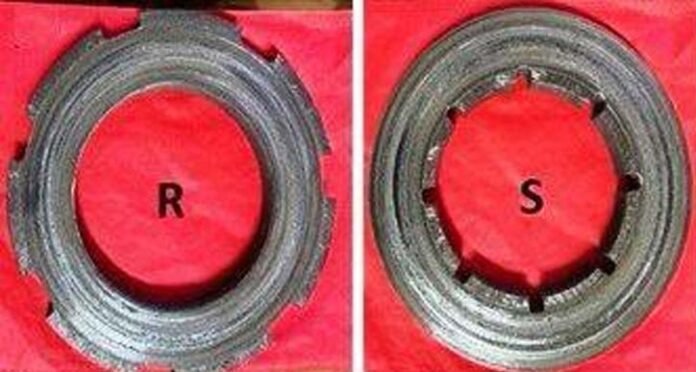
New Delhi: CSIR-National Aerospace Laboratories has made significant progress in the indigenous development of carbon fibre reinforced carbon–silicon carbide ceramic matrix composites.
These Cf/C-SiC composites have been designed for critical aerospace applications such as aircraft brake disks, long-range hypersonic vehicles, and other high-temperature operating environments.

The laboratory has been engaged in the development of carbon fibre and Cf/SiC composites for over two decades. Considerable work has been carried out to establish indigenous processes that reduce dependence on imported materials and strengthen India’s self-reliance in advanced aerospace technologies.
A hybrid process combining Chemical Vapour Infiltration and Liquid Silicon Infiltration has been employed to manufacture Cf/C-SiC composites. This approach has reduced manufacturing time and costs by nearly 40 to 50 per cent compared to conventional methods.
The baseline properties of these composites have been evaluated, confirming their suitability for demanding aerospace applications.
The Cf/SiC composites produced through this hybrid CVI+LSI process are being utilised in aircraft brake disks and hypersonic vehicle structures. Their ability to withstand extreme thermal and mechanical stresses makes them ideal for such high-performance systems.

In parallel, Ceramic Matrix Composites have been developed for brake and radome applications. These materials offer superior resistance to oxidation and wear, ensuring durability under repeated thermal cycles.
CSIR-NAL has also advanced the development of porous and functionally graded silicon nitride Radome materials. These radomes are designed for broadband applications in the 2–23 GHz frequency range, ensuring electromagnetic transparency while maintaining mechanical strength. Such Radomes are critical for modern fighter aircraft and missile systems, where reliable radar performance is essential.

Recently, CSIR-NAL signed a non-disclosure agreement with Bharat Electronics Limited for the joint development of silicon nitride Radomes. This collaboration is expected to accelerate the deployment of indigenous radome technologies for defence platforms, reducing reliance on foreign suppliers and enhancing strategic autonomy.
Research insights from recent studies highlight that Cf/C-SiC composites exhibit excellent frictional stability and oxidation resistance under cumulative thermal loads.
Their tribo-chemical dynamics and microstructural evolution contribute to reliable braking performance in high-speed aerospace and transport systems. These properties have been validated in advanced testing environments, confirming their long-term operational viability.






