New Delhi: With just weeks to go before the COP26 climate conference, Rolls-Royce, Airbus and Shell are calling for further ambition and collaboration across the aviation sector and with governments to enable the transition of long-haul aviation towards net zero ahead of the aviation goals set by the UN Race to Zero. As the technology enablers are being put in place, the focus must be on the infrastructure, investment and policy frameworks necessary to support the scaling up and use of vital sustainable aviation fuels (SAF).

Under the UN’s Race to Zero goals the current ‘breakthrough’ required for the decarbonisation of aviation is to achieve a minimum of 10% SAF use by 2030 with the proportion not reaching 100% earlier than 2050. Rolls-Royce, Airbus and Shell are investing in the technology that could enable that to happen sooner:
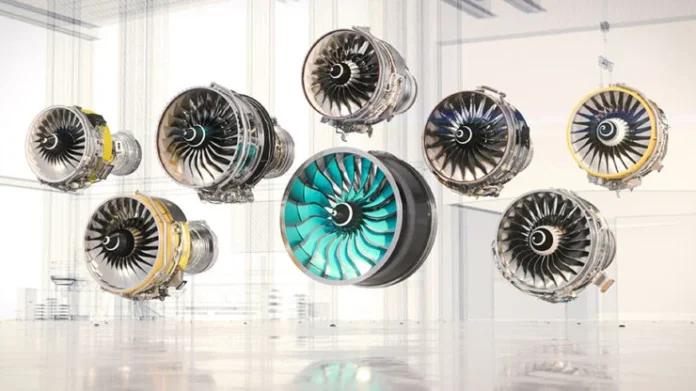
- Rolls-Royce today announces that by 2023 all its ‘Trent’ engines, used across a range of long-haul aircraft, will have been proven compatible with 100% SAF. That builds on its earlier commitment to test Trent models currently in production and means that within two years Rolls-Royce will have proven that net zero carbon operation is possible with about 40% of the world’s long-haul aircraft engines.
- All Airbus aircraft are currently certified to operate on up to a 50% blend of SAF mixed with kerosene and Airbus has the ambition to achieve certification of 100% unblended SAF by the end of this decade.
- By 2025, Shell alone has committed to produce 2 million tonnes of SAF per year. That is more than 10 times the total amount of SAF produced globally today. By the end of the decade, at least 10% of Shell’s global aviation fuel sales will be SAF. Shell is already building one of Europe’s biggest biofuels plants in the Netherlands, with production due to start in 2024.
New all-electric, hybrid-electric and hydrogen technologies will have a role to play in reducing the aviation industry’s use of fossil fuels over the medium to long-term. For long-haul aviation, the challenge of decarbonisation is particularly difficult and SAF represents a clear pathway to net zero flight over longer distances. Aviation needs around 290 Mt¹ of fuel a year, this is expected to grow as the sector continues to grow following the pandemic. Global SAF production will therefore have to increase significantly over the coming years to replace it. As a result, collaboration and a global enabling policy environment that matches the extent of the aviation industry’s technological ambitions are required to scale SAF production and significantly increase the pace of decarbonisation within the sector.
Warren East, Chief Executive, Rolls-Royce, said: “At Rolls-Royce, we believe in the positive, transformative potential of technology. We believe we have the technology enablers to make long-haul aviation compatible with net zero carbon. Flying generates between 2% and 3% of global emissions, but as easier-to-abate sectors decarbonise that proportion will increase, so shortening aviation’s journey to net zero with action in the opening phase of this ‘Decisive Decade’ would be a huge win for the world. However, we will only create the focus and momentum required to achieve this if we ratchet our collective ambition beyond the current target of achieving 10% SAF usage by 2030. We need partners who share our vision for the use of SAFs as a solution for reducing emissions on long-haul flight, to help all of us successfully transition to a net zero carbon future.”
Dr. Sabine Klauke, Chief Technical Officer, Airbus, said: “There are multiple solutions to catalyse the global transition to decarbonised aviation, be it developing and maturing new technology pathways, seeking improvements in operations and infrastructure, and committing to an industry-wide scale-up in the uptake and production of Sustainable Aviation Fuels. Today, all Airbus aircraft can run on blends of up to 50% and we are working closely with our partners to accelerate this to 100% by 2030. In the meantime, accelerating our progress on SAF will require a collective effort, and the time to act across sectors and companies is now.”

Anna Mascolo, President Global Aviation, Shell, said: “The aviation sector is moving towards net zero, but we need to accelerate. Shell’s commitment is clear: within four years, we’ll produce 10 times as much SAF as is currently made by all producers across the world, with other industry players expected to step in to complement this ambition. With partners like Rolls-Royce and Airbus, Shell is shaping a future where we can still benefit from flying while emissions are driven down. We can strengthen the industry’s momentum with a regulatory framework that supports our investment in technology and infrastructure, while helping us build customer demand.”