


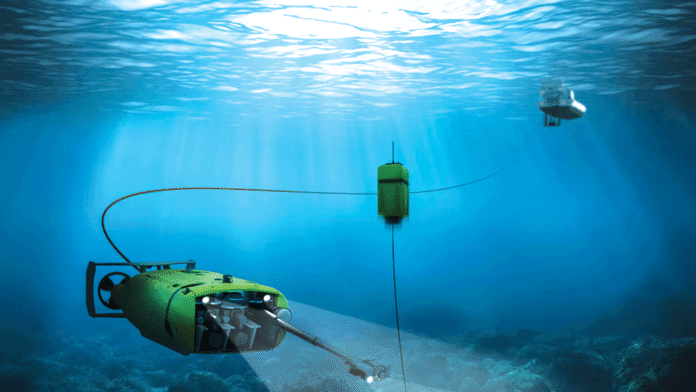
The maritime domain is undergoing a profound transformation driven by technological advancements, geopolitical competition, and the growing strategic importance of undersea infrastructure. The seabed is fast emerging as a new arena of strategic contestation. Critical undersea communication cables, energy pipelines, sensors, autonomous systems, and mineral resources have elevated the significance of the ocean floor in national security calculations. For India, a nation with extensive maritime interests in the Indian Ocean Region (IOR), developing a comprehensive seabed warfare strategy is no longer optional but imperative. Such a strategy must address current vulnerabilities while preparing for the requirements of future maritime warfare.
Strategic Importance of Seabed
More than 95% of global internet traffic is carried through undersea fiber-optic cables. Energy pipelines and offshore installations further contribute to the strategic value of the seabed. Disruption of these assets can severely impact national economies, military communications, and critical infrastructure. As maritime powers increasingly recognise the military utility of the seabed, it has become a contested operational domain. India’s geographical position at the centre of the Indian Ocean provides significant strategic advantages but also creates responsibilities. The nation with a 7,516 km coastline relies heavily on secure maritime trade routes and undersea communication networks for national growth. Any hostile action against these systems could affect economic stability, military readiness, and our national resilience.

Emerging Nature of Seabed Warfare
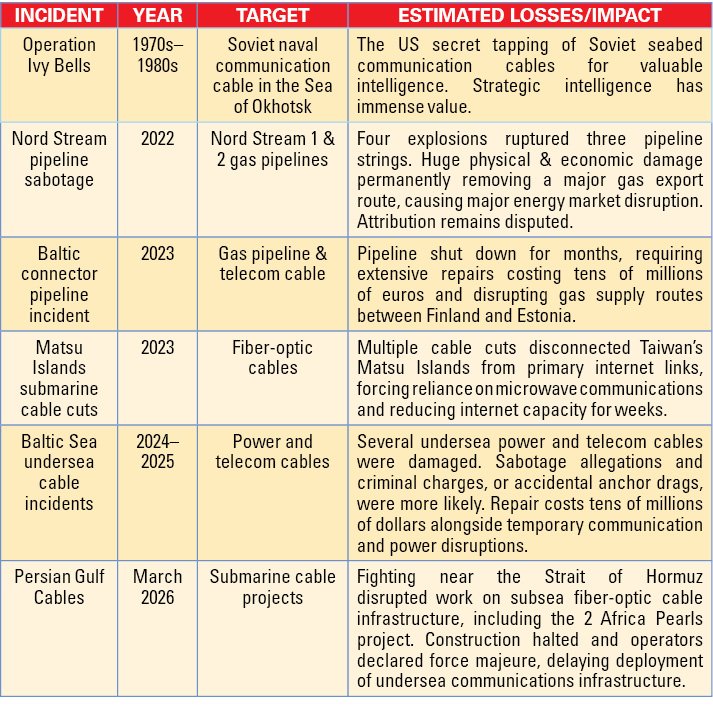
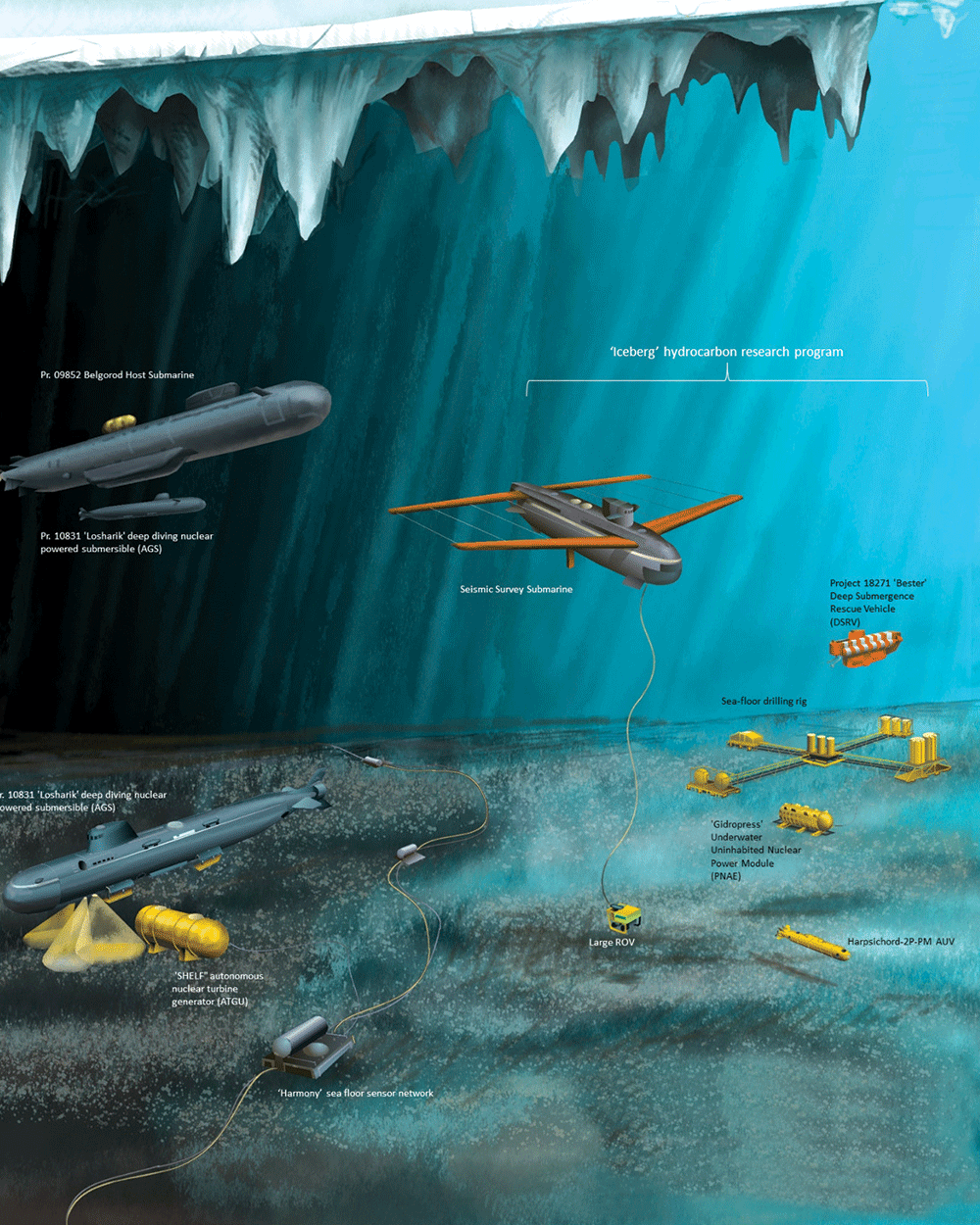
Seabed warfare encompasses military operations conducted on, near or beneath the ocean floor. It includes surveillance, intelligence gathering, protection of underwater infrastructure, extensive use of remotely operated submersibles/vehicles, deployment of seabed sensors, mine warfare, anti-submarine operations, hybrid and gray zone operations, seabed mapping & hydrographic dominance, rapid repair and resilience integration with multi-domain operations, use of emerging technologies (AI, QM, DT) and offensive actions targeting adversary assets. States capable of dominating the underwater battle-space will enjoy significant strategic advantages. A few notable incidents/sabotage of undersea infrastructure are given below.
Progress by Maritime Powers
United States invests heavily in undersea superiority, combining manned submarines, remotely operated and unmanned underwater vehicles (ROVsAUVs/UUVs), towed arrays, and a robust industrial base for undersea sensors and communications. It operates many families of underwater unmanned vehicles (UUVs) across the Navy, Defense Advanced Research Projects Agency, Office of Naval Research, and other agencies.
China is rapidly building UW ISR capabilities to exploit the seabed mapping, lay dual-use infrastructure, and deploy undersea autonomous systems. It has over 130 independent agencies researching UW technologies & equipment. Its investments in undersea mapping, mine warfare, and submarine-laid cables demonstrate how seabed control supports both grey-zone coercion and wartime advantage.

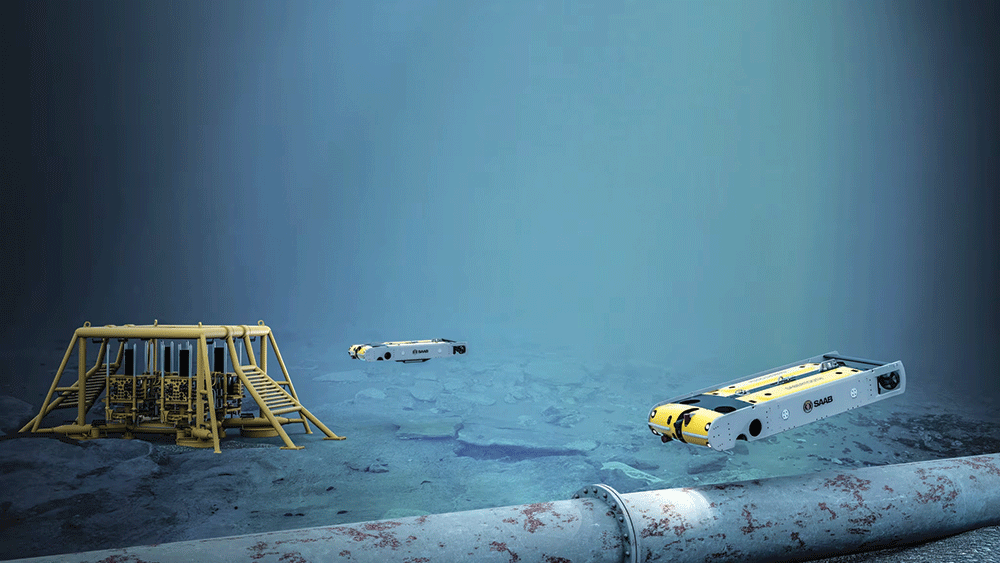
United Kingdom and NATO: Seabed-focused efforts emphasise resilience of undersea critical infrastructure (cables, pipelines) and collective defence of seabed assets. Their approach highlights multilateral cooperation, legal frameworks, and the development of norms to protect subsurface infrastructure.
Australia and Japan are investing in UUVs, joint ASW capabilities, and cooperative seabed monitoring with partners to secure maritime approaches against harassment and interference.

France has already promulgated its white paper on Seabed Warfare Strategy encompassing a plethora of domains.
Norway and the Netherlands are focused on North Sea infrastructure security, underwater surveillance, North Sea cable and pipeline protection. (Increased investment in seabed systems after Baltic incidents).
India has a formidable submarine force, air assets, and expertise in underwater operations, but only a few organisations, viz. DRDO, the National Institute of Ocean Technology (NIOT), the National Centre for Polar and Ocean Research (NCPOR), and the Indian National Centre for Ocean Information Services (INCOIS) contribute to oceanographic and technological research. India lacks an extensive network of underwater sensors, platforms for seabed operations, underwater infrastructure protection systems, and deep-sea intervention techniques for continuous monitoring of critical maritime zones. Cooperation and synergy between various organisations are essential for enhanced seabed awareness.
Building a Future-Oriented Seabed Warfare Strategy
Enhancing UDA: Establish a layered network of seabed sensors, underwater acoustic arrays, unmanned vehicles, and satellite-supported monitoring systems for real-time information on submarine movements, underwater infrastructure status, and unusual seabed activities. Artificial intelligence and big-data analytics should be integrated into surveillance systems.
Seabed warfare encompasses military operations conducted on, near or beneath the ocean floor. It includes surveillance, intelligence gathering, protection of underwater infrastructure, seabed mapping, rapid repair and resilience integration with multi-domain operations, use of emerging technologies (AI, QM, DT) and offensive actions targeting adversary assets
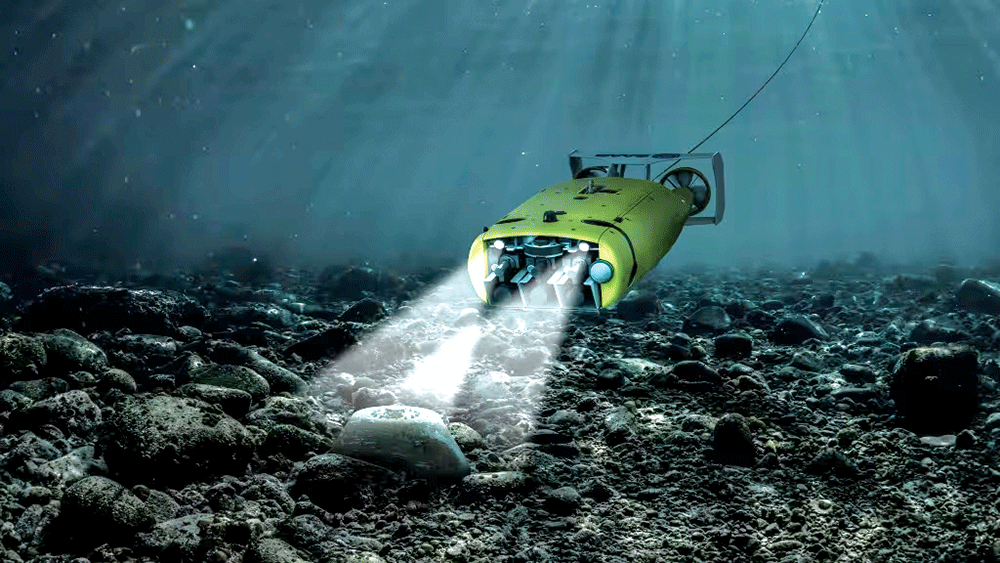
Developing Autonomous Underwater Systems: Accelerate development and deployment of AUVs and UUVs for ISR, mine countermeasures, and infrastructure inspection as they offer reduced risk to personnel, extended operational endurance, and the ability to operate in contested environments.
Protecting Critical Undersea Infrastructure: Identify and prioritise protection of critical underwater assets, communication cables, offshore energy facilities, and strategic installations. Establish regular monitoring, redundancy planning, and rapid repair capabilities. Specialised underwater units to conduct inspections, respond to threats, and support repair operations. Public-private partnerships involving telecommunications companies, energy operators, and defence agencies can strengthen resilience against various threats.
Strengthening Anti-Submarine Warfare: Further modernise ASW assets and underwater sensor networks. Operate integrated manned-unmanned systems and combine data from multiple sensors and platforms to create a comprehensive operational picture in complex underwater environments.
Leveraging Deep-Sea Technologies: Use the Deep Ocean Mission to advance technologies with both civilian and strategic applications. Deep-sea exploration vehicles, seabed mapping systems, robotic platforms, and underwater communication technologies can support military objectives along with research. Invest in deep-sea innovation and blue technologies.
Regional and International Cooperation: Expand regional cooperation for information sharing, joint exercises, and collaborative research initiatives; access to advanced technologies; strengthen regional mechanisms on maritime security, underwater infrastructure protection, and ocean governance.
India must identify and prioritise the protection of critical underwater assets, communication cables, offshore energy facilities and strategic installations. Public-private partnerships involving telecom companies, energy operators and defence agencies can strengthen resilience against various threats
Policy and Institutional Reforms: Establish specialised commands, enhance inter-agency coordination, and develop operational doctrines to improve preparedness. Expand training programmes on oceanography, underwater robotics, cyber-physical systems, and seabed operations
Policy recommendations
- Create a National Seabed Security Task Force
- Accelerate high-resolution seabed mapping of the EEZ and strategic chokepoints
- Indigenise and fund a modular UUV and AUV acquisition programme.
- Establish permanent seabed-monitoring nodes around critical cables and offshore platforms
- Lead a regional initiative for the protection of undersea infrastructure
- Build rapid-repair ships and specialized MCM units.
- Promote legal reforms clarifying civil-military roles for seabed incidents.
- Invest in R&D for attribution technologies,
Emerging seabed warfare strategy is shifting from a narrow focus on detecting submarines to comprehensive control of the underwater environment. India must adopt a forward-looking seabed warfare strategy that combines technological innovation, operational readiness and international cooperation
Conclusion
Emerging seabed warfare strategy is shifting from a narrow focus on submarine detection to comprehensive control of the underwater environment. India must adopt a forward-looking seabed warfare strategy that combines technological innovation, operational readiness, infrastructure protection, and international cooperation.

The writer is a former Indian Navy Submarine Officer. He is a specialist in missiles, underwater weapons, sensors, anti-submarine warfare, and is a deep sea diver. He writes regularly on strategy, tactics, warfare and modern military technologies. He is an active member of national strategic think tanks, such as the USI, the Chakra Foundation, and STRIVE. The views expressed are personal and do not necessarily reflect the views of Raksha Anirveda





