


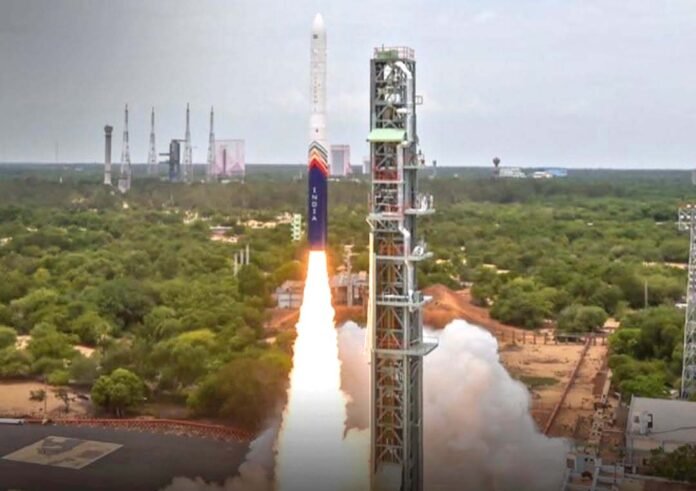
The recent agreement gives Reflect Orbital access to two launches on Skyroot’s Vikram rocket family for future spacecraft. The first mission will use Vikram-1, while the second is planned aboard Vikram-1U, an upgraded vehicle still in development. The companies have not disclosed the contract’s value or launch dates. The deal was announced on October 14, 2026.
Reflect Orbital is developing satellites fitted with mirrors to redirect sunlight towards selected places on Earth. The company says the service could provide illumination after dark for applications such as search-and-rescue operations and construction work, and extend the hours in which solar farms receive sunlight. The concept remains to be demonstrated at operational scale; how much extra electricity the system could generate in practice is uncertain.

The California-based company says it has been licensed by the Federal Communications Commission to operate its first spacecraft. Its larger ambitions involve building orbital infrastructure to deliver sunlight to precise locations. Reflect Orbital’s chief executive, Ben Nowack, said launch capacity is constrained and that working with a new provider would help secure access to space.
For Skyroot, the bookings are a commercial vote of confidence following the maiden flight of Vikram-1. The rocket lifted-off from the Satish Dhawan Space Centre on July 18, 2026 and successfully placed payloads into low Earth orbit. It was the first privately developed Indian orbital rocket to reach orbit on its first flight, a milestone for the country’s emerging private launch sector.
The maiden mission, named Aagaman, carried customer payloads and in-orbit demonstrations. The upper stage reached an orbit about 450 kilometres above Earth roughly 15 minutes after liftoff, according to reporting on the flight. Skyroot has described that launch as a test mission and planned additional flights to build confidence before routine commercial operations. A successful first flight is important, but repeatability and reliable delivery will be central to winning satellite operators’ business.
The two Reflect Orbital missions will use different versions of the rocket. Vikram-1 is designed to carry up to about 350 kilogrames to low Earth orbit. Vikram-1U, which will include additional first-stage boosters, is expected to offer increased payload capacity; industry reporting puts its capacity at about 550 kilogrames. Its first mission is expected in the first quarter of 2027, although schedules can change as development and testing proceed.

Skyroot, founded in 2018 by former Indian Space Research Organisation engineers Pawan Kumar Chandana and Naga Bharath Daka, is developing a family of small launch vehicles aimed at satellite operators. Its business proposition includes dedicated launches, which give a customer control over the mission, as well as rideshare flights that divide launch costs among several payload owners. The company is positioning the Vikram family as a responsive option for customers seeking specific orbits and launch schedules.
Reflect Orbital’s contract is notable because it is a dedicated booking rather than simply a payload slot on a shared flight. That can offer a customer more control over orbit and timing, but typically requires committing a whole launch vehicle. The agreement therefore signals an intention to secure capacity in advance while the spacecraft programme develops. Financial terms and detailed mission specifications have not been made public.

Skyroot’s first international customer mission was for Germany’s DCubed, whose in-orbit technology demonstration flew on the Aagaman mission. The Reflect Orbital agreement adds another overseas client, extending the company’s commercial pipeline across its rocket variants. Each contract will ultimately depend on Skyroot’s ability to deliver launch services on schedule and deploy payloads accurately.
The new deal does not mean Vikram-1 has entered routine commercial service. Skyroot must demonstrate dependable launches, develop production capacity and meet customer requirements as it moves from a successful test flight towards regular operations. For Reflect Orbital, the next challenge is to build and operate spacecraft that can prove the value of reflecting sunlight from the orbit. The agreement links those two ambitions: a new launch provider seeking global customers, and a satellite company seeking reliable access to space.






