


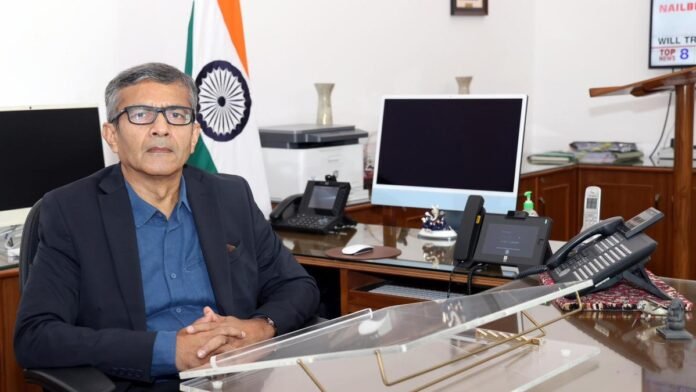
On October 9, speaking at the annual session of the Society of Indian Defence Manufacturers, Defence Secretary Rajesh Kumar Singh said the Ministry of Defence will seek a 35 per cent rise in the modernisation budget for 2027-28. He added that a 25 per cent increase would be a good result if the full demand is not granted. If approved in full, capital acquisition would reach roughly ₹2.5 lakh crore, about $30 billion.
Anyone who has served in a unit short of spares, simulators or modern equipment will welcome this. Yet a soldier does not fight with a budget line. He fights with what reaches his unit, works on the day, and keeps working for years. That is the test this demand must pass, and it is a harder test than the one set by the Finance Ministry.

What the Numbers Say
Capital outlay on defence services for 2026-27 stands at ₹2.19 trillion. Of that, ₹1.85 trillion is earmarked for capital acquisition, more than 24 per cent above the previous year’s budget estimate. A 35 per cent rise on that base gives about ₹2.5 trillion. A 25 per cent rise gives roughly ₹2.3 trillion, by my own arithmetic. The ministry’s case rests on two claims: that it fully used its modernisation allocation in 2024-25 and 2025-26, and that it signed capital contracts worth more than ₹2 trillion in each of those years.
Both are real achievements. Neither is the same as capability. A revised estimate is fixed after a mid-year review, so using all of it tells us the ministry spent what it was given. A signed contract tells us a commitment has been made. The aircraft, guns, sensors and software arrive years later, and only then does a commander feel any difference. India’s public conversation about defence has long counted rupees. It should start counting inductions.
A signed contract tells us a commitment has been made. The aircraft, guns, sensors and software arrive years later, and only then does a commander feel any difference. India’s public conversation about defence has long counted rupees. It should start counting inductions
Procedure Decides What the Money Buys
This is where the draft Defence Acquisition Procedure 2026 matters. The draft was released in February. It was still unclear in early October whether it had been formally notified. The ministry has signalled that final approval of the acquisition reforms is expected before the end of the year, so the text may still change.
The draft supposedly does several sensible things. It drops the Buy (Indian) category, so that Buy (Indian-IDDM), meaning indigenously designed, developed and manufactured, becomes the preferred route. It would possibly also raise the minimum indigenous content to 60 per cent in certain critical areas. It replaces self-declaration with financial formulae, tier-wise supply chain reporting and batch-wise certification. It adds a Long-Term Bulk Acquisition route to give industry demand visibility, and a low-cost route capped at ₹75 crore per project and ₹2,000 crore a year. It also starts the clock at the request-for-information stage, so a case not ready in about fifteen months must restart.

Together these shift the question from where something is built to who controls it. That is the right question. About 75 per cent of capital acquisition is already reserved for domestic industry. Money flowing to Indian factories is welcome, but it buys sovereignty only if design authority, source code and the right to upgrade sit in Indian hands. A licensed production platform you cannot upgrade, modify or reprogram without another country’s permission is a platform on lease.
About 75% of capital acquisition is reserved for domestic industry. Money flowing to Indian factories is welcome, but it buys sovereignty only if design authority, source code and the right to upgrade sit in Indian hands
For the services, the promise is faster induction. Spiral development lets a force receive an initial configuration sooner and improve it in stages, rather than wait years for a perfect system that may already be dated. For industry, the promise is visibility: assured orders, a price preference of up to 15 per cent for higher localisation and genuine indigenous design, and a route from iDEX and the Technology Development Fund into real procurement. Each side pays a price. The services must accept that early indigenous systems may be less polished than imports. Industry must accept audits, penalties and real spending on research rather than assembly.

Where It Can Go Wrong
A bigger budget and a tougher procedure also create new ways to fail. Four aspects stand out.
First, institutions: Fewer categories fix the classification, but not the overlapping chains of responsibility between the user, the acquisition wing, finance and industry. Reforms in India have usually stumbled on execution rather than intent. It still is a ‘Snakes and Ladders’ game in a time-insensitive, play-safe bureaucratic trap.
Second, depth: Genuine indigenous design assumes strength in materials, electronics, sensors and software, and in areas such as aero-engines, that strength is still being built.
Third, burden: Formula-based reporting may fall hardest on the MSMEs and start-ups the policy is meant to help.
Fourth, gaming: Any indigenous content formula that leans on declared values can be manipulated, and a larger budget raises the reward.
Fewer categories fix the classification, but they don’t fix the overlapping chains of responsibility among the user, the acquisition wing, finance, and industry. Reforms in India have usually stumbled on execution rather than intent
Eight Recommendations
A bigger demand is justified only if it comes with a larger promise. I would put eight commitments on the table.
- Measure delivery, not just contracts: Each year the ministry should report to Parliament, and to the public where security permits, how many contracted systems arrived on time, how many slipped and by how much, and what share of inducted fleets is serviceable.
- Protect the money from the year-end rush: A budget that rises by a third will be tempted to be spent in the final quarter. Multi-year commitments for long programmes, with unspent capital carried forward within agreed limits, would reward good planning over fast spending. Thus, the modernisation budget must be roll-on.
- Pay for sustainment at the start: Spares, maintenance, repair and overhaul, training and software support should be priced and funded inside the acquisition contract. A cheap platform with an unfunded tail is an expensive platform.
- Define ownership and audit it: Write design authority, source code access and upgrade rights into the contract in plain terms. Back indigenous content claims with independent audit rather than self-declaration alone, and test the formula for ways it can be gamed.
- Be practical where India cannot yet build: For aero-engines and similar items, a time-bound partnership with clear milestones for intellectual property and design authority is better than either a blanket ban or permanent import dependence. The jet engine co-production agreements now being finalised should be judged on exactly this basis.
- Make room for the small: Standard templates, third-party certification, tiered reporting and prompt payment would let MSMEs and start-ups spend their time on engineering. The low-cost route can serve as a testbed for unproven firms, with small orders and quick feedback.
- Keep the demand signal honest: Long-term bulk acquisition and assured orders work only if they are honoured. Services Qualitative Requirements should be written with early industry consultation, and trial teams and acquisition staff need the training and numbers to match the speed the procedure now demands.
- True measure of modernisation is ‘New Schemes’: Keep the ‘New Scheme’ head under modernisation as the measure of new capability development and visible, not buried under the committed liability burden.
The big decisions waiting in the queue will test all eight at once. If industrial participation, design access and sustainment are written in at the start, they become the template for the next decade. If they are bolted on later, they become the next round of delay.
The Defence Ministry will ask for more money. The harder question is whether it is ready to be held to account for what that money delivers. A budget makes a promise. Procedure, ownership and delivery turn the promise into the readiness of a force. This requires budgetary and capability transformation beyond mere allocation.

The writer, a PVSM, AVSM, VSM has had an illustrious career spanning nearly four decades. A distinguished Armoured Corps officer, he has served in various prestigious staff and command appointments including Commander Independent Armoured Brigade, ADG PP, GOC Armoured Division and GOC Strike 1. The officer retired as DG Mechanised Forces in December 2017 during which he was the architect to initiate process for reintroduction of Light Tank and Chairman on the study on C5ISR for Indian Army. Subsequently he was Consultant MoD/OFB from 2018 to 2020. He is also a reputed defence analyst, a motivational speaker and prolific writer on matters of military, defence technology and national security. The views expressed are personal and do not necessarily carry the views of Raksha Anirveda





