


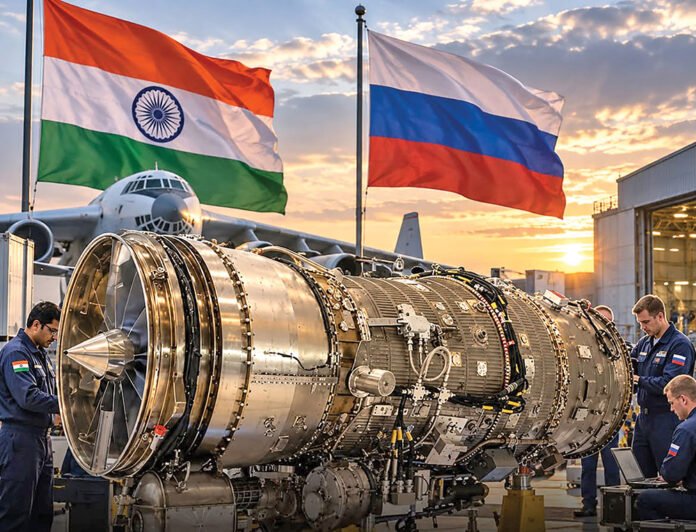
The anarchic nature of the world order entails intense competition among the great powers for dominance and hegemony. Studies by scholars such as Wallerstein (World-Systems Model), Kondratieff and Modelski (long cycles of economic and technological dominance), and Schumpeterian theory of innovation (creative destruction) have clearly established the dictum that no country can be a great power without control over critical technologies. In today’s aerospace age, this dictum translates into the need to master the critical domains of nuclear, space, aviation and propulsion, communications, computing and AI. Aeroengine technologies present the toughest challenge to master, and it is no wonder that only the leading great powers possess complete control in this domain. For India, the aeroengine remains a technological challenge despite over four decades of struggle. The Kaveri engine development history exemplifies this challenge.
Over the past six months, the Indian government and industry have announced three routes to develop the fighter engine. In April 2026, GE Aerospace and HAL finalised the technical terms for co-producing the F414-INS6 for the Tejas Mk2 and the first AMCA squadrons. DRDO’s GTRE (Gas Turbine Research Establishment) has proposed a joint venture with the French engine manufacturer Safran to co-design and co-produce a 120 kN engine to power AMCA Mk2. The proposal, valued at up to Rs 61,000 crore and envisaging complete IPR for India, awaits clearance by the CCS (Cabinet Committee on Security). In a third and notable development, Reliance Industries and Rolls-Royce announced a “strategic intent” to build a “sovereign indigenous” combat engine. Taken together, these three major steps suggest momentum for the aeroengine project. Measured against what India lacks, they look like three ways of buying time.

Lessons from Kaveri Programme
Kaveri engine troubles are often attributed to metallurgy. This is too simplistic; the challenges were complex. In 2006-07, GTRE proposed a joint venture with Snecma (the French engine house that later merged into Safran), claiming that Snecma’s design assistance would accelerate Kaveri development. At this stage, the Indian Air Force and HAL felt that Kaveri engine development was far behind the LCA (Tejas) aircraft’s progress and would delay the whole programme. In August 2007, the IAF constituted a study group, under the author’s chairmanship, to examine the programme’s status and GTRE’s proposed joint venture with Snecma.
The report flagged a few crucial findings. The programme was authorised in 1989 with an ambitious and impractical seven-year timeframe from development to series production and cost. Kaveri was GTRE’s first full aeroengine development. Yet DRDO chose a six-stage core design with full digital control and flat rating, even though such a design had not yet matured, even among established engine houses in the US, the UK, France, and Russia. Indian aerospace metallurgy was in its infancy, the materials database was small, and turbine blade design capability was limited. Established engine houses would have needed 15-20 years for such a project. India should have planned for 20-25 years and at least ten times the allocated research budget of Rs 389 crores in 1989.
Kaveri engine troubles are often attributed to metallurgy. This is too simplistic, the challenges were complex. In August 2007, the IAF constituted a study group, under the author’s chairmanship, to examine the programme’s status and GTRE’s proposed joint venture with Snecma. The report flagged a few crucial findings
The core was at the heart of the problem: a sub-optimal thermodynamic cycle, blade flutter, a faulty combustor, deficient high-pressure turbine and compressor designs, and a low surge margin. The fan and low-pressure turbine had their own failures, and the afterburner would not reliably relight at altitude. After 15 years, the core engines (K1 to K9) had logged about 1800 test hours, of which only 680 were counted as effective, against at least 8000 hours of ground testing required before flight testing. The committee assessed that the Kaveri was at least 15 years away from maturity. Seventeen years later, the dry Kaveri has just completed trials in Russia and awaits certification. The development was also interrupted for 2-3 years due to the programme’s closure and subsequent revival.
The Comptroller and Auditor General’s (CAG) 2010 audit reached the same verdict independently. Sanctioned in March 1989 at Rs 382.81 crores for completion by December 1996, the programme had seen its cost revised to Rs 2,839 crores, a 642 per cent increase, and its completion date slip by 13 years. The engine weighed 1235 kg against the design target of 1100 kg; the turbine blade design had not been frozen; the control system was not flightworthy; and critical component tests had not been conducted for want of facilities. GTRE had even declined Snecma’s offer of joint development in 2001, only to seek a JV seven years later.

Beneath these lie institutional failures that persist. India still lacks a full-scale altitude test facility and a flying test-bed aircraft. GTRE remains a laboratory, not an engine company. India attempted a state-of-the-art, 4.5-generation afterburning fighter engine with no lineage of smaller engines beneath it, whereas every mature engine house grows through derivatives.
The Caution: We Have Been Here Before
The JV with Snecma was intended to solve the above problems through co-design. Instead, Snecma proposed, and GTRE accepted, replacing the Kaveri core with Snecma’s ready-made core. Our study concluded that this bypassed co-design and brought in licensed production through the back door. The JV would have produced 88.7 kN of thrust, short of the 90 kN benchmark, and reached 90 kN only through a combat rating that consumed hot-end life. Its 48-month schedule was near impossible even for Snecma alone; we estimated 72 months at best and 84 to 90 months normally, with no allowance for GTRE’s learning curve. Almost every important technology was to be bought separately, at extra cost and subject to French government approval, with no visibility on the transfer of core technology. In that form, the JV would have effectively killed the ongoing indigenous programme, instead of assisting.

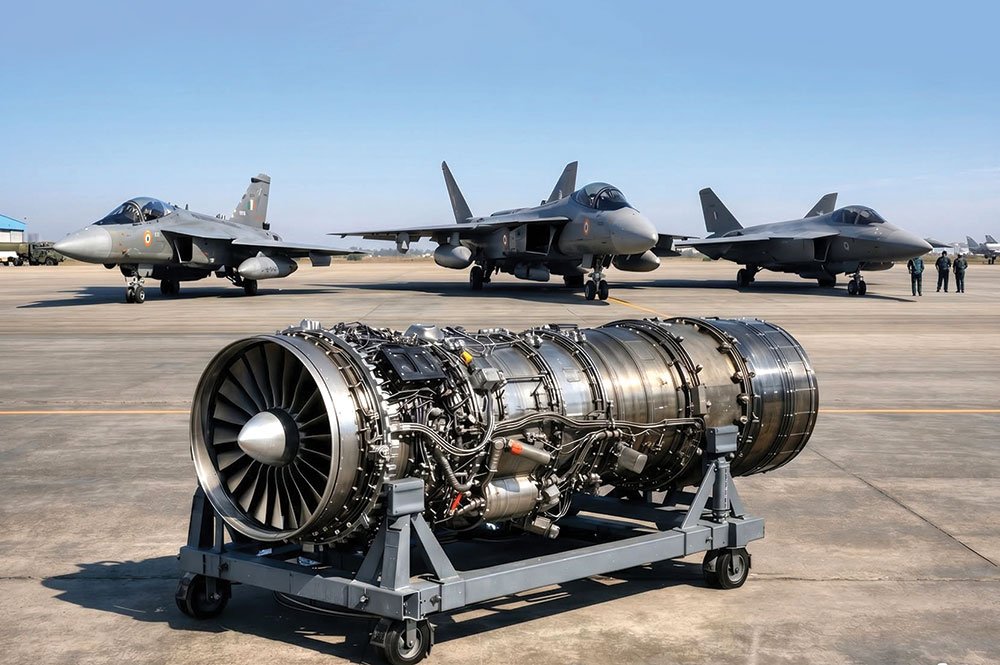
The recommendations were practical and prescient: delink engine development from the LCA; revise the JV to strengthen the indigenous effort pursuing the Kaveri engine core; link it to the then-proposed MCA (Medium Combat Aircraft); and completely restructure GTRE, integrated with DMRL, HAL, and MIDHANI. The LCA did move to a proven engine. GTRE was never restructured. Because Snecma refused to meet the co-design and technology database access terms proposed in the study, the proposed JV was dropped.
Seventeen years later, the MCA is now the AMCA, and Snecma is now Safran. The questions asked then remain the same: will the partnership build a truly Indian aeroengine, or replace it?
Three Courses of Action, One Blind Spot
India’s aeroengine development strategy has been hampered by strategic inconsistency and disruptions. Long-term strategies are built on a clear understanding of what technological sovereignty entails. What matters is the distinction between production sovereignty and design sovereignty. The three partnerships deliver the first, in varying degrees. None yet secures the second.
The HAL-GE deal is a manufacturing transfer. HAL will receive the production technologies for the F414-INS6 engine. Reports envisage HAL achieving 80 per cent localisation by value, including single-crystal blades and coatings, by 2030-31. Effectively, this contract remains built-to-print, transferring the how, not the why. Design tools, test databases, life-prediction methods, alloy development, the engine control software (FADEC) and rights to derivatives remain outside it, and US re-export controls remain in force. The F404 delivery delays of 2023-25, which prevented HAL from delivering the first Tejas Mk 1A despite a three-year delay and affected the IAF’s operational capability, show how much leverage the supplier retains.
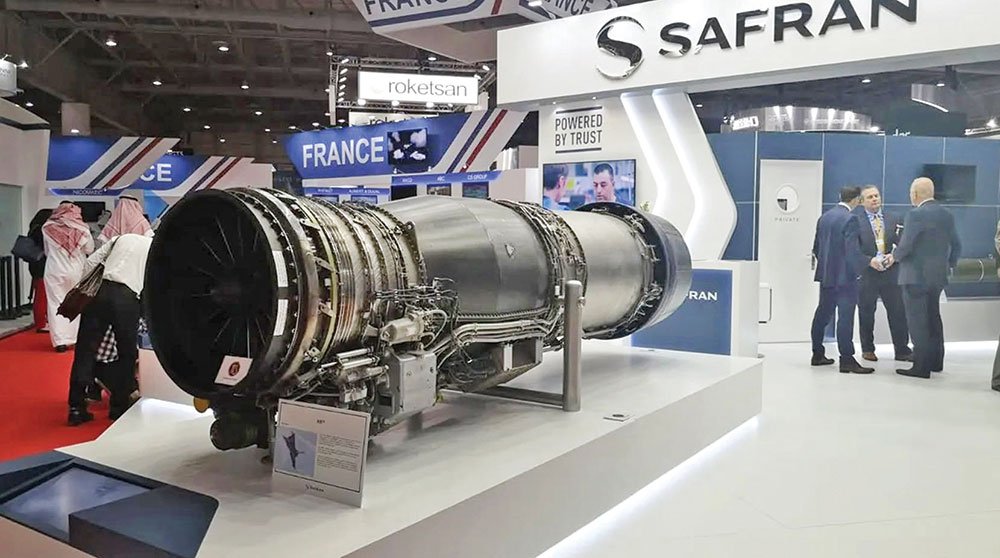
The Safran programme reflects lessons from the aborted GTRE-Snecma JV proposal. It is now better conceived: a new engine with Indian ownership of the intellectual property and no right for Safran to reuse the architecture. But owning the IP is not the same as owning the capability. The decisive question is the 2009 question: who designs the core? Who will be the design authority, and will it be a joint design authority, which is unlikely? If Safran designs the high-pressure compressor, combustor and turbine while GTRE handles the fan, nozzle and afterburner (as in 2009), India will own drawings it cannot extend. The unresolved division of labour between HAL and GTRE compounds the risk. The contract’s work-share schedule, not the joint communiqué, will decide the outcome.
The Reliance-Rolls Royce announcement is, for now, a press release with no financial terms, timeline, ownership structure, or IP allocation. Reliance brings capital and execution capacity; neither is the binding constraint. Without Indian design authority, this venture becomes a Rolls-Royce manufacturing node in India.
A Realistic Timeline Assessment
On realistic assumptions, the Safran engine reaches core testing around 2030-31, first flight around 2034-36, and series production between 2037 and 2040. If India leverages the programme effectively to acquire and develop critical technologies, including design, development, manufacturing, and significant supply chain control, then truly independent aeroengine mastery lies closer to 2050. The 2009 estimate of 20 to 25 years for a first engine has proved, if anything, optimistic. Thirty years is the average price every late entrant has paid.
A global talent drive could save perhaps five to eight years. But export controls limit what recruits may bring; tacit knowledge resides within teams, and it is a moot point whether DRDO can absorb such people. Talent follows institutions.
The Way Forward: The Imperative of Change
Revisit earlier recommendations on structural reforms. Corporatise GTRE as a national engine company with design authority and production, integrated with DMRL, HAL, and MIDHANI. Write the know-why into the Safran contract: Indian design of the core, engineers embedded in Safran’s offices, milestone-based transfer of design authority, FADEC source code, and unrestricted rights to derivatives. Build testing infrastructure, such as an altitude test facility and flying testbeds, as a high priority. Fund a ladder of engines, from the Manik and the dry Kaveri to a Kaveri 2.0, so each generation trains the next. Ring-fence twenty years of funding under a single aerospace authority. Another committee, chaired by the author, recommended in 2014 the critical need to constitute a single aerospace authority, the National Aerospace Commission.
The twenty-first century is the century of aerospace power. Mastery of aeroengine technologies is a prerequisite for a great power in this century, despite advances in AI, robotics, and computing. Engines are learned, not bought. Unless India learns, it will own the drawings and rent the knowledge for another generation.

The writer, AVSM VM PhD (V) is a former Deputy Chief of Integrated Defence Staff at HQ IDS, and is currently Founder-President of The Peninsula Foundation. The views expressed are of the writer and do not necessarily reflect the views of Raksha Anirveda





