


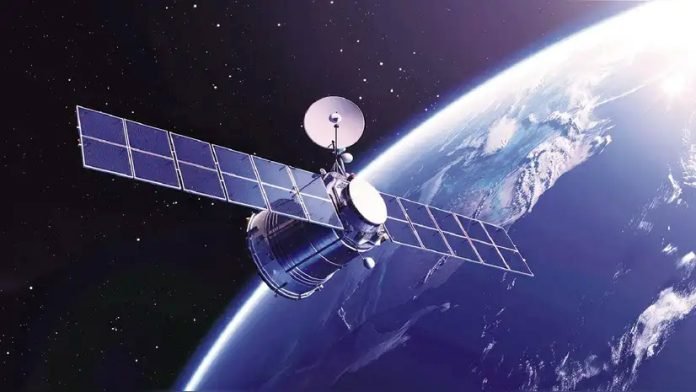
In a significant development for India’s space and telecommunications sectors, Hyderabad-based Ananth Technologies is set to become the first private Indian company to offer satellite communication (satcom) services using a domestically-built satellite. The Indian National Space Promotion and Authorisation Centre (IN-SPACe), the space regulator, has granted Ananth Technologies the go-ahead to roll out broadband-from-space services starting in 2028.
Marking a shift in the country’s space ecosystem, this will allow Ananth Technologies to directly compete with international players such as Starlink (SpaceX), Eutelsat OneWeb, and Amazon’s Project Kuiper. The company plans to deploy a 4-tonne geostationary (GEO) communication satellite that will deliver a data capacity of up to 100 GB per second (Gbps) to users across the country. An initial investment of ₹3,000 crore has been committed to the venture, with scope for further funding depending on demand, a news report said.

India has more than 100 space technology startups and most were founded in the past five years. It owns 55 active space assets that include communication, meteorological and Earth observation satellites.
While many global players operate in low earth orbit (LEO) — typically 400 to 2,000 km from Earth — Ananth Technologies will deploy a satellite in GEO, over 35,000 km above the planet.
LEO satellites, like those used by Starlink, Amazon, and OneWeb, complete an orbit every 1–2 hours, allowing for low-latency broadband. In contrast, GEO satellites orbit the Earth once every 24 hours, appearing stationary from the ground. While latency is higher in GEO systems, they offer broader territorial coverage — a single satellite can blanket the entire Indian subcontinent, unlike LEO constellations that require multiple satellites for complete coverage.
In a related development, Elon Musk’s Starlink is also close to securing its final authorisation to operate in India. According to a report, IN-SPACe has issued a draft Letter of Intent to Starlink. Once both parties sign the document, formal approval will be granted.

This would place Starlink on par with other authorised service providers such as Eutelsat OneWeb and Jio Satellite. In May, Starlink received the Global Mobile Personal Communication by Satellite (GMPCS) licence, making it the third satcom firm cleared to offer commercial services in India.
Last month, Vodafone Idea (Vi) announced a strategic alliance with US-based AST SpaceMobile to offer satellite-based phone services directly to standard smartphones in India. AST SpaceMobile is developing the world’s first cellular broadband network operating entirely from space, targeting both commercial and government sectors.

“Vi (Vodafone Idea) and AST SpaceMobile Inc. announced a strategic partnership to expand mobile connectivity across India’s unconnected regions. AST SpaceMobile made history by placing the first-ever voice and video call from space using a standard mobile phone, a milestone that demonstrates the real-world viability of its advanced technology,” Vodafone Idea said in a statement.






