


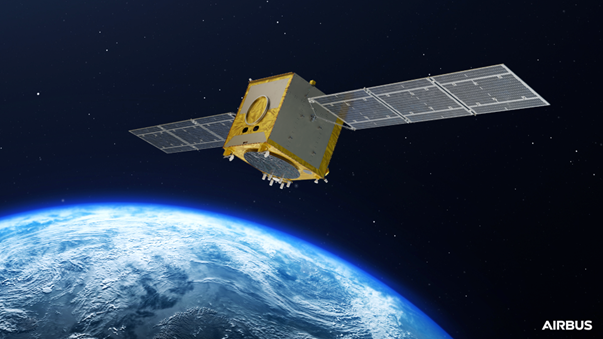
Ottobrunn, Germany. The European Space Agency (ESA), acting on behalf of the EU Agency for the Space Programme (EUSPA), under a delegation of the European Commission, has awarded Airbus a contract to build two additional second-generation Galileo satellites. Building on an existing order of six second generation Galileo (G2) satellites, this additional pair will benefit from existing manufacturing capabilities and reaffirms this successful partnership.
“With these contracts, ESA and European industry are safeguarding the continuity of Europe’s satellite navigation services, responding to the evolving needs of users, and strengthening Europe’s strategic autonomy. These contracts represent an investment in Europe’s ability to navigate its own future, independently and with confidence,” said Laurent Jaffart , ESA Director of Resilience, Navigation and Connectivity.

“This latest award for two additional sophisticated Galileo satellites underscores Airbus’ satellite manufacturing expertise. We are committed to delivering these next-generation satellites which are vital to augment navigation capabilities for European security and defence and wider societal benefits,” said Alain Fauré, Head of Space Systems at Airbus.
The G2 satellites will incorporate enhanced navigation antennas to enhance the accuracy of the flagship European Global Navigation Satellite System. The spacecraft will be equipped with higher-strength navigation antennas as well as fully digital payloads which are reconfigurable in orbit, enabling them to actively respond to evolving user needs with novel signals and services. Airbus will draw on its coordinated production programme to leverage spacecraft manufacturing, integration, and testing expertise across Airbus sites including Backnang (near Stuttgart), Friedrichshafen, Getafe (near Madrid), Ottobrunn and Toulouse.
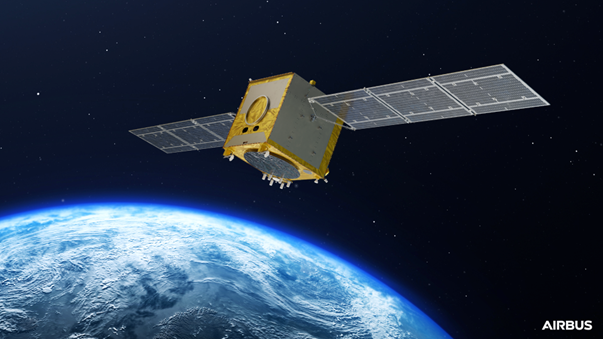
Each satellite will incorporate an enhanced atomic clock configuration as well as inter-satellite links to communicate and cross-check data. They will also feature advanced anti-jamming and anti-spoofing capabilities to safeguard Galileo’s signals. The spacecraft will each weigh more than two tonnes and will operate in orbit for 15 years.
A flagship programme of the EU, Galileo is funded by the European Union and managed by the European Commission. Since its inception, ESA leads the design, development and qualification of the space and ground systems, as well as procuring launches. ESA is also entrusted with research and development activities for the future of Galileo within the EU programme Horizon Europe. The EU Agency for the Space Programme (EUSPA) acts as the service provider, oversees the service operations and deployment of the Galileo system, including launch services, and ensures it meets market and user needs.“Galileo” is registered as a trademark in the database of the European Union Intellectual Property Office (n° 002742237).








