


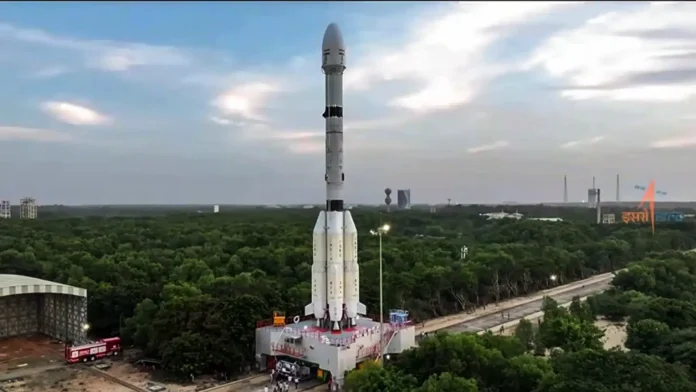
Hyderabad. Ananth Technologies’ contribution to the GSLV-F18/NVS-03 mission spans both the launch vehicle and its satellite payload, underlining the role of domestic suppliers in India’s space programme. The Hyderabad-based company provided 46 flight-hardware packages for the rocket and nine systems for NVS-03, according to company statements reported on October 31.
The Indian Space Research Organisation (ISRO) said GSLV-F18 placed NVS-03 into its intended orbit after launch at 23:51 IST on October 30. The satellite entered an initial orbit of 170.3 km by 38,080 km. ISRO reported that its first orbit-raising manoeuvre was completed successfully on October 31, with further manoeuvres planned to move it towards its geosynchronous orbital slot at 111.75° east.

Ananth’s 46 launch-vehicle packages support functions including telemetry, data acquisition, navigation, guidance and control, power management, relay operations, structural monitoring, actuator control and transponder functions. Such equipment helps monitor the vehicle and supports the control systems that guide it through flight. The company’s contribution is a set of subsystems-not the rocket as a whole: ISRO remains responsible for the mission and the launch vehicle’s overall integration and execution.
For NVS-03, the company supplied nine spacecraft systems, including power-management packages, DC-DC converters, star sensors and attitude-and-orbit-control systems. Together, these support power conversion and distribution, onboard operations and the satellite’s ability to determine and control its orientation. Ananth Technologies chairman Subba Rao Pavuluri described the mission as a milestone for India’s indigenous space capabilities and said the company would continue to support national space programmes with domestic technologies.
NVS-03 is the third satellite in the next-generation navigation series intended to maintain continuity of services from the Indian Regional Navigation Satellite System, known as NavIC. ISRO says the satellite carries an indigenous atomic clock alongside procured clocks. Its navigation signals include L1 in addition to the existing L5 and S-band signals, and its service area covers India and a region extending 1,500 km beyond the country’s geopolitical boundary.
The initial orbit is not the satellite’s final operating position. ISRO’s October 31 update said the spacecraft’s health was normal after its first manoeuvre, while additional orbit changes remained necessary before it could reach the planned geosynchronous slot. That distinction matters: successful injection into an initial orbit is a key launch milestone, but the spacecraft must still complete its planned orbital adjustments.

The mission also illustrates how private manufacturers contribute to complex public-sector programmes through specialised hardware. Ananth’s packages cover a wide range of functions, but their presence should not be mistaken for private control of the mission. ISRO’s role includes system-level integration and mission execution, while suppliers provide components and subsystems that must meet demanding operational requirements.
NVS-03’s additional L1 signal and atomic-clock capability are part of the effort to sustain and enhance NavIC services, rather than a stand-alone replacement for the wider satellite constellation. With the satellite beginning its planned orbit manoeuvres, attention now turns to its transition into the intended orbital position and subsequent operational readiness.







