


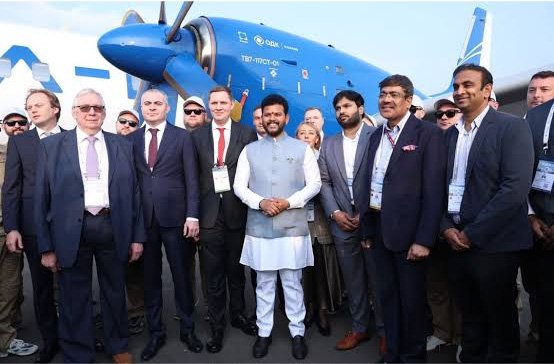
The first day of the two-day summit, Aviation India and South Asia 2026, held at New Delhi’s Aerocity, brought together airlines, airports, manufacturers and aviation service providers under a theme focused on finding a sustainable growth formula for Indian aviation. On day one, chief executives’ remarks showed that expansion is no longer simply about adding aircraft: carriers must also contain costs, secure airport capacity and build networks that can compete for international traffic.
Air India’s new chief executive, Tewolde Gebremariam, offered the most immediate turnaround challenge. In his first major public appearance since taking charge, he said the airline wanted to increase its widebody aircraft orderbook, while acknowledging that restoring profitability was an urgent concern. He described the carrier’s transformation as a long-term project that could take 15 to 20 years.

The Tata Group-owned airline is contending with high fuel costs and disruption to long-haul operations due to the closure of Pakistani airspace. Gebremariam said his near-term priorities include reducing costs, rebalancing the network and rebuilding connectivity. Routes from Delhi to Europe and the United States have been particularly affected, and some operations could shift to Mumbai. Bengaluru is also being considered as a third hub alongside Delhi and Mumbai.
His growth ambition remains substantial. Air India aims to build international connectivity through more widebody aircraft and investment in infrastructure, training and maintenance. Gebremariam said India could become a global aviation hub if the right decisions are made at the right time. The airline’s twin task, then, is to improve financial performance while preparing for a larger role in long-haul travel.
Arun Bansal, chief executive of Adani Airports, framed the opportunity from the infrastructure side, arguing that India needs three large national carriers to serve rising demand and compete internationally. IndiGo and Air India are two, he said, but the country needs a third carrier of comparable scale. He also argued for strengthening Indian airlines before exposing them to greater international competition.
Bansal said passenger traffic could grow from about 300 million currently to 1.1-1.2 billion by 2040-45. Meeting that demand, he said, would require more aircraft, expanded airports and regulatory changes. Indian travellers often connect through foreign hubs, including in the Middle East, to reach Europe and the United States; developing more direct services depends on airlines’ fleet capacity as well as airport and policy readiness.

Adani Airports plans to invest $10-11 billion over seven years in airport infrastructure, commercial businesses and city-side development. Bansal said its portfolio handles around 100 million passengers annually, with a goal of reaching 300 million over the next decade. Planned projects include expanding Navi Mumbai airport and redeveloping Terminal 1 at Mumbai airport.
For IndiGo chief executive Willie Walsh, the emphasis was on growing international reach without weakening the short-haul operation that underpins the airline’s business. IndiGo expects to have 14 Airbus A321XLR aircraft by the end of December 2027, Walsh said. The longer-range narrowbody jets will allow it to serve more overseas destinations while keeping its focus on short-haul efficiency. The airline currently has four A321XLRs, with another due by year-end.

Walsh said IndiGo expects to begin receiving Airbus A350-900s in the second quarter of 2028, but cautioned against letting the excitement of widebody operations distract from its existing network. IndiGo has more than 440 aircraft and aims for a fleet of 600 by 2030. He also called for effective airline-airport partnerships, urging airports to focus on the value of their investments amid concerns over airport charges and taxes.
The contrast between Air India and IndiGo’s approaches was pronounced. Air India is pursuing widebody growth to strengthen long-haul connectivity even as it works to return to profitability. IndiGo, while preparing for future A350 operations, is guarding the cost discipline of its narrowbody network. Both strategies depend on aircraft deliveries, but the executives’ comments made clear that fleet expansion alone cannot guarantee sustainable growth.
Regional carrier FLY91 presented a different measure of ambition. Managing director and chief executive Manoj Chacko said the airline plans to expand from six aircraft to approximately 60 over the next five years. It has placed an order for 40 aircraft, with deliveries expected to begin in 2027 and continue through 2032. Chacko described the company’s approach as steady rather than rapid growth, saying it was “playing a Test match.”
FLY91 operates across 14 stations and plans to reach nearly 350 weekly flights in the winter schedule. Chacko said its priority is to meet domestic demand before considering international routes, and warned that airlines should not build business models that depend entirely on government support under regional connectivity schemes. The responsibility, he said, rests with carriers to ensure routes remain commercially viable.
Airbus, meanwhile, urged India to address the practical bottlenecks that can prevent airport infrastructure from translating into hub status. The company called for more efficient airport transfers and regulatory reforms to support India’s hub ambitions. The message complements the airline executives’ focus on connectivity: international hubs require not only runways and terminals, but also smooth passenger connections, coordinated schedules and policies that enable carriers to build viable networks.
Airbus’s wider Indian presence includes engineering, procurement, customer services and manufacturing partnerships. The company said its Bengaluru technology centre, inaugurated in 2026, consolidates engineering, digital, customer-service and procurement teams, and is designed for about 5,000 employees. Airbus has also said annual sourcing from India has risen above $1.5 billion, linking local suppliers more closely to its global operations.
Taken together, the first-day statements sketched out an aviation market growing on several fronts: Air India’s long-haul recovery, IndiGo’s measured international expansion, FLY91’s regional network and Adani Airports’ capacity investments. Yet, the executives also pointed to the conditions that could constrain that growth-profitability, fuel and airport costs, airspace disruption, infrastructure bottlenecks and regulation. India’s hub ambitions will depend on whether airlines, airports and policymakers can resolve those pressures as demand rises.
Aviation India Summit 2026 builds on the formula of the successful Times Aerospace Aviation Events held in Africa, which began in Dubai in 2015 and continued annually in Rwanda, Egypt, Nigeria, Ethiopia, South Africa and most recently in Kenya.







