


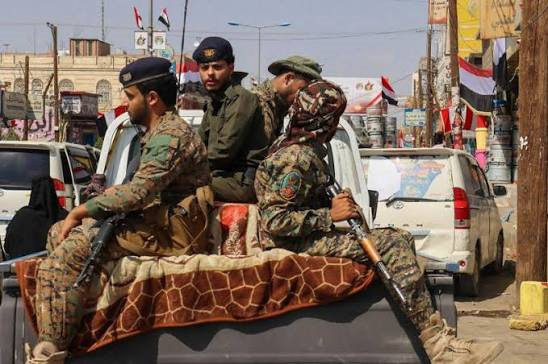
Whether or not Saudi Arabia offered the Houthis $1 billion, the fact that the report is credible is itself the verdict. Two months after Riyadh, Ankara and Islamabad signed the Mecca Joint Defence Alliance to deter Yemen’s Houthis, the kingdom’s defence minister was in Tehran, the Houthis’ patron, seeking a way to stop the attacks. A paper alliance failed to deter a non-state actor armed with cheap drones. The world’s richest military customer could not buy its way out of a cost-exchange trap. And Iran has turned from a spoiler into a broker. For India, each is a lesson rather than a spectacle.
What is Confirmed, and What is Not
The $1 billion figure comes from Israel Hayom, citing anonymous Gulf diplomatic sources, who said the money would reach the Houthis through Iran. A single source added that Prince Khalid bin Salman flew the cash in on his C-130 Hercules. A Saudi official, speaking to the same outlet, “did not confirm that any money had been transferred.” There is no public confirmation of any payment from Riyadh, Tehran or Sanaa.

If money flows while missiles are still falling, the Houthis will have learned that strikes on Riyadh are rewarded. In Yemen, the balance has shifted: the Houthis now negotiate not for a truce, but for a settlement on their terms
What is confirmed is the visit. Prince Khalid, Pakistan’s Field Marshal Asim Munir and Turkish intelligence chief Ibrahim Kalin met President Masoud Pezeshkian and Supreme National Security Council Secretary Mohsen Rezaei in Tehran. Riyadh described the trip as part of the alliance’s efforts “to de-escalate tensions… encourage dialogue and diplomatic solutions.” Iranian state television said the talks ended without an agreement that the Houthis would stop their attacks. The next day, the Houthis claimed a ballistic missile strike on the Saudi defence ministry in Riyadh.
An unverified report still matters, for two reasons. It is plausible: the Saudi official who declined to confirm it volunteered that the dispute concerns understandings, reached three years ago, for Saudi funding of public salaries and reconstruction in Houthi areas. And it is corrosive: in deterrence, perception is the currency. A kingdom widely believed to be paying its attacker has already paid a price in credibility, whatever happens to the money.
Why the Mecca Pact Did Not Deter
The Mecca Joint Defence Alliance, signed in August, was explicit in purpose: an attack on one would be an attack on all, and the Houthis were the obvious addressee. Yet from July onwards the Houthis struck deep and often. On October 10, an attack on Riyadh’s King Khalid International Airport killed 12 people and injured 309, according to Saudi civil aviation authorities. Airports in Dammam, Najran, Abha and Jizan, and Aramco facilities at Yanbu and Rabigh have also been targeted, according to a timeline of the escalation and other reporting. The Future Investment Initiative was reportedly postponed.
Princess Reema’s call in The New York Times for a “coordinated international response” shows Riyadh still keeping the Western option open. But each week the Houthi campaign continues, Iran’s offer gains value and Washington’s loses it
The pact failed because deterrence is a function of credible will, not signatures. Pakistan has ratified it, though against significant domestic opposition. Turkey has declined to authorise combat operations against the Houthis. Both prefer mediation to war in Yemen. An alliance whose junior partners will not fight is a diplomatic statement, not a military threat. Beneath it lies the older problem: since 2015, billions in Western arms have not let Riyadh defeat an adversary with dispersed launchers and regenerating production.

The Cost-Exchange Trap
The Houthi campaign is a textbook case of attritional coercion. Iranian-derived Samad and Qasef one-way attack drones, costing an estimated $20,000 to $50,000 each, are launched in saturation waves. They fly low, using terrain to shorten radar warning, and are sequenced with cruise and ballistic missiles so that defences optimised for one threat are stressed by another. Targets are chosen for coercion: airports and energy sites, where one penetration produces headlines and cancellations.
The arithmetic is decisive. When each cheap drone must be met with an interceptor costing millions, the defender loses even when it wins. Stockpiles drain, debris falls on cities, and the attacker needs only occasional success. The doctrinal lesson is that air defence against mass drones cannot rest on premium missiles. It requires a layered architecture in which cheaper effectors, such as guns, electronic warfare, directed energy and interceptor drones, carry the bulk of the load, while expensive missiles are reserved for ballistic threats.

Paying the Adversary
Riyadh’s reasoning deserves a fair hearing. Vision 2030 depends on investors, tourists and airlines believing that the kingdom is safe. NEOM and energy exports are worth far more than $1 billion. A war in Yemen that has not been won in a decade will not be won this year. And the Houthi grievance is not invented: public-sector salaries in their areas remain unpaid, and the earlier understandings were never fully honoured. Framed as delayed salaries and reconstruction rather than tribute, a payment could be presented as a return to an earlier bargain.
The Gulf is India’s exposure. Some 2.5 million Indians live in Saudi Arabia, and Indians have also been killed in Houthi attacks. Saudi crude, Red Sea shipping lanes, and the Bab al-Mandeb are all within the Houthis’ range
But the framing cannot hide the substance. Riyadh has said it rejects a ceasefire under ‘military blackmail’ and will not transfer funds before the Houthis return seized territory. At the same time, it is reported to be backing a government offensive towards Mocha while seeking Iranian mediation. If money flows while missiles are still falling, the Houthis will have learned that strikes on Riyadh are rewarded. In Yemen, the balance has shifted: the Houthis now negotiate not for a truce, but for a settlement on their terms.
Iran: From Spoiler to Broker
The quiet winner is Tehran. Foreign Minister Abbas Araghchi had offered mediation, warning there was “no military solution.” By hosting the Mecca alliance, Iran has turned its influence over the Houthis into diplomatic standing. It is the problem and the solution, and it is therefore indispensable. Its pitch of regional security without American or Israeli intervention will resonate. Princess Reema’s call in The New York Times for a “coordinated international response” shows Riyadh still keeping the Western option open. But each week the Houthi campaign continues, Iran’s offer gains value and Washington’s loses it.
What India Should Take From This
First, critical infrastructure is a front line. Refineries, airports and pipelines are the targets of choice for cheap-drone coercion, and India’s are no exception. The priority now is to scale indigenous counter-UAV capacity, including detection, jamming, guns and directed-energy weapons, so that India never has to defend a ₹40 lakh drone with a ₹40 crore missile.
India must keep its balance. Riyadh is a strategic partner; Tehran controls Chabahar and holds influence over the Houthis. India’s value lies in talking to both, not in choosing between them
Second, alliances are only as credible as the will behind them, and Pakistan has shown little appetite to honour its Mecca Pact commitment.
Third, the Gulf is India’s exposure. Some 2.5 million Indians live in Saudi Arabia, and Indian lives have reportedly been lost in these attacks. Saudi crude, Red Sea shipping lanes and the Bab al-Mandeb are all within the Houthis’ range.
Fourth, India must keep its balance. Riyadh is a strategic partner; Tehran controls Chabahar and holds influence over the Houthis. India’s value lies in talking to both, not in choosing between them.
The Judgement
The Saudi-Houthi episode marks the point at which money and imported hardware stopped being a substitute for deterrence in the Gulf. A militia with cheap drones has forced a wealthy state into Iran’s waiting room, exposed a new alliance as untested, and imposed a cost-exchange that no defence budget can sustain. Whether $1 billion changes hands or not, Gulf security is being renegotiated on Tehran’s terms. India should learn that lesson while it remains someone else’s war.
The writer is an expert on geopolitics, national security, and counter-terrorism; and he regularly contributes his subject thought-leadership and academic commentary with several publications in newspapers, journals, and periodicals. He works with investigative agencies, regulatory bodies, financial institutions and enterprises, providing strategic and regulatory advisory. The views expressed are personal and do not necessarily carry the views of Raksha Anirveda






