


India’s Ministry of Defence (MoD) issued the Request for Proposal on August 12, 2026, for 60 next-generation Multi-role Transport Aircraft (MTA) in the 18 to 30-tonne payload class. The ₹1 lakh crore (near $10.5 billion) competition is meant to upgrade the Indian Air Force’s (IAF) tactical and strategic airlift capabilities. It will fill the “missing middle” gap between light-to-medium airlifters (like the Airbus C-295) and heavy strategic haulers (like the C-17), while primarily replacing ageing Soviet-era Antonov An-32 fleets. The proposal strongly emphasises domestic manufacturing, technology transfer and engaging hundreds of local MSMEs and Indian suppliers.
The main contenders are Embraer C-390 Millennium backed by a partnership with Mahindra Defence Systems, offering desired performance and a near 26-tonne payload. The 20-tonne load class Lockheed Martin C-130 Super Hercules is also trying to leverage the IAF’s existing operational experience with 12 in-service C-130Js and tie-ups with Tata Advanced Systems. The 37-tonne payload Airbus A400M Atlas continued to be in the fray initially, albeit it is so much larger and outside the MTA payload range. Later, it opted out from the bidding. The European aircraft builder already has an existing partnership in India with Tata Advanced Systems (TASL) for licenced manufacture of the C295MW tactical transport.

The RFP has also been issued to Adani Defence and Aerospace, Hindustan Aeronautics Ltd and Reliance Defence. The three companies have reportedly not yet publicly identified their overseas aircraft partners for the programme.
Existing Transport Aircraft Fleet of IAF
The IAF currently operates a diverse transport fleet of American and Russian aircraft featuring strategic airlifters, tactical workhorses and VVIP transport aircraft. IAF has 11 Boeing C-17 Globemaster III with heavy-lift capability used for long-range strategic transport. 17 Soviet-origin Ilyushin Il-76 heavy airlifters to serve long-haul military logistics. Over 100 Antonov An-32 tactical medium airlifters form the backbone of the IAF’s transport fleet and are used for high-altitude and rugged terrain supply runs. 12 Lockheed Martin C-130J Super Hercules are meant for Special Operations and tactical transport. 16 Airbus C-295 Medium tactical transport aircraft have been inducted, and additional 40 are being made in India.
The 60-aircraft MTA procurement bridges the critical “missing middle” between light C-295s and strategic heavy-lifters like the C-17 Globemaster III
IAF operates over 60 Dornier Do-228 light utility and transport turboprops used for communication and logistics. There are 40 Avro (Hawker Siddeley HS 748) legacy twin-turboprop transport units nearing the end of their operational lifecycle. The VVIP and specialised transport fleet includes Boeing 777 (Air India One), the dedicated long-haul aircraft for the President, Prime Minister and Vice President. Boeing 737 and Embraer Legacy 600 are used for shorter VVIP/executive domestic and regional transport.
RFP Requirements
The core requirements and specifications have been spelt out. The roles include troop and cargo movement, operations from forward and high-altitude airbases, humanitarian missions and potential aerial refuelling (auxiliary tanker roles). The payload capacity has to be 18 to 30 tonnes. Roughly 20 per cent (12 aircraft) will be delivered in fly-away condition from the Original Equipment Manufacturer (OEM), while the remaining 80 per cent (48 aircraft) will be manufactured in India. First deliveries must begin within 36 months of contract signing.

The aircraft will be expected to do more than just move cargo between established airbases. The requirement includes operations from high-altitude locations and unprepared runways, including the Advanced Landing Grounds (ALG) in Ladakh and the Northeast. For the IAF, that combination of payload, range and austere-field capability is important. Transport aircraft are increasingly being used to move troops, vehicles, ammunition and other equipment quickly between distant bases and forward areas.
Only 12 jets will arrive in fly-away condition; the remaining 48 will be built locally, aiming for 60% indigenisation and a regional MRO hub
Local production requires starting with significant domestic content (targeting gradually to 60 per cent indigenisation) under the Make in India initiative. The winning global vendors must partner with Indian companies (such as HAL, TASL, Mahindra Defence or Adani Defence) to establish local final assembly lines and Maintenance, Repair and Overhaul (MRO) facilities. A domestic defence MRO capability that starts with 60 Indian aircraft and becomes exportable to the rest of the region or beyond. That’s a sovereignty play where MRO capability intersects with strategic autonomy.

Make in India Imperative
Other than the performance criteria, a key aspect is the need to set up an industrial base and make the aircraft in India. It will thus be a mix of imported and locally made systems. Gradually, the entire aero-structure will have to be made in India, and bulk of systems and sub-components sourced locally. The Indian partner and the selected OEM will be expected to establish a final assembly line and MRO capability in India. That makes the MTA programme one of the more significant opportunities yet, for India’s military transport manufacturing sector.
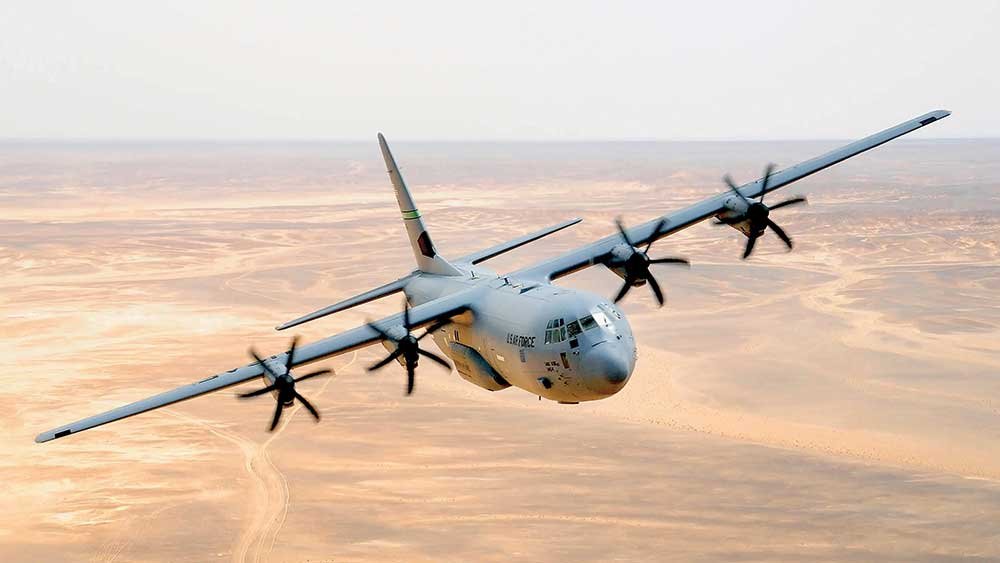
Lockheed C-130 Super Hercules
The Lockheed Martin C-130J Super Hercules is a four-engine turboprop military transport aircraft built for tactical airlift, humanitarian relief and combat missions worldwide. Powered by four Rolls-Royce AE 2100D3 turboprops with six-bladed composite propellers, it flies at 643 km/h cruise speed, and has a range of 6,852 km (with no payload). It has a capacity of up to 124 troops, 92 para-troops, or 19,598 kg of cargo. The minimum three crew include two pilots and one loadmaster. It has a short take-off capability and is designed to land and take off on rough, dirt or unprepared runways. The C-130 Hercules entered service with the US in 1956, and over 2,700 were built. The C-130 Super Hercules began inducting in 1999, and over 500 have been built and are operated by 27 countries. The aircraft costs roughly $75 million per unit.
Winning aircraft must handle high-altitude drop zones, unprepared runways across Ladakh and the Northeast and serve as auxiliary aerial refuellers, too
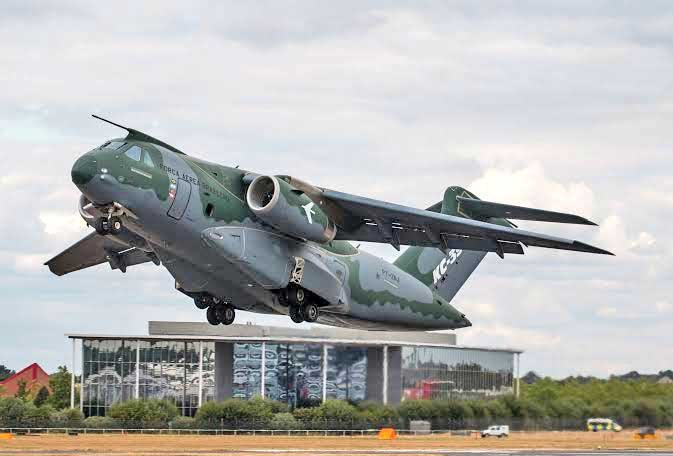
Embraer C-390 Millennium
The C-390 Millennium is a medium-size, twin-engine, jet-powered military transport aircraft. It is the heaviest aircraft that Embraer has ever made, this project began in mid-2000s. The aircraft has been built in partnership with various other aerospace companies, including FAdeA, ENAER and OGMA. Major sub-contractors in the aircraft’s manufacturing include Aero Vodochody, BAE Systems and Rockwell Collins.
The first of two prototypes performed its maiden flight in February 2015. In September 2019, the first production aircraft was delivered to the Brazilian Air Force. Its modular architecture allows for rapid reconfiguration for a wide range of missions like cargo and troop transport, medical evacuation, fire-fighting, search and rescue, humanitarian assistance and the aircraft can also be configured for air-to-air refuelling, both as a tanker and as a receiver. It can carry payloads of up to 26-tonnes, such as two fully-tracked M113 armoured personnel carriers, a Sikorsky H-60 helicopter, up to 80 soldiers or 66 para-troopers with full gear, and loads of upto 19-tonne can be air dropped. Each aircraft costs around $130-150 million.
KC-390 is the aerial refuelling variant. C-390 IVR is the anti-submarine and maritime patrol variant. Of the current operators of this aircraft, Brazil has ordered 22 aircraft (8 in service), Portugal six and Hungary two. It has also been selected by nations such as the Netherlands, Austria, South Korea, Czech Republic, Sweden, Slovakia and most recently by Lithuania and Uzbekistan.
Way Forward
C-390 Millennium and C-130J remain the frontrunners for IAF requirement. The new fleet would also give India more flexibility for humanitarian assistance, disaster relief and special operations.
Lockheed Martin’s C-130J has the advantage of already being in service in IAF. The Indian fleet has an air-to-air refuelling receiver capability and is used for missions ranging from airlift and disaster relief to search and rescue.
The C-130J sits at the lower end of India’s 18 to 30-tonne requirement, with a payload of about 19-tonnes. The C-130J also has a large international operator base, an established production line and an existing Indian industrial relationship. Tata Lockheed Martin Aerostructures in Hyderabad is the global source for C-130J empennage assemblies, while Tata and Lockheed Martin have also been developing an MRO capability in India. That gives C-130 some level of advantage.
Domestic defence giants including Adani Defence, Reliance Defence, HAL, Mahindra and TASL are positioned to lead local manufacturing and supply chain integration
Embraer’s C-390 Millennium comes from a newer generation of military airlifters and is larger than the C-130J. C-390 offers more payload. Yet, the C-390 was also designed for operations from semi-prepared runways. Its higher payload would reduce number of sorties and therefore maintenance costs. On the other hand, sometimes, the larger aircraft cannot be filled and remains underutilised.
Brazil is an important Global South Partner of India. India and Brazil share a Strategic Partnership since 2006, characterised by strong bilateral ties and cooperation in international forums like BRICS, G-20 and the UN. Their relationship is built on shared democratic values, financial costs and a vision for a more equitable global order. India already operates the Embraer Legacy 600.
Airbus had previously offered the A400M for the Indian requirement. But the aircraft is substantially larger than the specified category, with a payload of about 37-tonnes, compared with the 18 to 30-tonnes requirement. So, it became a lesser contender in MTA race, considering its suitability was more aligned with the replacement of IL-76.
After the RFP bids are received, there will first be a technical evaluation. Ground and flight trials will be subjected to those that clear the technical evaluation stage. The flight trials will be carried out across all the regions and weather conditions that the aircraft would have to operate in. In particular short field, high altitude, hot weather trials will be crucial.
Meanwhile it is time for India to build its own MTA and a Regional Jet, a project that can be handed over to the private sector.

–The writer is a IAF veteran (PVSM AVSM VM VSM) and former Director-General, Centre for Air Power Studies (CAPS). The views expressed are of the writer and do not necessarily reflect the views of Raksha Anirveda






