


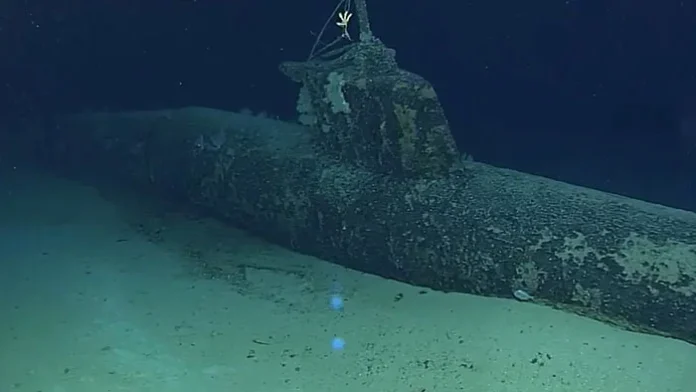
Underwater exploration has fascinated humans for centuries. Ever since the construction of the first submersible or a submarine by Cornelius Drebbel, a Dutch inventor in the 17th century, to the development of nuclear powered submarines and highly capable submersibles today, man’s quest for undersea adventurism has progressed unabated.

The ‘CRUSH’ for submarine journeys is super mysterious and thrilling. But the silent underwater cosmos is unfriendly to human life, the unknown abyss unfathomable and ruthless.
Numerous submariners and underwater explorers have been lost during thrilling sub-oceanic adventures. Most submarine operating navies (including India) have suffered losses. During World War I and II, combined losses reached over 1200 submarines and over 100 thousand men.
Adventure submarine tourism has also suffered losses and the latest being the mini-submersible TITAN of OceanGate while diving in Atlantic Ocean towards the enigmatic wreck of the ship Titanic lying down at 13 thousand feet (4 kms) with 5 brave sea explorers.
The ‘CRUSH’ for submarine journeys is super mysterious and thrilling. But the silent underwater cosmos is unfriendly to human life, the unknown abyss unfathomable and ruthless

The submersible lost communication with its mother ship on Sunday,18th June at 9:45AM, leading to various international teams being dispatched to scour the area with planes, ships and deep-sea unmanned vessels, hoping to find the stricken mini-submarine. The US Navy said, it had detected sounds “consistent with an implosion” shortly after the sub lost contact on Sunday during a descent to the Titanic wreck.
Modern deep diving nuclear attack submarines like the Russian Alfa class (Golden Fish) have a crush depth of 1300m. At crush depth, a submarine experiences implosion when the hull system loses its ability to withstand the enormous water pressure from outside, and the submarine’s walls collapse. Design deficiencies, equipment failures, or human mistakes can lead to such a situation.

During implosion at extreme depths, the fate of individuals inside a submarine would certainly be immediate death. When a submarine’s hull collapses, it moves inward at about 1,500mph (2,414km/h) – that’s 2,200ft (671m) per second. The time required for complete collapse is about one millisecond, or one thousandth of a second.
Since human brain responds instantly to a stimulus at about 25 milliseconds the human rational response – from sensing to acting – is believed to be at best 150 milliseconds. Further, as the air inside a sub has a fairly high concentration of hydrocarbon vapours during hull collapse, the air auto-ignites and an explosion follows the initial rapid implosion. Human bodies incinerate and are turned to ash and dust instantly.
At crush depth, a submarine experiences implosion when the hull system loses its ability to withstand the enormous water pressure from outside, and the submarine’s walls collapse
As the implosion would be extremely immediate and powerful, death will be in less than an instant and most likely painless. The implosion of OceanGate under immense water pressure at 380kg/cm2 would have afforded no time to those inside.
May the lost souls rest in eternal patrol under the waves. Submariners world over know the perils of diving beneath the waves. The tragic fate of the Titan submersible and its crew serves as a stark reminder of the perils associated with deep-sea exploration, even in this age of advanced technology and safety measures.
The famous quote of Sir Winston Chruchill “no one faces greater devotion to duty and a grimmer peril than the submariners” is a stark reminder of this gruesome truth.
Nevertheless, the spirit of humans will reign supreme and CRUSH for submarining would remain a challenging world for those undaunted underwater explorers that shall dive deep to test the oceans.
-The writer is a former Submarine Officer of the Indian Navy. The views expressed are of the author and do not necessarily reflect the views of Raksha Anirveda

The writer is a former Indian Navy Submarine Officer. He is a specialist in missiles, underwater weapons, sensors, anti-submarine warfare, and is a deep sea diver. He writes regularly on strategy, tactics, warfare and modern military technologies. He is an active member of national strategic think tanks, such as the USI, the Chakra Foundation, and STRIVE. The views expressed are personal and do not necessarily reflect the views of Raksha Anirveda





