


In the 6th century BCE, King Ajatashatru of Magadha unleashed a terrifying innovation on the ancient battlefields of India — the scythed chariot. Massive wheels fitted with razor-sharp blades mowed down enemy infantry like wheat crops before a combine harvester. Centuries later, Indian ingenuity gifted the world the stirrup, transforming horse cavalry into a devastating strike force that dominated warfare for a thousand years.
From ancient battlefields to modern skies, India has never lacked military creativity. After decades of Gandhian reticence, that same spirit is once again powering a dramatic transformation: the world’s largest democracy is no longer just buying weapons — it is rapidly becoming a feared and respected defence exporter.

The Numbers are Roaring
India’s defence exports hit a record-breaking ₹23,622 crore in FY 2024-25, and reached a record ₹38,424 crore across more than 80 allied nations in FY 2025-26. The government has set a bold target of ₹50,000 crore by 2029. If achieved, India will join an elite club of global arms suppliers and dramatically boost its strategic clout.
Prime Minister Narendra Modi has made Aatmanirbhar Bharat (Self-Reliant India) the battle cry. “India is moving ahead with the resolve of becoming self-reliant in defence manufacturing and becoming a major exporter,” he declared. The shift is real and accelerating.
The coming decade will determine whether India can join the top league occupied by the United States, Russia, France, China and a few European powers — or whether it will remain a promising but underachieving player. Success will depend on four critical pillars: innovation, technology, R&D, policy reforms and economic competitiveness.
The Global Defence Chessboard
The international arms trade is more than just business — it is a strategic instrument of statecraft. The United States dominates global arms exports through technological superiority, extensive alliances and robust military-industrial ecosystems. Companies such as Lockheed Martin, Boeing, Raytheon and Northrop Grumman operate within a framework where innovation, government support and exports reinforce one another.

Russia, despite economic sanctions and geopolitical challenges, built its export success through affordability, battlefield-proven systems and long-standing defence partnerships. Its aircraft, tanks, and missile systems remain in service across Asia, Africa and the Middle East.
China offers perhaps the most relevant comparison for India. Over the last two decades, Beijing transformed itself from a major importer of military technology into a significant exporter. Chinese companies leveraged state-backed R&D, aggressive financing, rapid industrialisation and strategic diplomacy to market drones, missile systems, naval vessels and air defence systems across the developing world.

India’s challenge is unique. Unlike China’s state-driven model or America’s mature military-industrial complex, India has to balance democratic institutions, fiscal realities, private-sector participation and geopolitical sensitivities. Yet this challenge also presents an opportunity to create a sustainable and globally competitive defence ecosystem.
BRAHMOS: The Supersonic Spear
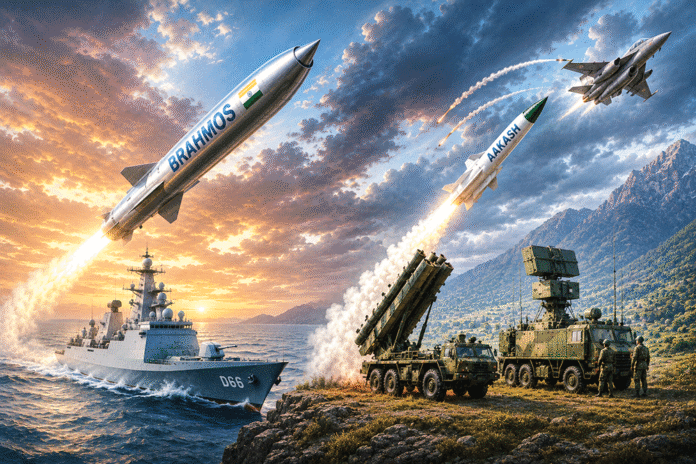
Nothing captures India’s soaring ambitions better than the BRAHMOS supersonic cruise missile.
Jointly developed with Russia, this fire-breathing monster flies at nearly three times the speed of sound, hugging the terrain before delivering precision strikes that few systems can match. The missile’s terrifying real-world reputation was cemented during Operation Sindoor in 2025, when BRAHMOS strikes crippled Pakistani air bases, destroying fighter jets, reconnaissance aircraft, hangars and runways in devastating fashion.
Jointly developed with Russia, BRAHMOS flies at three times the speed of sound, hugging the terrain before delivering precision strikes that few systems can match. Its terrifying real-world reputation was cemented during Operation Sindoor in 2025, when it crippled Pakistani air bases, destroying fighter jets, reconnaissance aircraft, hangars and runways
When your product performs like that on the battlefield, marketing becomes easy. The 2022 export to the Philippines was a watershed moment — India’s first major sale of a strategic missile system. More deals are in the pipeline. Nations in Southeast Asia, the Middle East and Latin America are taking notice.
As former Army Chief General MM Naravane noted, these are not mere sales — they are strategic partnerships that deepen India’s influence and security ties across the Indo-Pacific and beyond.
Aakash: Shield of the Skies
While BRAHMOS is the sword, Aakash is the shield. Designed to protect military formations and strategic assets from aerial threats, Aakash has undergone continuous improvements since its induction. This indigenous surface-to-air missile system has evolved into a highly capable, layered air defence solution. The next-generation Aakash-NG promises even greater range, mobility and lethality.
The global market for air defence systems is expanding rapidly. The conflicts in Ukraine and the Middle East have reinforced the importance of layered air defence networks – demonstrated brilliantly in Operation Sindoor, where hundreds of Pakistani drones launched against civilian and military targets were brought down with a 100 per cent hit rate. Countries are actively seeking reliable and affordable systems to defend against aircraft, drones, and missile attacks.
India’s comparative advantage lies in offering systems that are substantially cheaper than Western alternatives while remaining technologically capable and more advanced than Chinese analogues. This combination is particularly attractive to developing nations seeking modern, effective military capabilities without incurring unsustainable costs.
The export potential of Aakash extends beyond the missile itself. Radar systems, command-and-control networks, launch vehicles and maintenance packages create long-term relationships and recurring
revenue streams.
Artillery: Old School, But Still Lethal
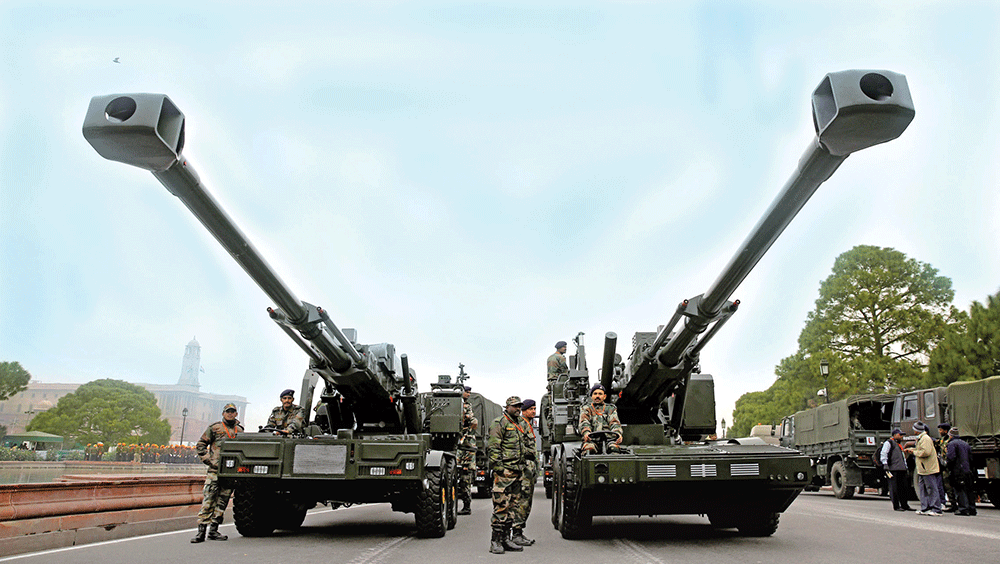
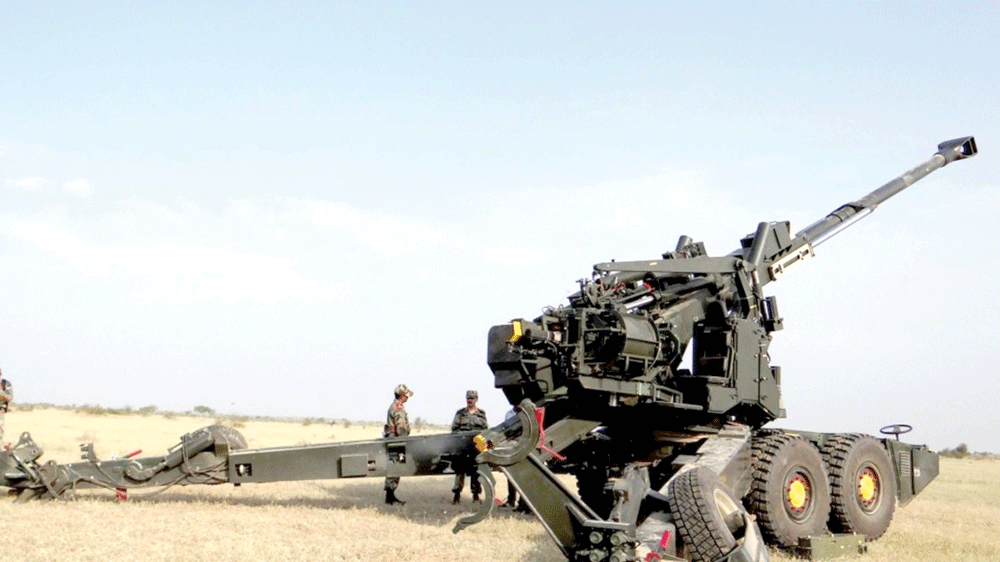
The success of artillery in recent conflicts has once again highlighted the enduring importance of long-range firepower. India’s indigenous artillery programmes have matured significantly over the last decade. Systems such as the Advanced Towed Artillery Gun System (ATAGS), Dhanush and various rocket artillery platforms have demonstrated impressive capabilities.
While BRAHMOS is the sword, Aakash is the shield. Designed to protect military formations and strategic assets from aerial threats, Aakash is a surface-to-air missile system. It has evolved into a highly capable, layered air defence solution. The next-generation Aakash-NG promises even greater range, mobility and lethality
ATAGS, in particular, has attracted international attention due to its range, automation and accuracy. Built through collaboration among DRDO, Bharat Forge and Tata Advanced Systems, it represents the growing synergy between government research institutions and private manufacturers.
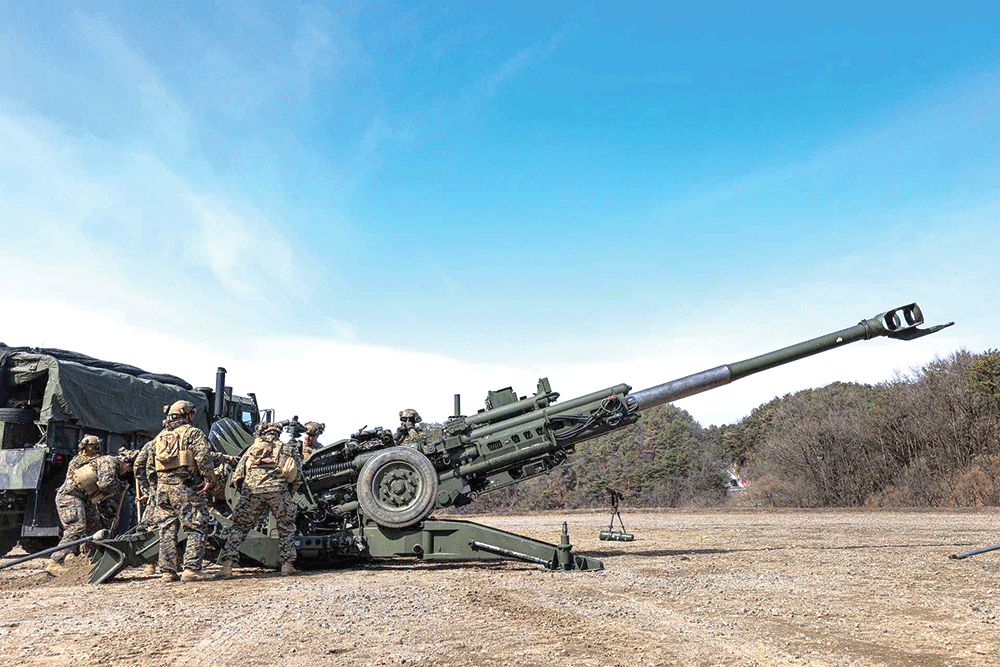
The experience of the United States with the M777 howitzer and Russia with various artillery systems illustrates how battlefield performance often drives export success. If Indian artillery systems continue to prove themselves operationally, they could emerge as major export products for Asia, Africa and Latin America.
Moreover, artillery exports have multiplier effects. They generate demand for ancillaries, creating a defence ecosystem rather than a one-time sale. Each gun sold opens the door to ammunition, training, maintenance and upgrades — creating decades-long revenue streams.
The Hidden Engine: Subsystems and Smart Tech
While missiles and artillery grab headlines, India’s real strength may lie in the invisible backbone — subsystems and components. Modern defence manufacturing operates through complex global supply chains. Aircraft, warships, missiles and electronic systems incorporate thousands of specialised parts produced by multiple suppliers across countries.
Indian companies increasingly manufacture avionics, radars, sensors, electronic warfare systems, aerospace structures, precision-machined components and software solutions for global defence programs. This sector offers several advantages:
- Faces fewer political barriers than complete weapons systems.
- Enables Indian firms to integrate into the global supply chains of leading manufacturers.
- Provides opportunities for small and medium enterprises to participate in defence exports.
Former DRDO Chairman G Satheesh Reddy has emphasised that technology development and industry participation are central to India’s long-term defence ambitions. The growth of defence startups, artificial intelligence applications, autonomous systems and advanced electronics reflects this shift.
Reddy also stressed the criticality of Artificial Intelligence. According to him, the pace of change is such that “there will not be a system tomorrow onwards without AI.” Any product, civilian or military, that does not embed artificial intelligence, he warned, will simply be obsolete. “If anyone comes out with any product in the years to come without AI, that is an outdated product.”
The future of defence exports may therefore depend as much on microchips, sensors and software as on missiles and guns. Drones, autonomous systems, quantum technologies, hypersonics and space-based defence are where the future battles will be won.
India’s comparative advantage lies in offering systems that are substantially cheaper than Western alternatives while remaining technologically capable and more advanced than Chinese analogues. This combination is particularly attractive to developing nations seeking modern, effective military capabilities without incurring unsustainable costs
Innovation, Policy and Execution
No country has become a major defence exporter without investing heavily in innovation. The United States spends hundreds of billions of dollars annually on defence research, creating technologies that often spill over into civilian sectors. GPS, stealth technologies, advanced computing and numerous aerospace innovations emerged from defence R&D. China’s rapid progress similarly stems from sustained investment in research institutions, military modernisation and technology acquisition. India has made significant advances in missile technology, space systems, electronic warfare and unmanned platforms. However, challenges remain.
Defence R&D expenditure as a percentage of GDP remains lower than that of major defence powers. Bureaucratic delays, fragmented project management and technology gaps continue to affect outcomes.
To compete globally, India must prioritise:
- Artificial intelligence and autonomous systems
- Quantum technologies
- Hypersonic weapons
- Cyber warfare capabilities
- Advanced materials and propulsion systems
- Space-based defence technologies
- Unmanned aerial and underwater systems
The establishment of defence innovation initiatives and the growing participation of startups represent encouraging developments. Yet the scale of investment must increase substantially if India seeks leadership rather than participation.
Policy Reforms and Effective Execution
Policy reforms have played a crucial role in India’s defence export growth. The government has simplified export authorisation procedures, liberalised industrial licensing, expanded foreign direct investment limits and introduced positive indigenisation lists that encourage domestic production.
Defence Minister Rajnath Singh has consistently advocated self-reliance and export-led growth. “India is not only strengthening its security but is also emerging as a trusted defence manufacturing partner for the world,” he has stated.
However, policy announcements alone are insufficient. Execution remains the key challenge. Export success requires timely deliveries, quality assurance, after-sales support, financing mechanisms, diplomatic coordination and competitive pricing.
The experience of the United States and France demonstrates the importance of aligning diplomacy, industry and military cooperation. Defence exports often succeed when supported by broader strategic partnerships. India must similarly integrate defence exports into its foreign policy framework, especially in Southeast Asia, Africa, the Middle East and the Indian Ocean region.
Systems such as ATAGS and Dhanush have demonstrated impressive capabilities. The range, automation and accuracy of ATAGS have attracted international attention. Built through collaboration among DRDO, Bharat Forge and Tata Advanced Systems, it represents the growing synergy between government research institutions and private manufacturers
India’s political leadership must not forget that the battlefield is the best testing ground for any weapon. The Rafale was unable to find a single buyer until the French Air Force got the opportunity to showcase the fighter in the 2011 Libyan War. The following year, India placed an order for 126 Rafales. Similarly, the Patriot was an unknown missile defence system until its use in the 1991 Iraq War. Despite its complete lack of success against Iraqi Scuds, the publicity it received on CNN made it a top seller. India should not shy away from testing its latest weapons against Pakistan at every available opportunity. As the old saying goes, what is visible sells.
Economic Growth and Strategic Influence
Defence exports are not merely about military hardware; they are engines of economic growth. A strong defence manufacturing sector generates high-skilled employment, promotes technological innovation, strengthens industrial capabilities and enhances national resilience. Each exported missile system, radar, or artillery gun supports thousands of engineers, technicians, software developers and manufacturing workers. The economic benefits extend beyond direct revenue. Defence production stimulates sectors such as metallurgy, electronics, aerospace, telecommunications, advanced manufacturing and logistics.
Plus, defence exports create strategic leverage. Countries purchasing military equipment often engage in long-term geopolitical relationships involving training, maintenance, upgrades, intelligence cooperation and joint exercises. This is why major powers treat defence exports as instruments of influence. Arms sales strengthen alliances, expand diplomatic reach and reinforce partnerships.
No country has become a major defence exporter without investing heavily in innovation. In India, Defence R&D expenditure as a percentage of GDP remains lower than that of major defence powers. Bureaucratic delays, fragmented project management and technology gaps continue to affect outcomes
For India, growing defence exports can support its aspirations as a leading power in the Indo-Pacific and the developing world.
The Road Ahead
From Ajatashatru’s blade-wheeled chariots to BrahMos screaming across the sky at Mach 3, India’s military innovation journey has come full circle — and is now accelerating.
The demand for cost-effective weapons systems is rising. The opportunity is massive. If India executes with speed and excellence, its emergence as a defence manufacturing powerhouse could become one of the defining success stories of the 21st century — not just economically, but as a symbol of a confident, technologically sovereign nation shaping the future of global security.
The chariot wheels are turning once again.

The writer is a defence journalist specialising in military affairs, security policy and defence technology. He reports extensively on operation strategies, defence manufacturing initiatives and geopolitical developments across the Indo-Pacific region. The views expressed are personal and do not necessarily carry the views of Raksha Anirveda





