


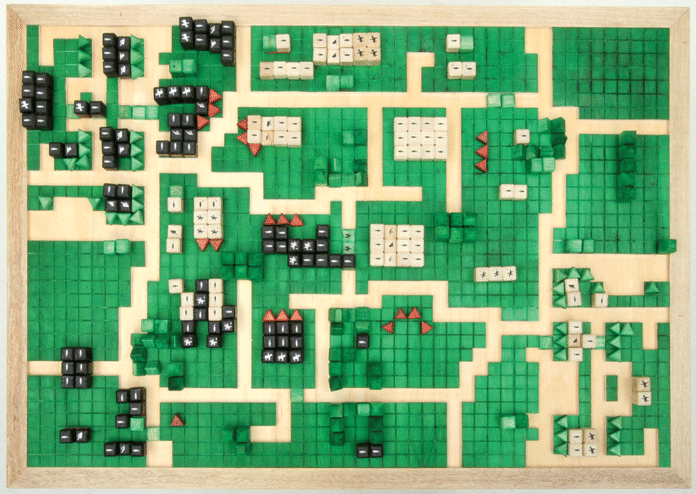
Recent security-related discourses on Indian television have popularised the term ‘wargaming’, with several defence experts, think-tanks, universities, and corporations referring to or claiming to have used it. Wargaming, and wargames, have long been popular in the West despite phases of disinterest, but they remain an esoteric art to most followers of the strategic debate in India, with persisting misconceptions about what they are and what they can do. To many, wargames are little more than snazzy computer simulations, while to others they are predictive super-tools capable of identifying winning strategies.
All such views miss the point.

The history of wargaming is a complete subject in itself. It shall be sufficient here to say that after experimentation with realistic versions of chess in the seventeenth century, the first game to have broken out of the gridded pattern of chess-type games, Kriegsspiel, was introduced into the Prussian Army in the early 19th century. Over the century, the game was eagerly adopted while various versions worked around its rigid rules, appearing in various armies. Wargaming continued to be exploited through the two world wars; after WWII, its nature changed with the rise of Operations Research and Systems Analysis, and the enhanced availability of computers. The post-war decades also saw a proliferation of wargaming as a highly popular hobby in the West, giving Western armies a decided advantage.
Design and Purpose of Games
Popular understanding conflates wargames with computers, which is really only one of the four broad classes of wargames, the other three being seminar games founded on discursive procedures, matrix games which are a more formalised offshoot of seminar games, and physical games played on maps or dioramas with movable counters representing forces. While physical games are popular with hobbyists, armies have made use of seminar and physical games, and also computer games ranging from simple computer-aided data handling, to elaborate networks of computers with high-end processing. In the parlance of computation, the latter are close to constructive simulations, which involve “constructed” realities and no physical or real elements.
The other popular misconception of wargames is that they provide answers and predict futures. However, just as any outcome in the real, complex world is one of the many that might have happened, outcomes of well-designed wargames do not tell what will happen but what might happen with varying probabilities. Treating outcomes of wargames as predictions would thus be erroneous. Rather than giving answers, wargames’ strength lies in generating questions. Results themselves are not important; well-designed wargames help understand why those results emerged, how reality responded to an idea, why participants behaved in a particular way, which assumptions shaped their decisions, where plans encounter friction, and what conditions and assumptions caused plans to succeed or fail, what factors proved decisive, or what alternative actions were available. This is why seasoned militaries seldom claim to have ‘validated’ a plan merely by playing it out successfully once in a wargame; indeed, some of the most useful wargames have been those wherein plans failed, revealing vulnerabilities before they were exposed in reality.
Well-designed wargames help understand why the results emerged, how reality responded to an idea, why participants behaved in a particular way, which assumptions shaped their decisions, where plans encounter friction and what conditions and assumptions caused plans to succeed or fail
The advantages of wargames over other analytical methods, viz. computer models, statistical analysis, and simulations, lie in introducing non-linearity arising from, one, replicating an environment of uncertainty, and two, dynamic and competitive decision-making, neither of which is easy in other analytical modes. A successful wargame leaves participants with a better appreciation of possibilities rather than confidence in one predetermined solution, and a better ability in anticipating, adapting, improvising, deceiving, and innovating.

Domains of Wargaming
With rising popularity, wargaming also expanded into domains other than the military. One such domain is diplomacy. International negotiations are rarely linear, as states simultaneously pursue multiple objectives, adjusting their positions to others’ responses in an environment of incomplete information. Rather than static calculations, diplomatic outcomes emerge from the interactions between a large number of states, non-states, and international bodies, none of which are homogenous bodies but are themselves systems of various competing opinions and stakeholders which complicate decision-making. Well-designed games using organisation theory to model decision-making and frictions within these groups can help explore negotiation strategies, alliance dynamics, escalation risks, and unintended consequences in ways that conventional planning methods often cannot.

The same logic applies to several other domains, viz., Trade and Economic Competition or Public Policy. States compete for access to markets, critical technologies, energy resources, and supply chains, contending with tariffs, sanctions, and other countermeasures. Governments confront interconnected problems of health, infrastructure, energy, migration, climate adaptation, and social stability, with decisions in any one realm having cascading effects in others.
Thus, policymakers must anticipate not only direct consequences but also unintended consequences triggered by complex feedback loops. These and other effects are difficult to analyse and foresee through purely linear methods, but wargaming offers a framework for exploring them by bringing together stakeholders and subject-matter experts, revealing potential aspects otherwise hidden until implementation.
The corporate world has long recognised this value and routinely employs competitive simulations to test strategies, anticipate rival actions, and identify emerging opportunities and threats. Other arenas where wargaming can be employed are internal security and disaster relief.
The US Firefighting Department uses wargames to manage bushfires, where the fire is the enemy. The point is that not only the military but all domains that require decision-making under conditions of uncertainty and the chance of provoking responses can benefit from wargaming.
Caveats and Possibilities
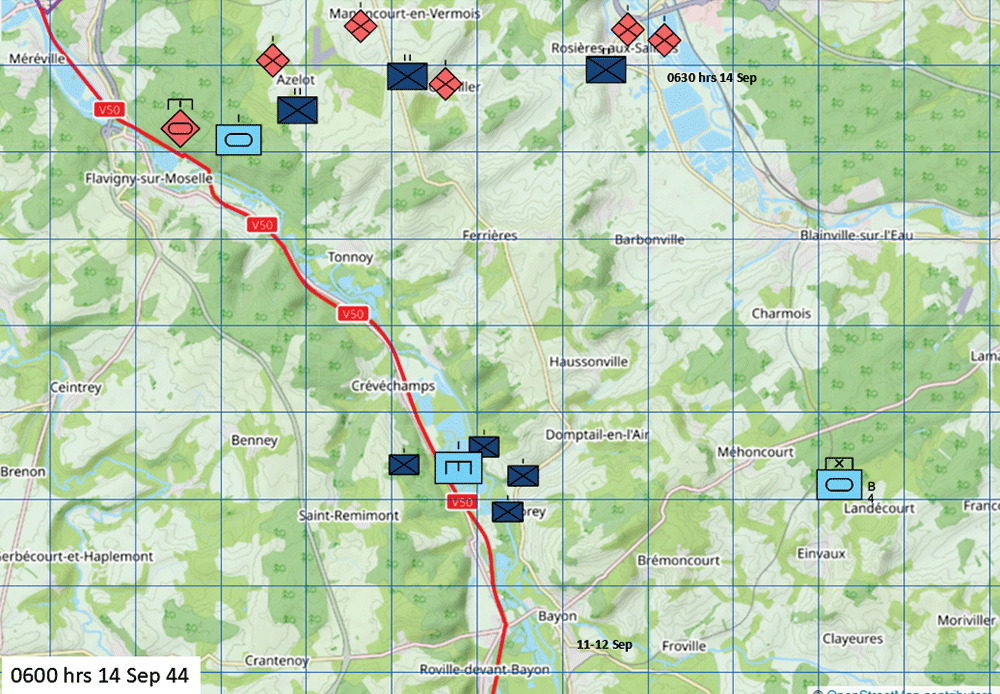
The rising popularity of wargaming must not obscure its limitations. There is no one universal wargame, for each game must be carefully adjusted to its scale and purpose to create an abstracted replica of reality wherein participants can practice competitive decision-making. Abstraction here is not a flaw — just like a map represents reality but is not reality itself, as famously observed by the philosopher Alfred Korzybski when he said that “the map is not the territory”, a wargame too is a representation made manageable by abstracting the endless variables, interactions, uncertainties, and human factors which can simply not be captured in a model. The abstraction, i.e., simplification, compression, selection, and omission of variables, must be done very carefully to match the scale and theme of a game, with designers making assumptions about what matters most, and making careful choices about what to include and what to exclude.
For example, a game for the training of junior leaders or examining a tactical battle must focus on manoeuvre and firepower of subunits on detailed terrain models, while another examining geostrategic competition would emphasise political decision-making and the use of instruments of national power, paying lesser attention to manoeuvre or firepower of military forces except for logistic sustenance or impact on public opinion.
All said, a game remains a model, its insights only as reliable as its assumptions, participants, design, and execution. Just like paper maps which can be accurate or distorted, wargames too can be credible or distorted replicas of reality, the latter occurring if critical variables are omitted or if distorted adjudication methods are used.
Good wargames must, without pretending to reveal the future or creating false confidence in misleading conclusions, help prepare for a future that cannot be known and holds surprises. They must model human cognition and friction in a way that cancels out unrealistic participant behaviour (called gamer mode in wargaming parlance), while assumptions must not artificially ensure the success of a plan or reinforce biases.
It is thus that wargames require humility — experienced practitioners never view a single game as decisive evidence but understand the iterative analytical process. They see wargames as educational rather than predictive — cultivating habits of critical thinking and planning by exposing participants to uncertainty, incomplete information, competing objectives, and adaptive opponents.
Such experiential and experimental learning, which may include failing safely, is increasingly valuable in an era characterised by rapid technological change, geopolitical competition, and increasing uncertainty.

The writer is an Indian Army veteran with three decades of experience in the Indian infantry. He is also a military historian and an avid wargamer. The views expressed are of the writer and do not necessarily reflect the views of Raksha Anirveda





