


India’s defence sector is entering a decisive phase. With its growing geopolitical role, expanding industrial base and clear focus on self-reliance, India has a unique opportunity to become not only a major defence market, but also a trusted global defence exporter. The coming decade will be crucial in determining how effectively the country can convert its industrial momentum, innovation potential and skilled workforce into globally competitive defence capability.
For Schiebel India, this vision is closely aligned with our own long-term strategy. Schiebel India is already established in the country, and we are now expanding its capabilities to support customers, strengthen local industry participation and contribute to India’s wider Make in India, Aatmanirbhar Bharat and Vision 2047 ambitions.

Schiebel has more than two decades of experience in rotary-wing Vertical Takeoff and Landing Unmanned
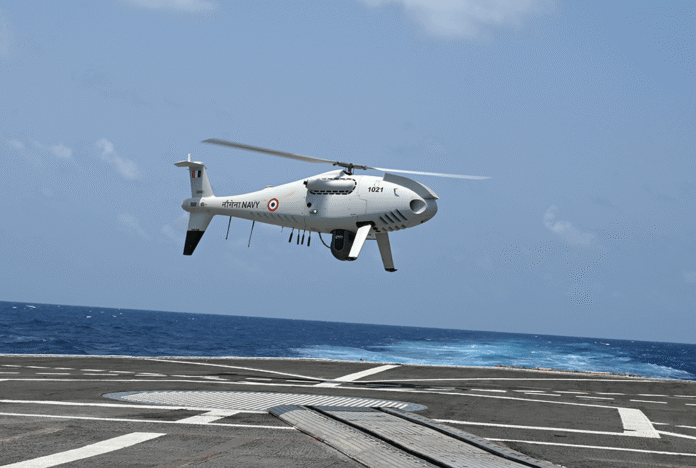
Air Systems (VTOL UAS). The CAMCOPTER® S-100 is a globally proven platform with extensive operational experience across maritime and land-based missions. In India, the Indian Navy is our customer, which reflects the relevance of this capability for demanding maritime security, surveillance and operational requirements.
This operational foundation gives Schiebel India a strong basis for the next phase of local capability development working closely with domestic industry to further mature and adapt the technology. Our focus is on expanding an ecosystem in India that not only supports assembly, integration, maintenance, software development, selected manufacturing etc. but also builds advanced capabilities in world class software, additive manufacturing, electronic assembly, precision manufacturing and a strong MILCOTS vendor network. This approach is fully aligned with Schiebel’s global distributed manufacturing concept and is designed to meet customer requirements in the domestic area as well as future export opportunities.
A key priority is the creation of a stronger assembly and integration ecosystem. This goes beyond local representation. It is about building the ability to assemble, integrate, test and support systems in India with increasing participation from Indian industry. Such a model supports faster response times, deeper technical knowledge and long-term value creation within the country.
The CAMCOPTER® S-100 is a globally proven platform with extensive operational experience across maritime and land-based missions. In India, the Indian Navy is our customer, which reflects the relevance of this capability for demanding maritime security, surveillance and operational requirements
In parallel, we have created a Maintenance, Repair and Overhaul (MRO) set up in Hyderabad which provides necessary support to our Indian customers like Navy. We are presently expanding the MRO ecosystem by technologically evolving with the domestic industry in order to make this MRO into a maintenance hub for our global customers in this part of the globe. For advanced unmanned systems, operational availability is critical. Local MRO capability reduces turnaround times, strengthens customer support and builds confidence among operators. It also creates skilled technical employment and supports the development of specialised aerospace and unmanned systems expertise in India.

Another important step is the commencement of domestic manufacturing activities in areas such as composites, electronic assembly, precision manufacturing and cable set & harness manufacturing etc. These are important building blocks for a broader aerospace manufacturing base. As these capabilities mature, they can support Indian requirements while also becoming part of Schiebel’s wider international supply chain.

We are also engaging extensively with domestic manufacturers to identify opportunities for deeper cooperation. India has a strong and growing network of public and private sector companies, Micro, Small and Medium Enterprises (MSMEs), start-ups and specialised engineering firms. By working with these partners, Schiebel India aims to contribute to the development of a manufacturing hub that can serve both domestic and international markets.
The ultimate aim is to support exports from India to global markets. Defence exports are not limited to complete platforms. They also include components, sub-systems, software, integration expertise, lifecycle support and certified manufacturing capacity. India has the potential to contribute across this full spectrum, provided industry continues to focus on quality, reliability, repeatability and long-term support.
A key priority is the creation of a stronger assembly and integration ecosystem. This goes beyond local representation. It is about building the ability to assemble, integrate, test and support systems in India with increasing participation from Indian industry
Innovation is equally important. India’s defence innovation ecosystem has developed rapidly in recent years, supported by government initiatives, start-up participation and growing interaction between industry and the armed forces. The challenge now is to transform innovation into field-ready, scalable and reliable capability.
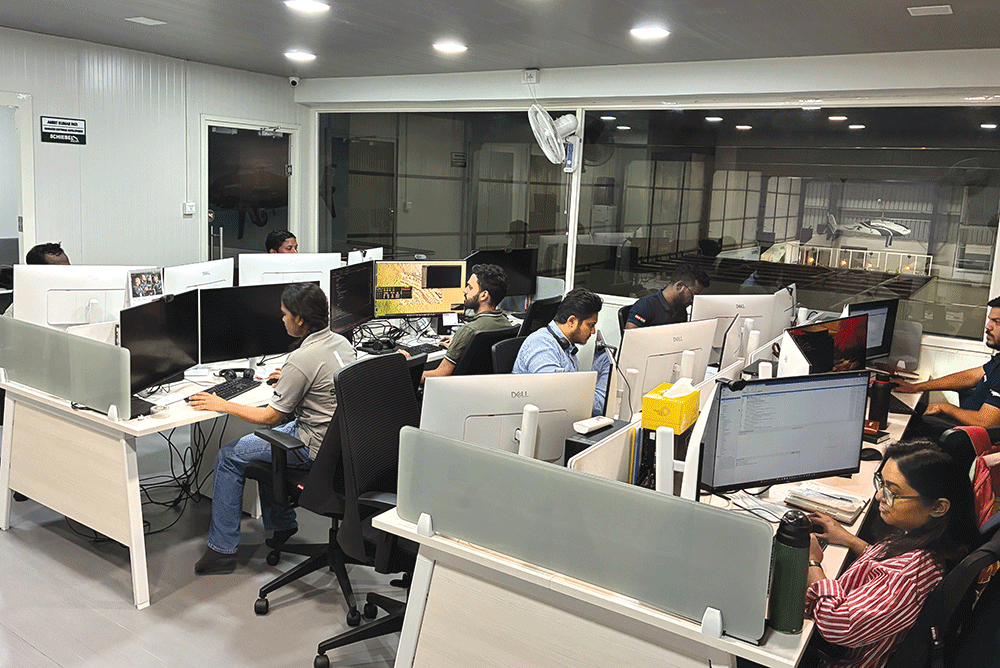
For Schiebel India, one major area of focus is the planned expansion of software capability. We have created a software division to develop future-ready mission planning and control software for both domestic and international markets. Software is becoming one of the defining elements of modern unmanned systems. It influences mission planning, control, data management, interoperability and operator effectiveness. The young programmers at Schiebel India are able to gain a deeper understanding of the underlying know why during the software development process rather than simply learning the how know of how to execute a task. This is a significant step forward in the type and quality of software being developed in the domestic industry.
This is particularly relevant as unmanned systems become more integrated into wider command-and-control environments. Future operations will require platforms that are capable, connected, adaptable and able to support faster decision-making. India’s strong software and systems engineering talent can become a major advantage in this area.
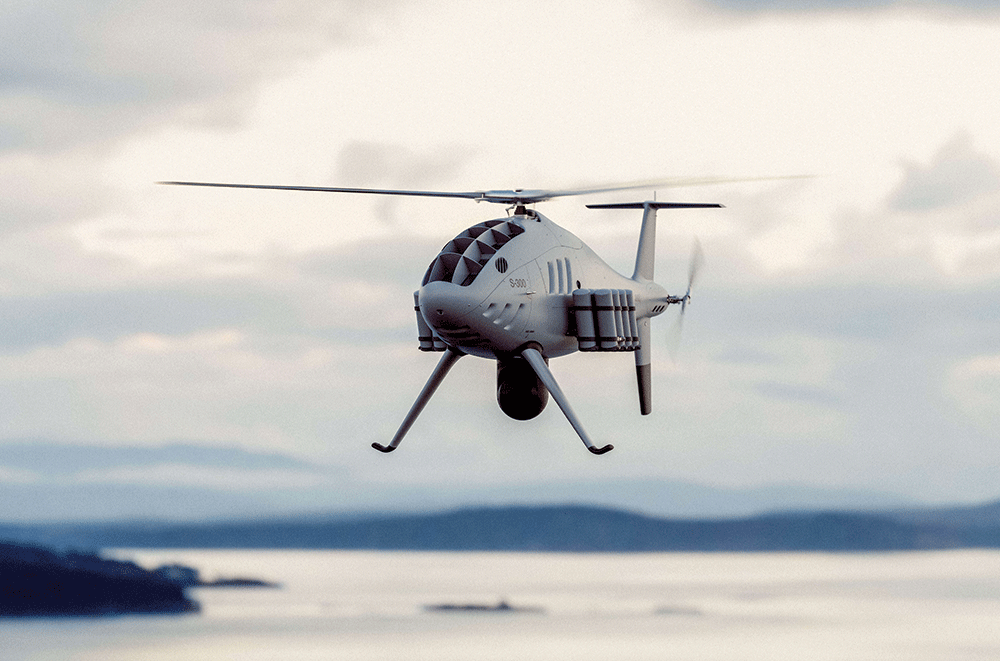
Mission adaptability is another important focus. Schiebel’s CAMCOPTER® family is built around flexible payload integration and operational versatility. The S-100 has already proven the value of a compact and mature VTOL UAS for a wide range of missions. The CAMCOPTER® S-300 expands this concept with greater payload capacity, longer endurance and broader mission flexibility for demanding maritime and land-based operations.
Within Schiebel Defence, the CAMCOPTER® S-101 and CAMCOPTER® S-301 represent dedicated defence platforms for customers requiring integrated ISTAR and mission-specific effectors. In India, we are working with domestic original equipment manufacturers in the field of weapon integration for these systems. This supports local expertise and creates opportunities for Indian companies to contribute to future defence capability development.
We are also improving existing capability through new-generation ground support and handling equipment. This is a critical part of operational effectiveness. A UAS is not only the air vehicle. It is a complete system, including sensors, ground control, communications, maintenance, support equipment and trained personnel. Improvements in ground support and handling can simplify deployment, reduce manpower requirements and increase flexibility in the field.
For India to reach the top league of defence exporters, the country must continue to build confidence in the quality, reliability and sustainability of its defence products. Global customers will look not only at performance, but also at lifecycle support, certification, compliance and supply chain resilience.
Schiebel India’s strategy is therefore based on long-term capability building. We are expanding in India, with India and for India, while also creating a pathway towards international markets. The country has the talent, industrial ambition and innovation potential required to become a major defence technology and export hub. Schiebel India is committed to being part of that journey.

The writer is a Chief Executive Officer, Schiebel Systems India Pvt Ltd. The views expressed are of the writer and do not necessarily reflect that of Raksha Anirveda





