


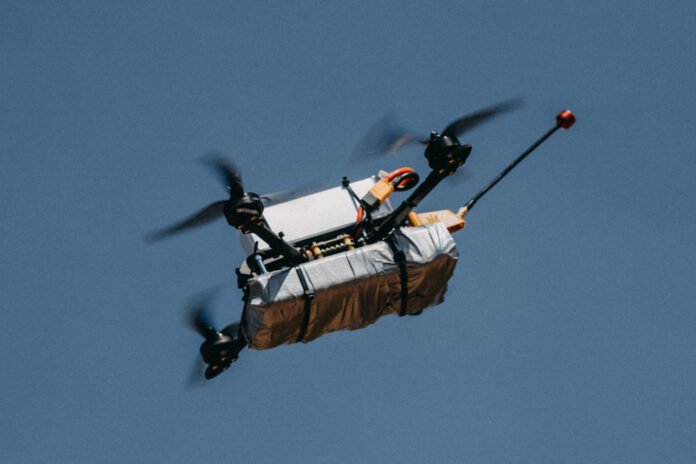
Within the space of a single week, Ukraine lost two of the men who had come to symbolise its evolving military doctrine. On July 15, President Volodymyr Zelenskyy dismissed Defence Minister Mykhailo Fedorov, the 35-year-old technologist who had led Ukraine’s drone revolution over the previous six months. Protests followed in more than a dozen cities. On July 21, amid continuing public demonstrations, Commander-in-Chief Oleksandr Syrskyi was also replaced by Mykhailo Drapatyi.
The episode has largely been portrayed as a morality play: the young innovator versus the Soviet-trained general; the future versus the past; drones versus tanks. It is an attractive narrative. It is also fundamentally misleading.

More importantly, the reason it is misleading carries an important warning for every military currently reassessing its force structure—India very much included.
The Wrong Debate
The weakest element of this popular narrative is its central assumption.
General Syrskyi, frequently portrayed as a traditional advocate of armour and artillery, was in fact the officer who created the world’s first Unmanned Systems Forces as an independent branch of a national army.
He also personally championed the appointment of its commander despite considerable institutional resistance. Whatever disagreements existed between Syrskyi and Fedorov, they were not about whether drones mattered.

The real disagreement lay elsewhere. Syrskyi argued that drones alone cannot prepare or dominate a battlefield. An effective military, he maintained, must continue investing across the full spectrum of capabilities, including artillery, mortars, air defence and electronic warfare, rather than concentrating resources exclusively on whichever technology currently dominates strategic debate.
He also made a point that deserves careful attention in New Delhi. A million-strong army cannot fundamentally transform the way it fights within a matter of weeks. At that scale, poorly managed experimentation is paid for in territory—and in lives.

Technology Versus Time
Fedorov’s argument was no less coherent. Ukraine’s comparative advantage, he believed, lay in technology rather than manpower. Machines should absorb the initial exchange so that soldiers do not.
Infantry should move only after autonomous systems have shaped the battlefield.
He also identified an institutional weakness that will be all too familiar to anyone who has observed a defence bureaucracy in operation: a programme to supply frontline brigades with drones required four months merely to obtain administrative approval.
The real contest is no longer drone versus tank, but drone versus electronic warfare
Both perspectives were valid. That is precisely what made the disagreement so difficult.
The dispute was never fundamentally doctrinal. It was about priorities, sequencing, budgets and institutional control. Tensions escalated when funds were reportedly shifted from one budget head to another—including, controversially, from military salaries to drone procurement.
When genuine debates over force structure become personalised contests over budgets and bureaucratic authority, institutions risk losing both their internal cohesion and the talented individuals needed to drive reform.
India’s Quiet Transition
India is engaged in a remarkably similar debate, albeit far more quietly.
A substantial indigenous drone ecosystem has emerged, driven largely by innovative start-ups producing everything from loitering munitions to unmanned logistics platforms. The Indian Army has advanced the concept of “a drone for every soldier” while simultaneously raising dedicated drone units.
At the same time, defence acquisitions continue across tanks, artillery, fighter aircraft, air defence systems and anti-tank guided missiles, with recent approvals funding kamikaze drones and counter-drone systems alongside conventional platforms.
This is not evidence of institutional indecision. Rather, it represents a pragmatic recognition that future warfare will require both conventional and emerging capabilities. If anything, India’s procurement decisions appear to have moved slightly ahead of the doctrinal framework that will eventually bind these capabilities together.
The Real Contest
The familiar debate between drones and tanks obscures the competition that is actually shaping modern battlefields. The more consequential contest is between drones and electronic warfare.
Ukraine has repeatedly demonstrated that unmanned systems remain highly vulnerable to jamming, satellite-navigation spoofing, radio interception and electromagnetic disruption. The growing importance of fibre-optic-guided drones, which are largely immune to electronic jamming, reflects this reality.
Just as a powerful air force can be neutralised by an effective integrated air defence network, a sophisticated drone fleet can be rendered ineffective by superior electronic warfare capabilities.
Any military that invests heavily in drones while neglecting the electromagnetic spectrum risks acquiring an expensive capability that its adversary may ultimately control.
Software Before Steel
The second omission in much of the current debate is even more fundamental. Most discussions of digital warfare continue to focus on platforms. The real transformation, however, lies in cognition. Autonomous navigation, machine target recognition, sensor fusion, predictive logistics and human-machine teaming are redefining the character of warfare.
Future military advantage will depend increasingly on software, artificial intelligence and decision-making speed rather than on platforms alone
Drones are merely the most visible manifestation of that transformation. The decisive variable is how quickly a military converts observation into action, and that is increasingly determined by software rather than hardware.
India’s comparative advantage in this domain—if pursued systematically—may ultimately prove more enduring than any single weapons platform.
India’s Two-Theatre Challenge
India also confronts a strategic reality that few other militaries face.
The optimal balance between digital and conventional capabilities is theatre-specific rather than universal. A western contingency, as Operation Sindoor demonstrated, favours stand-off precision strikes, drones, electronic warfare, air power and layered air defence, while limiting or altogether avoiding large-scale ground operations.
A northern contingency along the Himalayan frontier presents a fundamentally different operational environment.
Sustained high-altitude logistics, mountain infantry, artillery, armour wherever terrain permits, persistent surveillance and integrated air defence all remain indispensable.
A force optimised for one theatre cannot automatically succeed in the other. India must therefore maintain a far broader portfolio of capabilities than many other militaries. Its debate over digital and conventional warfare cannot be resolved through a single doctrinal formula.
Operation Sindoor’s Real Lesson
Operation Sindoor deserves careful study—not merely for what it demonstrated, but also for what it did not. The operation showed that precision stand-off strikes, integrated air defence, surveillance and information operations can successfully achieve limited military objectives without requiring large-scale ground combat.
Operation Sindoor demonstrated the effectiveness of precision warfare—but not the obsolescence of conventional forces
It did not, however, demonstrate that conventional forces have become obsolete. If anything, the credibility of India’s conventional military capabilities underwrote the success of the limited operation.
The ability to escalate gives strategic restraint its credibility. Without that latent conventional strength, restraint risks appearing less a matter of choice than of necessity.
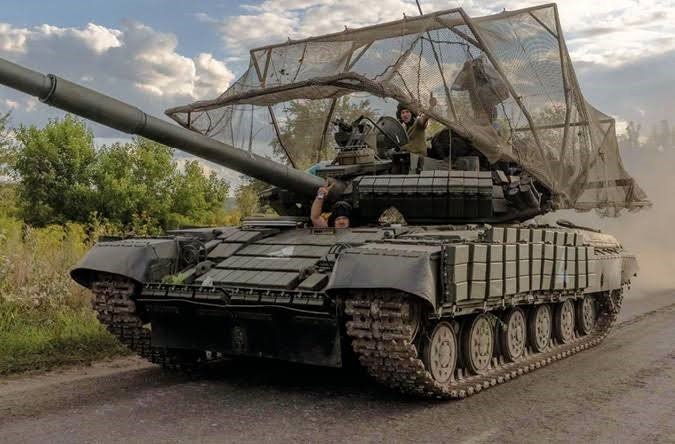
Intelligent Conventional Warfare
This brings us back to one of the oldest truths of military history—one that no technological revolution has yet overturned. War remains a contested human enterprise.
No military can unilaterally determine its character. A nation may prepare exclusively for long-range, non-contact warfare. Its adversary, however, may choose to close the distance, seize territory and impose an entirely different form of conflict.
Drones can destroy targets with remarkable efficiency. They cannot occupy ground. Only military formations capable of seizing, holding and controlling territory can ultimately convert battlefield success into political outcomes—the only currency in which wars are finally settled.
For India, therefore, the appropriate framework is not “digital versus conventional”, but intelligent conventional warfare. Within that framework:
- drones extend the reach of conventional forces;
- artificial intelligence compresses decision cycles;
- satellites provide persistent situational awareness;
- electronic warfare protects friendly networks while disrupting those of the adversary;
- precision missiles deliver stand-off effects; and
- conventional formations retain the ability to seize and hold territory.
The future belongs to intelligent warfare, where technology strengthens rather than replaces conventional military power
The integration itself constitutes the doctrine. The individual platforms are merely its instruments.
Kyiv’s Enduring Lesson
Ultimately, Kyiv’s most important lesson is institutional rather than technological. Ukraine lost two capable leaders within a single week—not because either misunderstood the future of warfare, but because its institutional processes proved unable to reconcile two valid, yet incomplete, strategic perspectives without allowing the debate to become factional.
India’s armed forces are currently absorbing both drones and armour, both software and steel. The challenge is not to choose between them.
It is to institutionalise their integration through joint doctrine, force design, procurement priorities and realistic budgeting, before future crises force those choices under the pressure of war.

The writer is an expert on geopolitics, national security, and counter-terrorism; and he regularly contributes his subject thought-leadership and academic commentary with several publications in newspapers, journals, and periodicals. He works with investigative agencies, regulatory bodies, financial institutions and enterprises, providing strategic and regulatory advisory. The views expressed are personal and do not necessarily carry the views of Raksha Anirveda





