


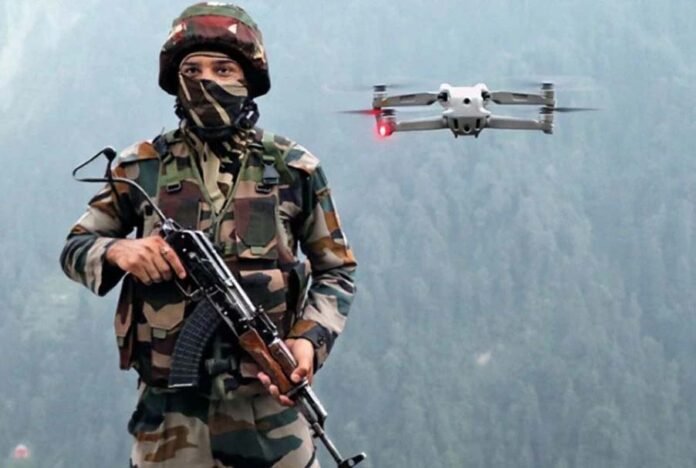
Hyderabad. Defence technology manufacturer Zen Technologies Limited introduced its innovative High-Altitude Man-Portable Anti-Drone System (MPADS), marking a crucial milestone in India’s indigenous defence electronics capabilities. The launch was strategically timed to coincide with Kargil Vijay Diwas, honouring the sacrifices of the Indian Armed Forces during the 1999 conflict while offering a direct technological answer to modern aerial warfare.
In recent years, the rapid proliferation of low-cost reconnaissance and loitering munitions along contested mountain borders has altered military operations. Traditional counter-unmanned aerial systems (C-UAS) rely heavily on heavy, vehicle-mounted radar and jamming rigs. While effective in open plains, these bulky systems struggle to operate in steep, narrow mountain passes and remote forward posts where vehicular access is non-existent.

MPADS fills this critical operational vulnerability by providing infantry units with a compact, highly mobile protection shield against airborne intrusions.
Advanced Technical Capabilities and Specs
Engineered specifically to survive extreme temperatures and harsh environmental conditions, MPADS integrates wideband Radio Frequency (RF) scanning, intelligent data analysis and non-kinetic jamming into a single portable package.
The system offers complete 24/7, all-weather defence coverage. It operates across a continuous RF scanning spectrum from 400 MHz to 6 GHz, capable of detecting rogue unmanned aerial vehicles (UAVs) at distances of up to 5 kilometres. Upon threat confirmation, the unit deploys an omni-directional jammer effective up to a 3-kilometre radius. This countermeasure simultaneously severs the drone’s command-and-control radio links and disrupts Global Navigation Satellite System (GNSS) signals, forcing target platforms to ground or drift off-course.
The MPADS offers robust, 24×7 all-weather operational readiness, engineered to deliver continuous protection in harsh environments. At its core, the system features a wideband Radio Frequency scanning spectrum ranging from 400 MHz to 6 GHz, allowing it to provide early detection of hostile unmanned aerial vehicles at ranges of up to 5 kilometres. For defence countermeasures, it deploys an omni-directional jammer effective at distances up to 3 kilometres.

Additionally, its target handling capabilities enable the system to detect, track and mitigate both individual multi-target threats and complex, coordinated swarm attacks simultaneously.
Furthermore, the system features multi-target tracking algorithms capable of processing simultaneous swarm attacks. This capability ensures tactical forces remain protected against coordinated, multi-directional drone saturation attempts.

Core Architecture: RFDD and Command Centre
At the heart of the MPADS unit is Zen Technologies’ proprietary Radio Frequency-Based Drone Detector (RFDD). Utilising Correlative Interferometry and Digital Beamforming techniques, the RFDD rapidly pinpoints the exact bearing of approaching hostile drones even amidst high noise levels.
The detector feeds real-time telemetry directly into an onboard Data Fusion & Command Centre (DFCC). The DFCC consolidates multi-sensor inputs into a single, user-friendly tactical map interface. Ground commanders can monitor active threat zones, analyse spectrum activity, classify drone models and execute rapid engagement protocols without requiring specialised electronic warfare expertise.
Mobility for Extreme Terrain
Designed with extreme tactical flexibility in mind, the entire MPADS ecosystem can be disassembled into ergonomic backpacks for infantry transport. Beyond soldier carry, the system is adaptable for transport on pack animals, all-terrain vehicles (ATVs) and autonomous unmanned ground vehicles (UGVs).
By reducing weight and power draw, Zen Technologies has ensured that small combat teams operating at high elevations can establish air defence umbrellas in minutes.
Bolstering Indigenous Defence Manufacturing
Based in Hyderabad, Zen Technologies possesses over three decades of experience supplying combat training simulators and anti-drone technologies to defence forces globally. Operating an R&D unit recognised by the Ministry of Science and Technology, the firm holds over 200 patent applications. The introduction of MPADS highlights India’s ongoing Aatmanirbhar Bharat initiatives, reducing dependency on foreign military equipment and boosting local production in frontline electronic warfare tools.






