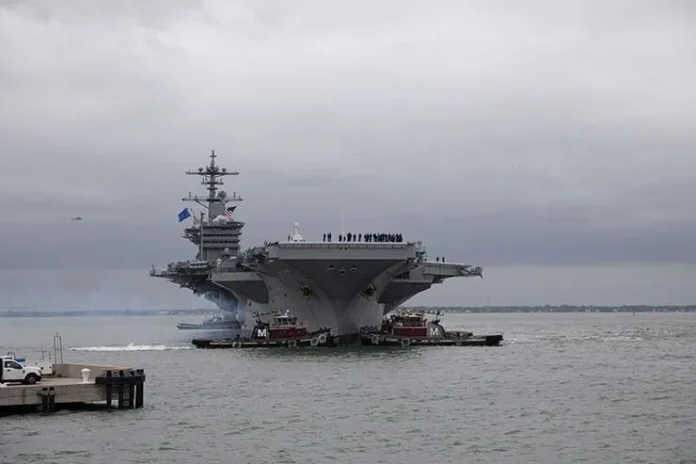
Washington: US Navy aircraft carrier George Washington completed its flight deck certification in June, weeks after concluding an overdue maintenance availability in May.

The certification, which requires the carrier air wing to demonstrate it can safely launch and recover aircraft during day and night operations, is a major milestone carriers must meet to operate at sea and is required to embark any aircraft.
“As always, I am incredibly proud of our USS George Washington warfighters, and the incredible support from the Carrier Air Wing One team,” said Capt. Brent Gaut, commanding officer of the George Washington, in a Navy news release.
“When you look back at what we have accomplished over the past week, meeting momentous milestone after milestone — from fuel certification, flight deck certification, to our first underway replenishment in six years — our team continues to demonstrate our extraordinary grit and determination in meeting and exceeding the mark as we take our place as our great nation’s premier CVN asset,” Gaut said.
In total, the air wing completed 247 day and night catapult launches and arrested landings, simulated emergencies, night taxi drills, and hangar bay aircraft spotting drills during the certification process.

“Flight deck certification was our first opportunity for the air wing and the ship team to work together in support of the ship’s fundamental mission, launching and recovering aircraft at sea,” Capt. Brad Converse, commander of Carrier Air Wing One, said in the release. “It was an honour to have [Carrier Air Wing One] land the first jets on USS George Washington in six years.”
The ship started its mid-life refuelling and complex overhaul known as an RCOH in 2017 — several years behind schedule — and started sea trials in May after departing HII’s shipyard in Newport News. The ship originally was slated to wrap up the RCOH in 2021 under a four-year timeline.

The longer-than-expected RCOH was due to an unplanned growth in work, labour inefficiencies and the COVID-19 pandemic, which led to the need to quarantine teams and supply chain delays, Navy officials said.
The RCOHs are completed at the 25-year mark in a carrier’s service life and are designed to refuel the nuclear power reactor and address other major maintenance issues and upgrades.
The carrier is slated to head to Yokosuka, Japan, next year after being based there for seven years prior to starting the RCOH.