


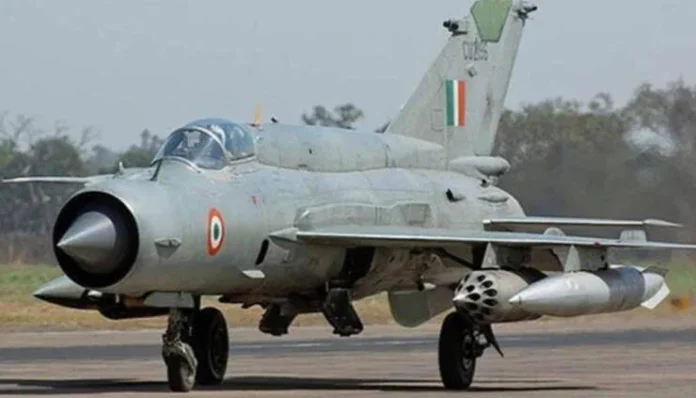
New Delhi: The Indian Air Force (IAF) is finally bidding farewell to the MiG-21, a jet both iconic and infamous as the “flying coffin.” Its retirement marks the end of more than six decades of service and closes a significant, sometimes tragic, chapter in Indian military aviation. The aircraft’s persistent presence, despite a questionable safety record, symbolised both the strengths and the long-standing modernisation challenges of India’s defence establishment.
Inducted in 1963, the MiG-21 was the IAF’s first supersonic fighter jet, revolutionising India’s air defence capabilities. It played a decisive role in every major conflict, from the 1965 and 1971 Indo-Pak wars to the 1999 Kargil conflict and even the 2019 Balakot airstrikes. More than 850 jets were acquired, making it India’s largest fighter fleet, with nearly 600 assembled locally by Hindustan Aeronautics Ltd (HAL).

Yet, this formidable legacy was increasingly overshadowed by its accident-prone nature. The MiG-21’s age and lack of viable replacements forced it to remain operational well past its intended lifespan, resulting in frequent crashes and fatalities that became a grim fixture in Indian headlines. Its symbolic presence in popular culture, including the 2006 film “Rang De Basanti,” only reinforced the urgency of transition.
The Tejas MK-1A, India’s indigenous replacement for the MiG-21, was supposed to herald a new era. In early 2021, a ₹48,000 crore contract was signed for 83 jets, with a promised delivery by March 2024. However, not a single jet had been delivered by the deadline, owing largely to supply chain issues—most critically, late engine deliveries from GE Aerospace. The first F404-IN20 engine arrived only in March 2025, almost two years behind schedule, leaving six completed aircraft grounded, waiting for powerplants.
HAL has revamped its Bangalore facility and opened an additional assembly line, with claims of being able to deliver up to 16 jets annually if the supply chain stabilises. The goal is to complete all 83 contracted jets by 2028 and fulfil an additional ₹67,000 crore order for 97 more MK-1As by 2031. However, the entire schedule is under constant threat due to unresolved logistical weaknesses and an inconsistent record of meeting deadlines.
Recognising the magnitude of the delay—and its implications for Indian aerospace readiness—the Ministry of Defence has taken steps to involve private companies. The recently established Defence Empowerment Committee proposed integrating private suppliers into the Tejas production ecosystem, resulting in milestone contributions.







