


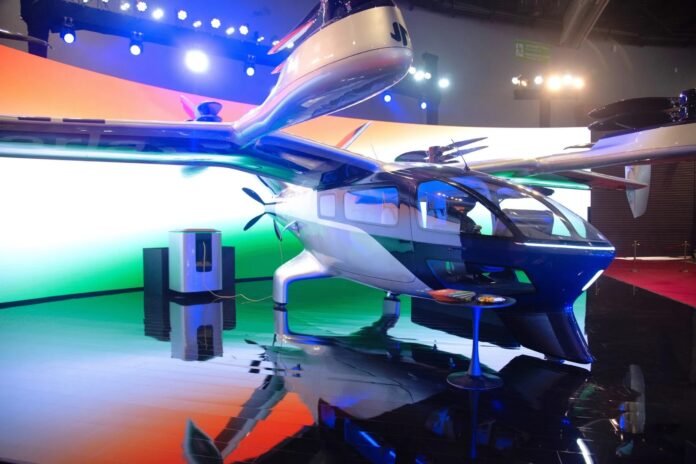
Bengaluru. Tata Elxsi and advanced air-mobility company Sarla Aviation have signed a memorandum of understanding to accelerate development of Shunya, an electric vertical take-off and landing aircraft designed to carry six passengers and one pilot.
The companies described Shunya as India’s first indigenous aircraft of its kind. Sarla Aviation will lead the aircraft’s design, development and type certification, while Tata Elxsi will contribute engineering expertise across flight-critical systems.

Under the agreement, Tata Elxsi will support avionics development, flight-control systems, software integration, verification and validation, testing and certification. The partnership may also extend to sensor-fusion-based navigation software, industrial and structural design, and airworthiness testing.
Sarla Aviation is targeting Shunya’s first flight within the next 18 to 24 months. Certification activities are expected to follow, though commercial operations will depend on regulatory approvals and the establishment of suitable landing infrastructure.
Shunya is being designed to fly more than 300 kilometres and combine vertical take-off and landing with fixed-wing cruise capability. That configuration would allow the aircraft to operate without a conventional runway while using its wings to improve efficiency during forward flight.
The aircraft is aimed at urban and regional transport applications, including airport transfers, city-to-city travel and other advanced air-mobility services. The companies said the technology could eventually support logistics, air ambulance operations and defence-related missions.

Jayaraj Rajapandian, Tata Elxsi’s head of aerospace, in a statement said aircraft are becoming increasingly fly-by-wire, electrified and connected. Those trends are creating new opportunities to rethink how people, goods and essential services move, he said.
The partnership follows progress on Sarla Aviation’s smaller technology demonstrator, Sylla 1.0. The half-scale demonstrator completed integrated flight testing in 2026, testing its electric propulsion system, battery architecture, distributed propulsion, flight-control algorithms, airframe and landing gear. The company has said the demonstrator is intended to help validate technologies for the larger Shunya platform.

Sarla’s planned aircraft is expected to use multiple propulsion units and advanced battery systems. Earlier descriptions of the programme also envisaged alternative passenger and cargo configurations, including a version capable of carrying four passengers with additional comfort or transporting freight. However, the latest partnership announcement focuses on the six-passenger, one-pilot configuration and a range exceeding 300 kilometres.
The development places Sarla among a growing group of companies pursuing electric air taxis worldwide. Yet, the path from prototype to passenger service involves challenges beyond aircraft engineering. Battery performance, thermal management, noise, weather resilience, flight-control reliability and maintenance standards will all affect operational viability. Regulatory certification, air-traffic integration, pilot training and landing-site approvals will be equally important.
For Tata Elxsi, the collaboration offers an opportunity to apply software and systems-engineering capabilities to a new aviation platform. For Sarla Aviation, it adds an established aerospace technology partner as Shunya moves toward flight testing.
If the timetable holds, the first flight could provide a significant test of India’s ability to develop, certify and eventually deploy homegrown electric aircraft for everyday transport.






