


As the closure of strait of Hormuz and the naval blockade led to disruptions in energy supply chains and the subsequent rise in oil prices in April 2026, an unassuming element on the periodic table, Helium (He) received attention among the scholars and analysts of international relations.
The concern seemed to wane away as US and Iran came close to sign a deal. However, with the resumption of Israeli strikes in Lebanon, the deal seems a distant possibility and the issue of Helium supply disruption may emerge again.

Helium is the lightest element after Hydrogen and is a noble/inert gas with properties that make it useful in various sectors. It has no colour, odour or taste of its own and cannot be solidified at normal atmospheric pressure.
Notably, it has the lowest boiling and freezing points making it a perfect cooling agent. It is predominantly used for its cooling properties in medicine, electronics and space sector.
Helium is significant for its key usage in health and medicine sector. Liquid Helium is used as a coolant for the superconducting magnets of the Magnetic Resonance Imaging scanners and in breathing mixtures for treating respiratory diseases.
Moreover, it is used in electronics and technology sector-semiconductors and fibre optics utilise it for its cooling properties. Helium is also used to displace oxygen and moisture during fabrication process in the microchip manufacturing for computers, smartphones and automobiles.

Helium is significant for its key usage in health and medicine sector. Liquid Helium is used as a coolant for the superconducting magnets of the Magnetic Resonance Imaging scanners and in breathing mixtures for treating respiratory diseases
The processors in quantum computers use it to maintain low temperatures. More importantly it is used in the Aero and space sciences; satellites and space research centres use it for cooling while it is used to pressurise the rocket fuel tanks before launch. Large Hadron Collider at CERN in Geneva, uses liquid Helium to cool the superconducting magnets.
Helium is found in abundance in the universe but in trace amounts on earth, escaping the atmosphere easily due to its light weight.

The US is the top producer of Helium constituting about 43 per cent of the global production followed by Qatar that produces 33 per cent of the total.
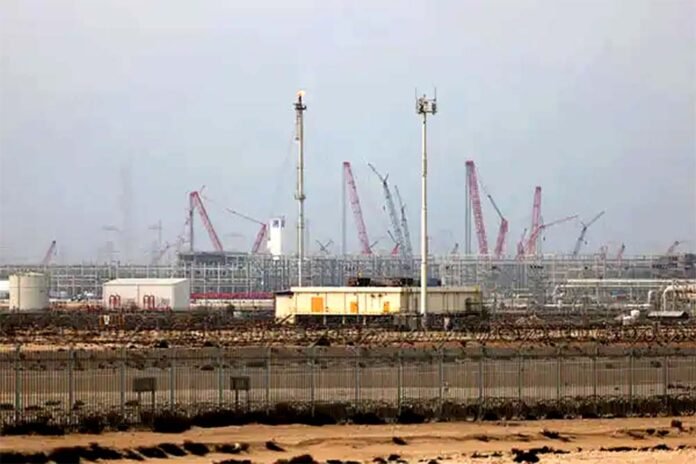
Russia, Algeria and Canada are other countries in the top five producers. Iranian attacks on the Qatari gas facility of Ras Laffan following the Israeli attack on South Pars Field in March impacted the Qatar’s ability to process around 12.8 million metric tonnes of LNG per year in the near future.
It has direct bearing on the production of Helium being the direct by-product of LNG processing. The Ras Laffan is the world’s largest liquid Helium plant with two primary recovery units, Helium 1 and Helium 2.
Along with LNG, its associated products like condensates, Naphtha, Sulphur and Helium will also face disruption in production. Helium spot prices have surged 40 per cent to 100 per cent since the crisis began in early 2026
Saad Sherida Al-Kaabi, the Minister of State for Energy Affairs, the President and CEO of QatarEnergy said that the damaged Trains 4 and 6 (Ras Laffan) will take between 3 to 5 years to repair and the impact will be faced by China, South Korea, Italy and Belgium with Qatar being forced to declare up to 5 years force majeure on some long-term LNG contracts.
Along with LNG, its associated products like condensates, Naphtha, Sulphur and Helium will also face disruption in production. Helium spot prices have surged 40 per cent to 100 per cent since the crisis began in early 2026.
Signing of a US-Iran deal will ensure stability in the Gulf region ensuring smooth supply of Helium, however, the resumed Israeli strike in South Lebanon after the ceasefire and ambiguity around withdrawal of Hezbollah from south of the Litany River as demanded by Israel reflect uncertainty over the deal.
Moreover, Iran’s indication for full scale resumption of war in case of Israeli attack on Beirut and lack of confidence in the process of the deal further expresses the fragility of the any future peace deal.
Lack of artificial substitute for Helium means sectors dependent on its use will have to close down completely if the instability continues
Iranian Foreign Minister Abbas Araghchi mentioned about lack of any tangible progress in the negotiations.
Meanwhile, Qatar has partially resumed production at Ras Laffan, however full resumption will take time. European company Edison expects to receive two thirds of the LNG after the signing of elusive US-Iran deal.
The vulnerability of Helium supply chain is also evident from the fact that it can be transported in liquid form at very low temperature.
It is rarely manufactured on its own, and is largely a by-product of Liquified Natural Gas production and can be exported only in cryogenic containers. Helium in the containers that were stuck during closure of Hormuz have already evaporated.
Lack of artificial substitute for Helium means sectors dependent on its use will have to close down completely if the instability continues.
Nevertheless, this is the fifth shock to the Helium production in the last 20 years. Earlier shocks to the Helium production have been attributed to the demand overpowering the supply due to aging US helium production facility, 2019 Qatar blockade and the Helium plant explosions in Russia in 2022.

The writer is Associate Professor at Jawaharlal Nehru University, New Delhi. She is an expert in Middle East Studies with experience in policy-oriented think tanks in India. She has published several articles and contributes write-ups on the geopolitical and socioeconomic issues of the region frequently. Earlier she has worked as Research Fellow at the Indian Council of World Affairs, and was a research scholar at the Manohar Parrikar Institute for Defence Studies and Analyses. The views expressed are of the writer and do not necessarily reflect that of Raksha Anirveda





