


Niccolo Machiavelli, the Italian diplomat and thinker, argued that one of his intentions in writing On The Art of War was to influence the people of Florence in general and the people of Italy in particular to not only learn but also to internalise martial qualities needed to revive the glory of Italy. By martial qualities, he meant values such as valour, fortitude, resilience and perseverance.
While these are all necessary for the survival of the power of the state, they are not really gender neutral. These qualities reek of raw masculinity, particularly portraying war as a glorious phenomenon that only men must fight and emerge victorious. While the above-mentioned text of Machiavelli was written five centuries ago, the world continues to be the same.

The question then arises — what exactly has changed? Well, the fact that even in today’s day and age, women continue to disproportionately bear the costs of war is something that has remained the same. While war is an extreme phenomenon that involves catastrophic consequences, the narratives of women’s suffering and their objectification continue to be a cause for concern almost everywhere in the world.
This assumes significance because the objectification of women is something that has continued unabated, both spatially and temporally. A controversial yet highly pertinent example in this context is an artwork unveiled by the Indian Air Force in the aftermath of Operation Sindoor.
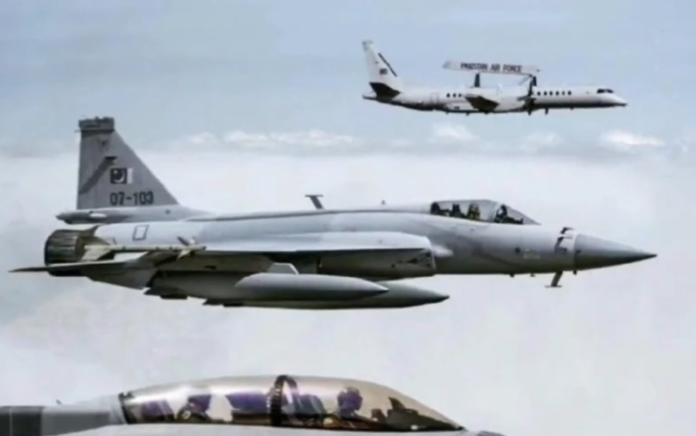
The artwork, which features a woman holding on to a flag to cover herself, was drawn against the backdrop of an S400 Triumf missile defence battery locking an AWACS (Airborne Warning and Control System) aircraft in its crosshairs. This artwork was released to celebrate the IAF’s ‘longest cross-country strike’ in global military history, where an S400 defence battery successfully shot down a Pakistani Air Force (PAF) Saab 2000 Erieye AEW&C (Airborne Early Warning and Control) deep inside Pakistani territory.
Women continue to disproportionately bear the costs of war even today. War is an extreme phenomenon that involves catastrophic consequences, and the narratives of women’s suffering and their objectification continue to be a cause for concern almost everywhere in the world
While the artwork aimed to showcase the Indian Air Force’s increasingly lethal capabilities, what is highly disturbing is the ostensible objectification of the woman in the artwork.

This, however, is not new. Historically, the jargon involved in military science and war studies has been formulated to symbolise masculine qualities such as valour, fortitude, perseverance, and aggression. However, in discussing the intricacies of terminologies in such disciplines, what the menfolk have indulged in is reducing women to a plaything — an object of pity, desire, and more disturbingly, objects of sexual pleasure.
In this context, Carol Cohn, a prominent academician whose research involves analysing the position and impact of conflict on women, wrote a path-breaking essay in 1988 titled “Sex and Death in the Rational World of Defense Intellectuals”. In her essay, Cohn gave a moving account of her time when, in 1984, she attended a summer workshop on nuclear weapons, nuclear strategic doctrine, and strategic analysis concerning these issues, where the lectures were delivered by male defence intellectuals.

This artwork, released to celebrate the IAF’s ‘longest cross-country strike’ in global military history, features a woman holding on to a flag to cover herself, and was drawn against the backdrop of an S400 Triumf missile defence battery locking an AWACS aircraft in its crosshairs
In her essay, she has highlighted:
First, the technical jargon the defence intellectuals used was dehumanising in its nature. Scenarios involving loss of lives during and after a nuclear attack were reduced to ‘collateral damage’. This, Cohn underlined, signals how loss of lives is being trivialised through the strategic use of military jargon.
Second, every stage of the discourse, whether the terminology used in nuclear attacks, such as “first strike”, “second strike”, “mutually assured destruction”, or the theology behind the nuclear regime, carried male symbolism. This is particularly consequential, given the codename of the detonation of the world’s first atomic bomb test, “Operation Trinity”. Trinity refers to the troika of the Father—God, Son—Jesus Christ, and the Holy Spirit. Trinity is a revered symbol in Christian theology.
Third, she highlighted the pervasive objectification of women, right from the nature of the conversations among the officials to the rationale behind the formulation and implementation of offensive nuclear policies by the bureaucrats and military officials.
In India, women are revered not just as deities but also as life givers. In this context, the IAF’s artwork is not only disrespectful to the dignity of women but is also egregious because the IAF is an institution that is expected to be a paragon of women’s empowerment in the country
Almost forty years later, the essay continues to resonate with the rational and conscious individuals who seek to deconstruct war. In the context of the artwork controversy, the essay assumes a high degree of significance. We must understand that for the establishment of a mature society, menfolk need to exercise prudence in sensitive matters concerning women.
As a country, India is the land where women have played a critically important role in almost every sphere of life. Further, women are revered not just as deities but also as life givers. In this context, the artwork by the IAF is not only disrespectful to the dignity of women but is also egregious because the IAF is an institution that is expected to be a paragon of women’s empowerment in the country. The fact that we did it in response to Pakistan’s disgusting action does not give us the moral high ground. India in general and the world in particular know quite well that not only is Pakistan a banana republic, but its track record on women’s rights, safety, and most importantly, gender justice is also utterly dismal. This artwork of the Indian Air Force is therefore something that must not only be rescinded but also ensure that nothing like it happens in the future.
Article 51A (e) of our constitution declares that it is the fundamental duty of every person to renounce practices that are derogatory to the dignity of women. It is high time the institutions of the Indian state, particularly the armed forces and the citizens of the country, practiced this duty properly. The message, hence, must be very clear — objectification of women, under any circumstances, in any manner, cannot be allowed.

The writer is a doctoral candidate in Political Science at Mahatma Gandhi Central University. The views expressed are personal and do not necessarily reflect the views of Raksha Anirveda





