


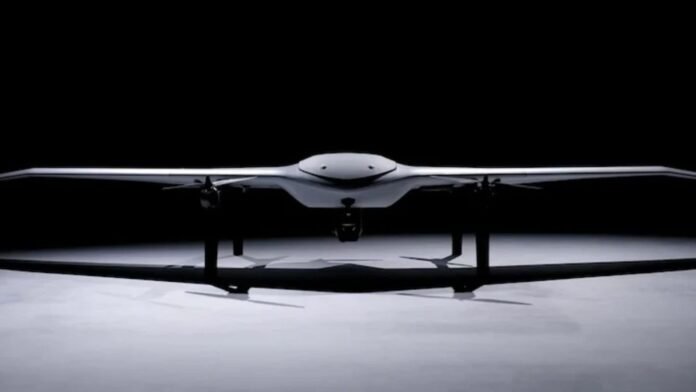
The latest drone, highlighted by Interesting Engineering, represents a broader push to extend electric-drone endurance beyond the short flight times associated with consumer quadcopters. Its claimed eight-hour capability would place it closer to the endurance of tactical unmanned aerial systems than conventional battery-powered commercial drones.
Most small multirotor drones remain airborne for roughly 20 to 40 minutes, depending on payload, wind, temperature and flying style. The gap between those aircraft and long-endurance military systems has traditionally been filled by petrol engines or hybrid-electric powertrains. A drone capable of remaining aloft for eight hours using an electric propulsion system could therefore offer quieter, cleaner and potentially simpler operations.

The reported endurance is particularly relevant for intelligence, surveillance and reconnaissance missions. A long-duration platform could monitor coastlines, borders, forests, pipelines, railways and industrial sites without repeated landings or battery changes. It could also support disaster response by maintaining an aerial view over flooded areas, wildfire zones or damaged infrastructure.
Electric propulsion brings several advantages. Motors have fewer moving parts than combustion engines, can be controlled precisely and produce less mechanical noise. Lower acoustic signatures may help surveillance teams gather information without disturbing people or wildlife. Electric systems also eliminate exhaust emissions during flight, an advantage for environmental monitoring and operations near populated areas.
However, eight-hour endurance is not simply a function of battery size. Batteries add weight, and the additional weight increases the energy required to stay airborne. Designers must balance battery capacity against airframe mass, propeller efficiency, aerodynamics, payload and weather resistance. A heavier camera or radar package can reduce the advertised flight time substantially.
Mission conditions matter as well. Strong winds, high temperatures, low temperatures, repeated climbs and rapid manoeuvres can all increase energy consumption. Manufacturers generally publish maximum endurance under controlled conditions, often with a limited payload and reserve power excluded. Operators therefore need to distinguish between headline endurance and the useful flight time available during a real mission.

The reported aircraft’s significance lies in its potential operating model. Long-endurance drones can reduce the number of platforms needed for continuous coverage, while allowing crews to schedule fewer landings and recoveries. That could be valuable in locations where runways, launch areas or maintenance facilities are limited.
Commercial applications may prove as important as military ones. Utilities could use the drone for extended inspection patrols, while conservation agencies could track wildlife or illegal activity across large territories. Survey companies could map remote terrain for longer periods, and emergency agencies could use persistent aerial observation during search-and-rescue operations. Long-range drones are already being examined for medical deliveries, maritime surveillance and environmental monitoring.

The technology also reflects the expanding competition in high-end unmanned aviation. Some existing long-endurance systems use hybrid power, converting petrol into electricity during flight. Skyfront’s Perimeter 8, for example, advertises five hours of standard endurance and has recorded a flight lasting 13 hours and four minutes, but it is a hybrid rather than a fully electric aircraft. Its battery-only configuration is designed for shorter missions of up to 1.5 hours.
That comparison highlights the challenge facing battery-only designs. Hybrid systems benefit from the greater energy density of liquid fuel, while all-electric platforms offer quieter operation and fewer emissions. Advances in battery chemistry, lightweight materials, solar assistance and efficient propulsion could gradually narrow the gap.
The new drone’s eight-hour claim will ultimately be judged by independent testing, payload performance and operational reliability. If those results match expectations, it could mark an important step towards persistent electric aviation – and make long-duration aerial monitoring more accessible across civilian and defence sectors.






