
London, July 2, 2018. Leonardo has been awarded a post-design support contract by the UK Ministry of Defence which will see the Company provide in-service support for its pre-flight threat simulation equipment, currently being used on the Typhoon, Tornado, Merlin, Wildcat, Chinook and C130J platforms. The contract builds upon the previous 10 years of support delivered by Leonardo and will run over a five year period from 2018 until 2022.

Leonardo’s threat simulation equipment has been designed and developed in the UK in partnership with the MOD, using state-of-the-art Radio-Frequency (RF) technology to provide a wide range of stimulation and test capabilities.
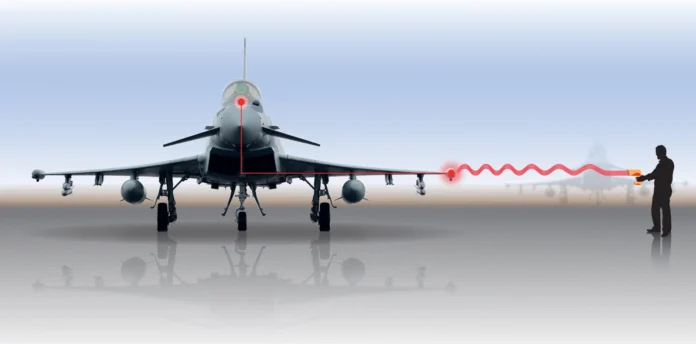
The equipment uses special RF-emitting ‘hoods’ and handheld devices to target the particular platform’s sensors and simulates threats using real radar energy whilst the aircraft is still grounded.
By performing this preliminary check, the user gains increased confidence that the platform’s RF defensive systems are operationally effective before embarking on a mission.
The majority of Defensive Aids Suites (DAS) on air platforms come with ready installed ‘built-intest-equipment’ (BITE), which signals to the pilot that the equipment is working as designed.

However, throughout the life of an aircraft, and with each mission it executes, undetected problems can emerge as the aircraft receives ongoing maintenance. For instance, in some cases the RF antenna degrades. These issues may not be identified by the BITE, meaning the installation is not operationally effective.
As a result of this, limited or incorrect information could be provided to the pilot by the system, endangering the crew. Leonardo’s equipment closes this gap, providing improved ‘capability assurance’ throughout a platform’s operational life.