


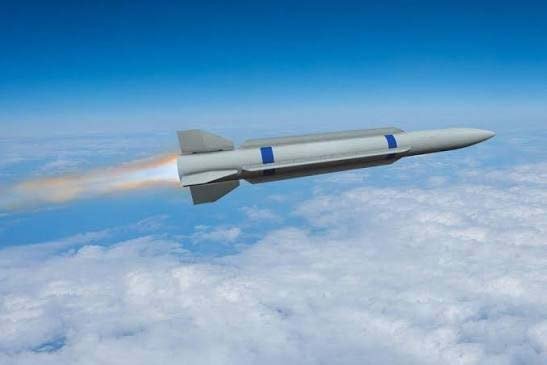
WASHINGTON. In a major strategic realignment that challenges standard aerospace monopolies, the US Army has designated defence-tech disruptor Anduril Industries as a critical future player for its upcoming hypersonic weapons arsenal. The decision underscores the Pentagon’s urgent shift away from sole reliance on legacy defence conglomerates in favour of rapid, venture-backed tech startups capable of achieving “affordable mass”.
Speaking at the Center for Strategic and International Studies (CSIS), Lieutenant General Frank Lozano, a senior Army acquisition leader, confirmed that the military is aggressively broadening its supplier ecosystem. Lozano named Anduril alongside fast-moving defence innovators Castelion and Ursa Major, as foundational partners in a newly realised push to build massive “magazine depth” for high-velocity, deep-strike munitions.

The High-Low Inventory Blueprint
The Pentagon’s expanding interest in non-traditional suppliers stems from a vital shift in structural warfare tactics. Instead of purchasing a small pool of high-end, exquisitely priced weaponry, the Army is structuring a targeted inventory mix.
Under the service’s current doctrine, the weapon cache is split between two tiers:
- The Exquisite Tier (40%): Premium, multi-million-dollar platforms like Lockheed Martin’s Long Range Hypersonic Weapon (LRHW), also known as “Dark Eagle”. These GPS-denied, highly survivable systems are reserved for striking high-value targets at extreme distances – such as deep command centres, hostile radar sites and ballistic missile launchers.
- The Affordable Mass Tier (60%): Lower-cost, high-volume hypersonic systems designed to flood battle spaces and close the distance after initial high-end strikes.
“I have to create greater magazine depth from a hypersonic perspective,” Lt. Gen Lozano stated, “And so that’s why we’re actively working with Castelion, we’re actively working with Anduril, and we’re actively working with Ursa Major to expand the scope.”
Disrupting the Monopoly
Anduril’s entry into the ultra-fast propulsion sector highlights the firm’s explosive industrial ascent. Founded by Palmer Luckey, the startup recently secured a massive Series H funding round of $5 billion, rocketing its market valuation to $61 billion – effectively doubling its net worth in less than a year.

While initially known for its autonomous counter-drone systems and artificial intelligence framework called Lattice, Anduril confirmed it had quietly launched an internal hypersonic development track. In a clear sign of progress, the company recently successfully deployed three internally funded hypersonic payloads aboard a Rocket Lab launch vehicle.
The strategy matches the rapid manufacturing styles of fellow entrants like Castelion. The startup has advanced its proprietary “Blackbeard” missile, conducting testing cycles almost monthly. According to Congressional testimonies, Blackbeard targets a price point that is just three per cent of the cost of traditional, exquisite hypersonic systems. Similarly, Ursa Major has advanced solid rocket motor (SRM) capabilities and high-speed propulsion, offering alternative components that circumvent the heavily consolidated traditional supply chains.

A New Generation of Munitions
The military’s embrace of these agility-focused firms signals a growing frustration with traditional defence production lines, which often struggle with multi-year delays and skyrocketing overhead costs. By building weapon systems with highly digital commercial supply chains, modern modularity and rapid testing loops, the Pentagon intends to reshape deterrence in theaters like the Indo-Pacific.
With Anduril already clinching high-profile production contracts for the US Air Force’s Collaborative Combat Aircraft (CCA) drone initiative, its path into advanced hypersonic systems highlights a profound truth: the future of American military mass relies heavily on Silicon Valley engineering.






