


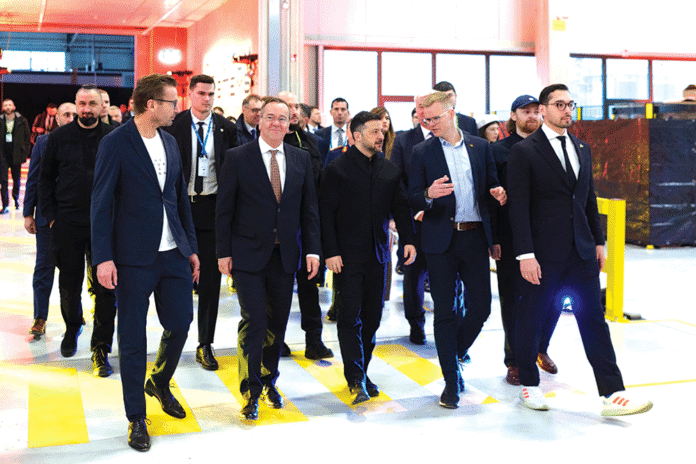
More than four years after the launch of the special military operation by Russia in Ukraine, both sides find themselves ensnared in a conflict that neither can decisively win, yet neither appears willing to end. As the frontlines continue to shift and military aid packages continue to flow, the human toll continues to rise. With the hindsight of over four years of conflict, a far more consequential question arises: is the conflict merely a war over Ukraine, or has it become a struggle for the future geopolitical architecture of Eurasia itself?
On June 4, 2026, President Volodymyr Zelensky proposed a face-to-face meeting with President Vladimir Putin in an open letter, stating that he was ready for a “full ceasefire”. However, Putin turned down the offer, saying that he saw no point in such a meeting at present.

The tone and tenor of the letter suggest that the Ukrainian President feels emboldened by the apparently successful military pushbacks against the Russian Army in recent weeks, including the successful targeting of Russian infrastructure far into the Russian mainland. Putin agreeing to direct talks at this stage could be seen as a sign of weakness on the part of the Kremlin. Moreover, meeting Zelensky as an equal would undermine years of Kremlin propaganda aimed at delegitimising the Ukrainian President.
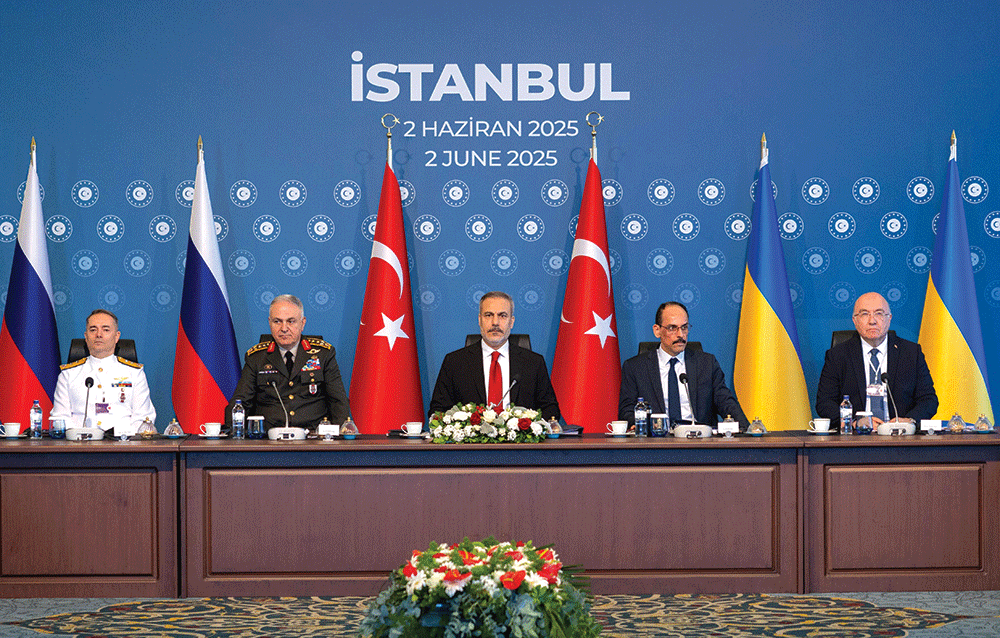
The latest exchange captures the fundamental paralysis of the current situation wherein both sides claim willingness to talk, but neither has made the concessions necessary for talks to begin, and the international mediating parties are themselves fractured.
Russian Foreign Minister Sergei Lavrov noted that the resumption of dialogue between Russia and Europe is impossible through ultimatums such as those presented to Moscow following the meeting of President Volodymyr Zelensky with the leaders of the European troika countries (France, the United Kingdom and Germany) in London on June 7, 2026. He warned of a serious threat of confrontation between Russia and NATO and characterised Ukraine as a “shock fist” of a broader European military project that increasingly seeks strategic autonomy from the United States.
Whether viewed as rhetoric or a genuine warning, such statements highlight an uncomfortable reality: the war is no longer confined to questions of territorial control over eastern Ukraine. For significant elements of the Western strategic establishment, the objective is not merely to defend Ukraine but to weaken, destabilise and, in the most hawkish formulations, territorially fragment Russia.

The Russian Fear of Fragmentation
Russian President Vladimir Putin has repeatedly articulated this concern. In a speech delivered in September 2022, he stated: “They are saying directly that they managed to break up the Soviet Union in 1991, and now it is time for Russia itself to be split into many regions that would be at each other’s throats.”
He warned that Russia would use any means at its disposal to defend its sovereignty.

Concerns regarding the fragmentation of Russia are not merely products of Kremlin imagination. They draw upon a body of strategic literature and policy discussions that have existed, in varying forms, within American and European policy circles for decades.
One of the most influential examples remains the work of Zbigniew Brzezinski. In his influential 1997 book, The Grand Chessboard: American Primacy and Its Geostrategic Imperatives, Brzezinski argues: “A loosely confederated Russia — composed of a European Russia, a Siberian Republic, and a Far Eastern Republic — would also find it easier to cultivate closer economic relations with its neighbours.” He goes on to add, “Without Ukraine, Russia ceases to be a Eurasian empire… Russia without Ukraine can still strive for imperial status, but it would then become a predominantly Asian imperial state.”
In February 2023, the Hudson Institute and the Jamestown Foundation jointly hosted a conference in Washington titled Preparing for the Dissolution of the Russian Federation. Although not representative of official policy, the event attracted considerable attention and reflected the emergence of a small but vocal constituency advocating a post-Russian geopolitical order.
Similarly, in a provocatively titled report, After the Fall: Must We Prepare for the Breakup of Russia?, the Institut Montaigne in Paris published an analysis in 2023 exploring the strategic implications of the potential fragmentation of the Russian state. These proposals go beyond supporting Ukraine’s defence and point towards a broader objective of weakening Russia’s long-term strategic capacity.
When Strategic Logic Becomes Strategic Risk
From a purely geopolitical perspective, the basic logic is not irrational. Russia is the world’s largest country by territory; it commands the world’s largest nuclear arsenal; holds vast hydrocarbon and mineral reserves; sits astride the Eurasian landmass; and is home to more than 50 per cent of the world’s largely unexplored, mineral-rich Arctic coastline.
Also, a weakened and fragmented Russia would eliminate the most serious geopolitical challenge to Western primacy in Eurasia at a single stroke.
Yet strategic logic does not necessarily translate into strategic wisdom.
The fragmentation of a nuclear-armed state stretching across eleven time zones and marked by ethnic and territorial fault lines would constitute one of the most destabilising developments in modern history. Even the Institut Montaigne acknowledges that any such scenario would likely be “chaotic, prolonged, sequential, conflictive and increasingly violent”.
More than four years after the Russia-Ukraine war began, the conflict has evolved far beyond a struggle over territory
European history offers sobering lessons about the dangers of strategic overreach. Within one century, Europe’s geopolitical rivalries, ambitions and miscalculations contributed to two world wars that devastated the continent and reshaped the international order.
Today, some of the strategic assumptions underpinning Western policy towards Russia carry risks that are no less profound.
At the heart of the issue lies a simple but uncomfortable question: what happens if the strategy of sustained pressure succeeds too well? Russia is not merely another regional power. It is a nuclear superpower possessing the world’s largest nuclear arsenal and a military doctrine that explicitly reserves the right to employ nuclear weapons under circumstances perceived as threatening the survival of the state.
The Collapse of Nuclear Guardrails
The danger, therefore, lies not in the current military balance but in the possibility of escalation resulting from strategic miscalculation. The global nuclear order today is arguably more fragile than at any point since the end of the Cold War. In February 2026, United Nations Secretary-General António Guterres warned: “For the first time in more than half a century, we face a world without any binding limits on the strategic nuclear arsenals” of the United States and Russia.
The expiration of the New START Treaty reflects the collapse of a decades-long arms-control architecture that had helped prevent catastrophic escalation between the world’s two largest nuclear powers.
As the last surviving strategic arms-control agreement between Washington and Moscow, New START provided transparency, verification mechanisms and limits on deployed strategic nuclear weapons. Its lapse removed the final institutional guardrail governing nuclear competition between the two countries.
Against this backdrop, several European governments continue to advocate policies designed to maximise pressure on Russia.
In June 2026, Sergei Lavrov issued one of Moscow’s strongest warnings to date, stating: “A direct clash between NATO and Russia could quickly escalate into an exchange of nuclear strikes with catastrophic consequences.”
It is sometimes tempting to dismiss such statements as instruments of coercive diplomacy. Yet history repeatedly demonstrates that the Russian Federation has often communicated its genuine concerns clearly and openly long before translating them into action. Ignoring such signals entirely may prove to be as dangerous as overreacting to them.
Whether one agrees with Russian policy or not, prudent statecraft requires acknowledging the possibility that nuclear powers may act on the threats they repeatedly articulate. The greatest strategic danger may lie not in deliberate escalation, but in the assumption that escalation can always be controlled.
Lessons from Europe’s Past
Europe has encountered this problem before. More than one hundred years ago, the assassination of Archduke Franz Ferdinand in Sarajevo triggered, through a cascade of alliance obligations, miscalculated ultimatums and failures of diplomatic imagination, a conflict that consumed four empires and an entire generation of European men.
The greatest strategic danger may not lie in deliberate escalation, but in the assumption that escalation can always be controlled
Russia, the Tsarist Empire, entered that war as a major power and emerged from it dissolved. Austria-Hungary, whose aggressive ultimatum to Serbia set the chain of events in motion, ceased to exist. Germany, which calculated that a short, sharp war would consolidate its continental dominance, instead created the conditions for its own disastrous defeat and, twenty years later, for the rise of National Socialism and the catastrophic Second World War.
The Perils of Strategic Maximalism
More than a century later, some Europeans appear convinced that Russia’s nuclear warnings are merely rhetoric, Putin’s escalatory signals are a bluff and continued pressure on Russia will eventually produce either Russian military defeat or internal regime collapse. What Europe’s maximalists refuse to examine, however, is the consequence of such an approach.
Let us assume, theoretically, that Russian military losses continue to mount; that the Kremlin begins to perceive the possibility of a conventional defeat threatening core national interests; that no new arms-control framework emerges to replace New START; and that strategic trust continues to erode.
What mechanism then prevents escalation towards the nuclear threshold? The only factor upon which the world would then be compelled to rely is Russian restraint.
Entrusting the future of humanity to the presumed restraint of a nuclear adversary, while simultaneously signalling that the long-term objective is its fragmentation, constitutes a profoundly fragile foundation upon which to build international security.
The Case for a Frozen Peace
Beyond strategic and military calculations lies a critical legal dimension that is often overshadowed by geopolitical narratives. Ultimately, the legitimacy and durability of any future settlement will depend not only upon military realities and political compromises, but also upon its compatibility with the foundational principles of international law.
A settlement perceived as violating core legal principles may succeed in ending active hostilities, but it is unlikely to secure lasting peace or broad international acceptance.
If total victory appears unattainable and escalation carries unacceptable risks, then efforts must inevitably shift towards halting hostilities and achieving peace, however imperfect it may ultimately be. The most realistic near-term outcome may resemble the armistice arrangement that ended active hostilities on the Korean Peninsula.
Under such a framework, the existing line of contact would be frozen without requiring an immediate comprehensive peace settlement. Ukraine would receive meaningful security guarantees while Russia would obtain assurances addressing some of its stated security concerns.
A strategy designed to weaken Russia may ultimately raise questions about the stability of the entire Eurasian security order
Such an arrangement would undoubtedly be imperfect. Territorial disputes would remain unresolved. Political tensions would persist. Europe would continue to live with an open strategic wound. Yet a frozen conflict would halt the killing, facilitate reconstruction, allow displaced populations to return and create diplomatic space for a more comprehensive settlement in the future.
Towards a Multipolar Peace Process
A second avenue involves broadening the diplomatic framework beyond the existing structure. At present, negotiations are heavily shaped by the United States-Russia relationship, with Ukraine often functioning as both participant and subject.
A genuinely multilateral framework including India, China, Brazil and Japan as active co-mediators would change the geometry of the negotiations in ways that could benefit all parties.
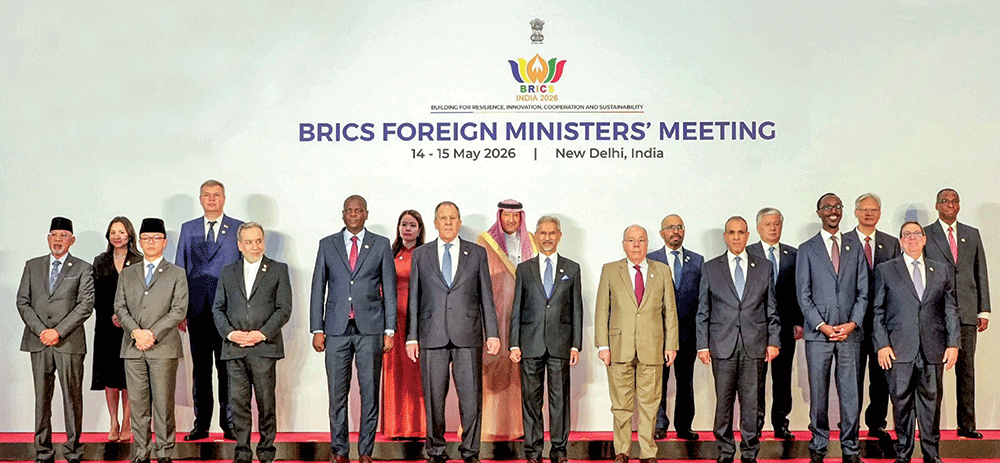
Significantly, President Putin, speaking at the Eastern Economic Forum in 2024, named India, Brazil and China as potential mediators. Russian officials have also repeatedly indicated that Moscow remains open to realistic peace initiatives that acknowledge Russian security concerns.
A complementary approach could involve the development of a peace framework with the participation of international organisations such as the United Nations (UN), European Union (EU) and BRICS.
Such organisations could collectively contribute to security guarantees, reconstruction efforts, monitoring mechanisms and confidence-building measures. A durable settlement will require endorsement from a broader coalition that reflects the increasingly multipolar character of the international system.
Competing Visions of Security
As of mid-2026, the Russia-Ukraine war has lasted longer than the First World War. Yet, despite the immense human, economic and geopolitical costs, the conflict remains trapped between competing visions of victory and differing definitions of security.
On one side stand those who believe that sustained military and economic pressure can permanently weaken Russia and reshape the geopolitical balance in Eurasia. On the other are those who argue that strategic realism demands an imperfect peace before escalation produces consequences beyond anyone’s control.
The collapse of the global arms-control architecture has removed the final institutional guardrails governing nuclear competition
The fundamental challenge for the West is to accept and recognise the fact that Russia is a permanent geographic and geopolitical reality in Eurasia that cannot simply be wished or militarily pressured out of existence. Its security concerns must be taken into account while devising any future security architecture for Europe.
Likewise, Russia must recognise that lasting stability cannot emerge from military coercion alone and that the principle of sovereignty remains a central component of any sustainable settlement.
The Search for an Imperfect Peace
The path out of the current impasse may not satisfy all parties. It may leave territorial disputes unresolved, some grievances unaddressed and strategic ambitions unfulfilled. Nevertheless, durable peace is often built not on complete satisfaction, but on a mutual recognition of limits.
The choice before policymakers is therefore stark: construct an imperfect peace while the opportunity still exists, or continue down a path where miscalculation, pride and strategic maximalism could produce consequences from which no nation emerges victorious.

The writer, Kirti Chakra, AVSM, VSM, is an Indian Army veteran. He has also served as the Indian Military Attaché in Moscow. He is the Founding Director and CEO of ThorSec Global. An accomplished scholar, he specialises in Geopolitics with a focus on Russian Studies and is currently pursuing his PhD in the field, further enriching his depth of knowledge and global perspective. He can be reached at deepakmehra67@yahoo.co.uk and deepak.mehra@thorsecglobal.com. The views expressed are of the writer and do not necessarily reflect that of Raksha Anirveda

The writer is a legal academic with a PhD in Law, working at the intersection of gender justice, public policy, and national security. She is presently serving as Assistant Professor (Gr II) of Law at Amity University, Noida. She can be contacted at sunandini.arun@gmail.com. The views expressed are personal and do not necessarily carry the views of Raksha Anirveda





