


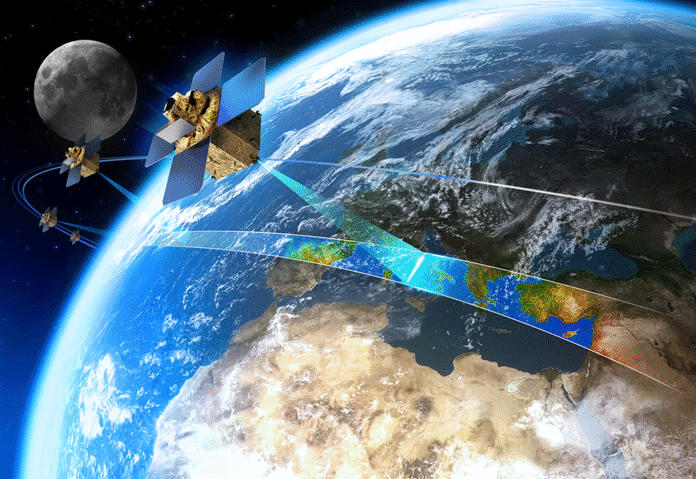
Leonardo, a global leader in Aerospace, Defence and Security, has outlined the scale of its space activities ahead of BSX 2026, positioning itself among Europe’s top industrial groups in the sector. Through its Space Division and joint ventures Telespazio, Thales Alenia Space and e-GEOS – the latter 20% owned by the Italian Space Agency – the company says it covers the entire space value chain, from building satellites and orbital infrastructure to satellite services, Earth observation, telecommunications, navigation, robotics and mission management, while integrating these assets with AI, cloud computing, supercomputing and cybersecurity to become a provider of fully integrated solutions.
A Next-Generation Earth Observation Constellation: Earth observation is one of Leonardo’s biggest focus areas, with satellite data used to monitor the planet, critical infrastructure, seas, agriculture, emergencies and climate phenomena. The company has launched development of its first proprietary constellation – 18 multi-sensor satellites across two orbital planes – backed by an internal investment of roughly half a billion euros, with two launches planned in windows opening in late 2027 and late 2028.

The constellation will combine radar and optical sensors, in-orbit data processing, inter-satellite optical links and advanced digital technologies, cutting the time between data acquisition and delivery, and shifting satellites from simply collecting data to processing it as intelligent nodes in space. Leonardo is also a key partner in Italy’s IRIDE national monitoring constellation, the COSMO-SkyMed radar constellation run with the Italian Ministry of Defence and Europe’s Copernicus programme.
Back to the Moon, and on to Mars: Leonardo plays a leading role in the NASA-ESA Artemis programme, contributing habitation modules, infrastructure, robotics and communication and navigation systems for a sustained human presence on the Moon.
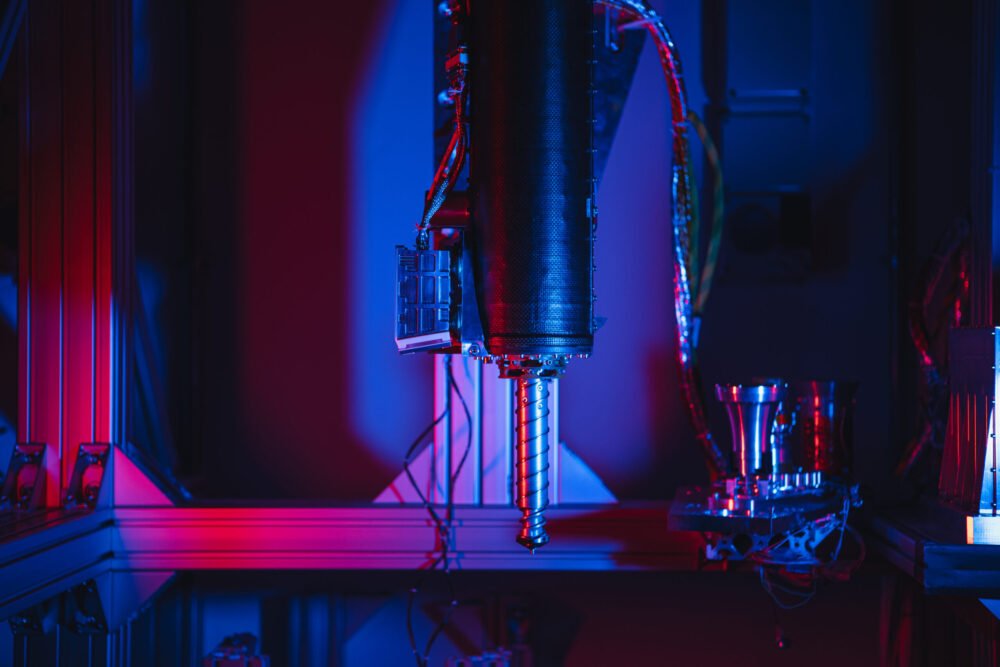
In Turin, work is under way on the Italian Space Agency’s Multi-Purpose Habitat and on Argonaut, Europe’s first lunar lander, while Telespazio leads Moonlight, Europe’s first lunar communication and navigation system; the group also supplies key technologies for the Orion crew spacecraft. Beyond the Moon, Leonardo is involved in the ExoMars 2028 mission, contributing a drill designed to search for signs of past or present life up to two metres deep.
Low Earth Orbit and Satellite Navigation: Thales Alenia Space built 50% of the International Space Station’s pressurised volume in Turin and is now working on future commercial space stations. Leonardo also plays a central role in Europe’s Galileo navigation system, supplying atomic clocks that underpin its precision, while Thales Alenia Space builds new-generation satellites and Telespazio operates several of its control centres.

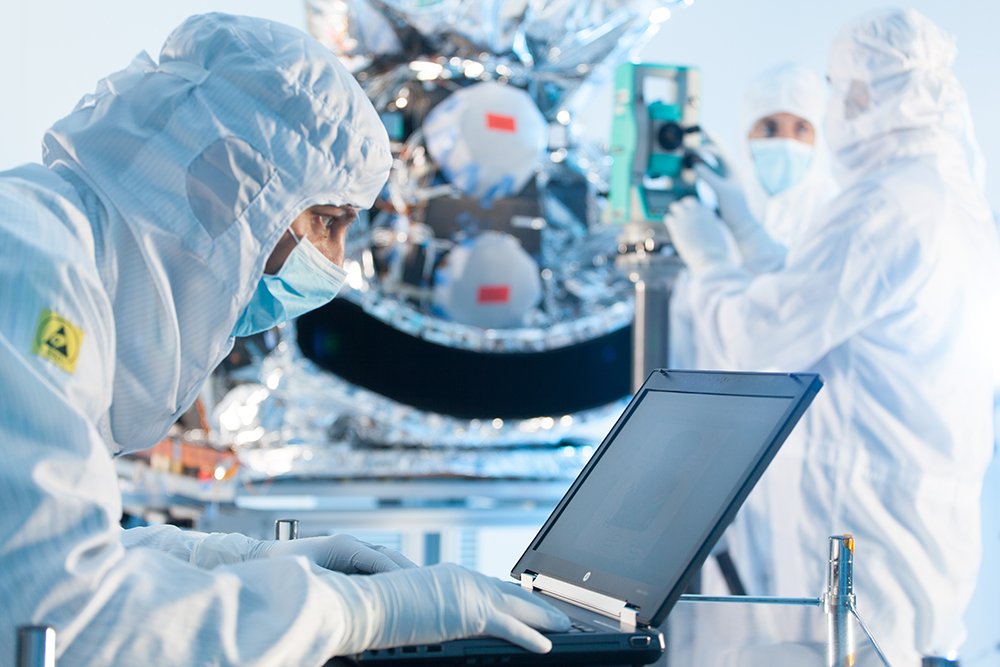
Betting on In-Orbit Servicing: Leonardo is expanding into technologies to inspect, repair, refuel or reposition satellites already in orbit, aiming to extend satellite lifetimes and make space activities more sustainable. It is involved in the European Commission’s ISOS programme, leads the ASIMOV project under the European Defence Fund and is developing technologies for Italy’s national In-Orbit Servicing programme.
Leonardo’s space capabilities, built over more than 60 years, are backed by an international network of partnerships and, in Italy, centres of excellence including the Fucino Space Centre in Abruzzo – one of the world’s largest teleports – and Thales Alenia Space’s new Space Smart Factory in Rome, a digital, automated facility capable of producing up to 100 satellites a year.

Leonardo employs over 62,000 people worldwide across Electronics, Helicopters, Aircraft, Cyber & Security and Space, with a major industrial presence in Italy, the UK, Poland and the US, and operations in 150 countries. Listed on the Milan Stock Exchange, the company recorded new orders of €23.8 billion in 2025, an order backlog of €46.6 billion and consolidated revenues of €19.5 billion, and is included in the Dow Jones Sustainability Indices and the MIB ESG Index.






