


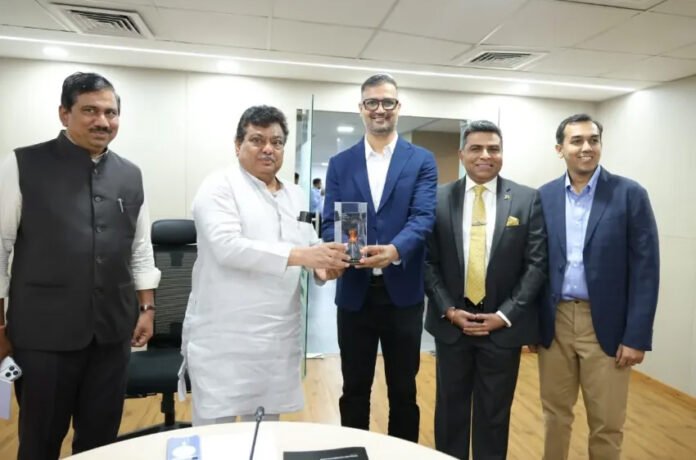
Bengaluru. The facility is planned for the Adinarayana Hosahalli Industrial Area in Bengaluru Rural district, on a 10-acre site. Karnataka Industries Minister MB Patil announced the investment on Tuesday, November 3 after meeting company representatives in Bengaluru. The project forms part of a wider ₹700-crore investment announcement that also includes a proposed Bayer Global Capability Centre in Bengaluru.
The state says Astrobase’s plant will have the capacity to manufacture 40 rocket engines a year and generate more than 1,250 jobs. The company is developing medium-lift launch vehicles, reusable launch systems and indigenous propulsion technologies. Its planned investment comes as India’s private space sector seeks to build capabilities beyond satellite services and into launch systems and rocket manufacturing.

Astrobase’s engine, called Everest, is designed for launch vehicles carrying payloads of between 8 tonnes and 26 tonnes, according to the minister’s announcement. The company describes Everest as an 800-kilonewton-class engine powered by liquid oxygen and methane, using a full-flow staged-combustion cycle. That architecture routes fuel and oxidiser through separate pre-burners and turbopumps before they enter the combustion chamber, making the design technically demanding.
Astrobase says methane-oxygen propulsion is suited to reusable launch vehicles, while its vehicle concept is intended to serve medium- and heavy-lift missions. The company’s website describes a two-stage launcher, with engines on both the booster and upper stage. These are company plans and technical claims; the announced factory capacity does not itself establish that the vehicle or engine has completed operational qualification or reached commercial launch service.
The new project will build on Astrobase’s existing footprint in Karnataka. The company says it already has a manufacturing facility in Bengaluru, where it carries out activities including material processing, machining and integration. Its engine testing facility is in Anantapur, Andhra Pradesh. The proposed Hosahalli project is therefore a planned expansion of engine manufacturing, rather than the company’s first reported industrial or testing site.
The company has also received public-sector backing for technology development. Astrobase’s website says it was selected by IN-SPACe under the Technology Adoption Fund for indigenous 800-kilonewton rocket-engine development. That support sits alongside the new state-announced capital commitment, although details of the investment timetable, construction schedule and financing structure were not provided in the reports.

Patil said Astrobase was founded by professionals with experience in India’s space programme, including former ISRO scientists. The company’s work reflects a broader shift in India’s space ecosystem, where private firms are taking on more roles in launch vehicles, propulsion, satellite manufacturing and related infrastructure. A local engine plant could expand the industrial base and create engineering and manufacturing positions, but its practical impact will depend on execution, recruitment and sustained production demand.
Bayer will separately invest ₹200 crore to establish a Global Capability Centre in Bengaluru, expected to create about 220 jobs. Combined, the two projects are projected to create more than 1,470 positions across the state. Patil said discussions with Bayer’s leadership had taken place during his recent visit to the Netherlands, as Karnataka sought to attract investment.

For Astrobase, the key milestones ahead are turning the announced investment into a functioning production line, scaling engine manufacturing to the stated annual capacity and progressing its propulsion technology through testing. The proposed plant adds to Karnataka’s aerospace and space-technology ambitions, but the promised output and employment will ultimately depend on the project’s build-out and the company’s ability to move from development into repeatable production.







