


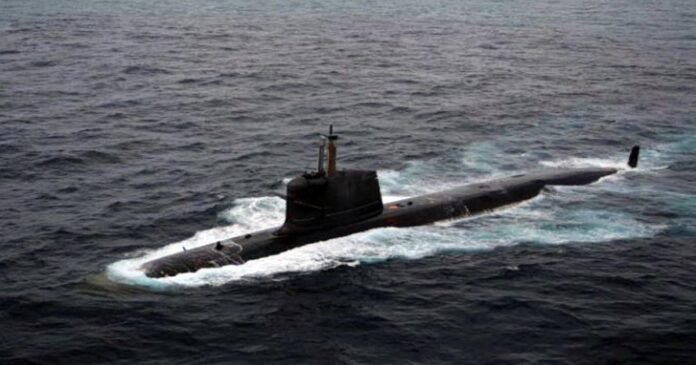
New Delhi: India’s nuclear submarine program is advancing significantly, particularly with the recent approval for new nuclear-powered attack submarines and the establishment of a Very Low Frequency (VLF) communication facility. This initiative is primarily aimed at enhancing India’s naval capabilities in response to growing concerns over China’s military expansion.
The Cabinet Committee on Security (CCS) has sanctioned the construction of two new nuclear-powered attack submarines, part of a broader plan to eventually induct six such vessels into the Indian Navy. This initiative is part of the Advanced Technology Vessel (ATV) project, which aims to bolster India’s underwater capabilities significantly.

These submarines will be designed and built indigenously, marking a significant step towards self-reliance in defence production. The project will involve major private sector firms, such as Larsen and Toubro, ensuring that India develops its technical capabilities without relying on foreign assistance.
The new submarines are expected to enhance India’s deterrent capabilities against regional adversaries, particularly China, which has been rapidly expanding its own submarine fleet. The introduction of these vessels is seen as crucial for maintaining a strategic balance in the Indian Ocean Region.
A new VLF facility is being established to improve communication with submarines while they are submerged. This technology is vital for operational effectiveness and ensures that India can maintain command and control over its naval assets even when they are deep underwater.
As China continues to enhance its naval capabilities, including the deployment of advanced submarines, India’s response through its nuclear submarine program is critical. The ability to operate nuclear-powered attack submarines will provide India with greater flexibility and deterrence options in maritime operations.

With the commissioning of INS Arighat, India now has two operational nuclear-powered submarines, which play a vital role in India’s nuclear triad—capabilities that include land-based and air-based nuclear delivery systems. This development underscores India’s commitment to maintaining credible second-strike capabilities against potential threats from both China and Pakistan.

Raksha Anirveda's editorial desk team brings in the collective experience of creative professionals - a fine mix of senior copy editors, writers, proofreaders and designers. Working as a team, they continuously create, manage, and curate content to sustain the magazine's profile and reputation in line with market trends and achieve magazine's goal.






