


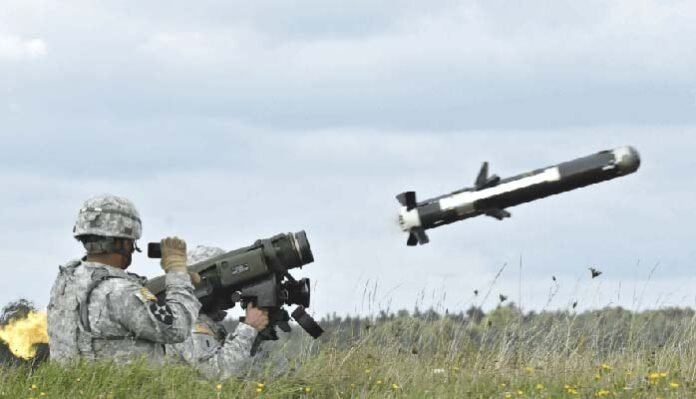
New Delhi: India’s recent surge in spare part procurements for its legacy Milan and Konkurs anti-tank guided missiles (ATGMs) stems from the vast scale of ongoing service-life extension programmes. These initiatives target thousands of ageing missiles and launchers stockpiled over decades, requiring the replacement of time-expired components across a large portion of the inventory.
The Indian Army has relied heavily on these second-generation, wire-guided missile systems since their licenced production began at Bharat Dynamics Limited (BDL) in the 1980s. Estimates suggest the cumulative inventory may exceed 200,000 missiles, supported by thousands of launchers. As of early 2024, the Army fielded roughly 15,140 Konkurs systems and tens of thousands of Milan-2T variants, implying that even modest refurbishment per unit triggers extraordinarily high aggregate spare demands.

Critical to the life-extension process is the replacement of degradation-prone components such as rocket motors, squibs, seals, propellants, and electrical modules. Each missile, though relatively simple compared to modern systems, contains numerous elements affected by age, heat, and storage conditions. When multiplied across tens of thousands of units, routine maintenance suddenly resembles industrial-scale production in both scope and budgetary magnitude.
Contrary to impressions of over-procurement, the inflated spare quantities are a direct result of India’s deliberate decision to preserve its legacy stock for training and war-reserve needs.
Service-life renewal ensures continued availability of baseline anti-armour capabilities amidst delays and gradual inductions of next-generation domestic systems like the MPATGM, NAG, and SANT missiles. This transitional strategy prevents any operational gap during the evolutionary phase of indigenous weapon development.
Unlike high-technology fighter assets, such as the Rafale fleet, ATGM spares involve massive volumes of low or medium-value components. While the expenditure appears excessive in total, each individual part addresses a specific reliability risk tied to age or handling. In contrast, high-performance aircraft like the Rafale require fewer but significantly more expensive spare assemblies, given their complex mechanical and electronic architecture.

The support model for the Rafale operates under a performance-based logistics (PBL) framework, where initial provisioning, readiness guarantees, and predictive maintenance are central. This contrasts starkly with the ATGM refurbishment ecosystem, which follows a batch-wise overhaul routine through public-sector depots and BDL facilities.
The differing philosophies underline the divide between sustaining a large, ageing, low-complexity war reserve and maintaining a technologically advanced, high-readiness combat platform. Thus, the seemingly “insane” scale of India’s ATGM spare parts procurement reflects practical realism rather than inefficiency.

It signifies the strategic necessity to preserve proven systems until indigenous successors mature fully—sustaining deterrence and operational flexibility at minimal technological risk during a crucial transition in India’s guided weapons capability.






