


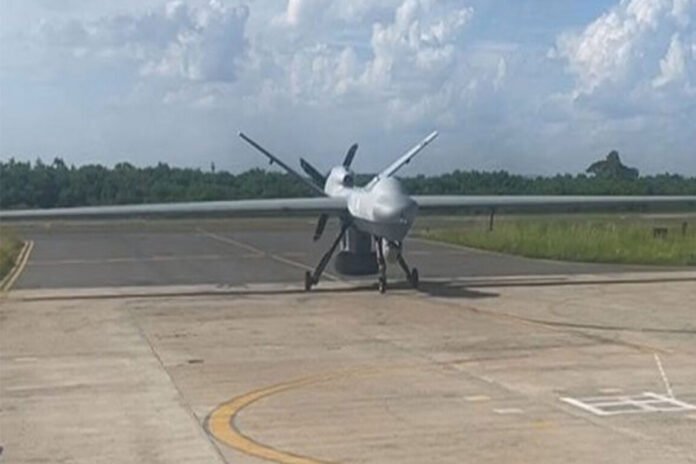
NEW DELHI. In a significant move aimed at fortifying India’s maritime domain awareness and securing its expansive coastline, the Ministry of Defence has officially initiated the procurement process for 10 Medium Altitude Long Endurance (MALE) Remotely Piloted Aircraft (RPA) systems. Destined for the Indian Coast Guard (ICG), the upcoming tender is estimated to be valued at approximately ₹2,000 crore, representing a landmark step in modernising the coastal force’s aerial reconnaissance and monitoring infrastructure across critical oceanic regions.
According to a formal Request for Information (RFI) published by the Defence Ministry, prospective aerospace and defence vendors have been given until October 7 to submit their technical and commercial responses. Once acquired, these sophisticated unmanned aircraft will be integrated into and operated by the Aviation Wing of the Indian Coast Guard. The primary mission duties outlined for the drone fleet include continuous maritime surveillance, intelligence gathering and executing critical Search and Rescue (SAR) missions to ensure the safety of mariners navigating through Indian waters.

The operational footprint designed for these MALE drones covers vast swathes of the Indian Ocean Region. The platforms will be tasked with monitoring India’s Exclusive Economic Zone (EEZ), which extends 200 nautical miles outward from the coastline, as well as the broader Indian Search and Rescue Region (ISRR), which stretches up to 1,000 nautical miles into the high seas in designated sectors. To execute missions across such immense distances, the drones will feature Satellite Communication (SATCOM) integration, providing Beyond Line of Sight (BLOS) command links and real-time sensor data streaming back to naval command nodes.
Historically, the Indian Coast Guard has depended almost entirely on crewed aerial assets, including twin-turboprop Dornier 228 maritime surveillance aircraft and light utility helicopters. While these manned platforms remain integral to coastal security, the introduction of MALE UAVs introduces a game-changing operational capability. Unmanned aerial systems can sustain long-endurance flights exceeding 24 hours continuously without pilot fatigue, delivering persistent, round-the-clock aerial monitoring at significantly reduced operational costs compared to conventional aircraft.
From a strategic perspective, the new drone fleet will provide crucial surveillance along highly sensitive maritime borders. The ICG maintains a vital operational presence along the maritime border with Pakistan off the coast of Gujarat and the Creek region. Additionally, persistent high-altitude surveillance will strengthen anti-poaching operations, counter illicit drug trafficking, deter maritime smuggling and protect strategic island territories including the Andaman and Nicobar Islands and the Lakshadweep archipelago.
The upcoming tender has attracted intense interest from top domestic defence contractors. Prominent firms expected to submit bids include Adani Defence and Aerospace, Tata Advanced Systems, Solar Industries, Larsen & Toubro, Raphe mPhibr and state-owned aerospace giant Hindustan Aeronautics Limited (HAL). This competition reflects the Indian government’s steadfast push for self-reliance under the ‘Make in India’ and ‘Aatmanirbhar Bharat’ defence frameworks.

Furthermore, this Coast Guard procurement aligns with a larger, nationwide modernisation drive across the armed forces. The Ministry of Defence is simultaneously processing a mega ₹32,000 crore acquisition project to procure 87 MALE drones for the Indian Air Force, Indian Army and Indian Navy. Together, these complementary programmes demonstrate India’s commitment to establishing an advanced, home-grown uncrewed aerial surveillance network across its land and maritime frontiers.






