


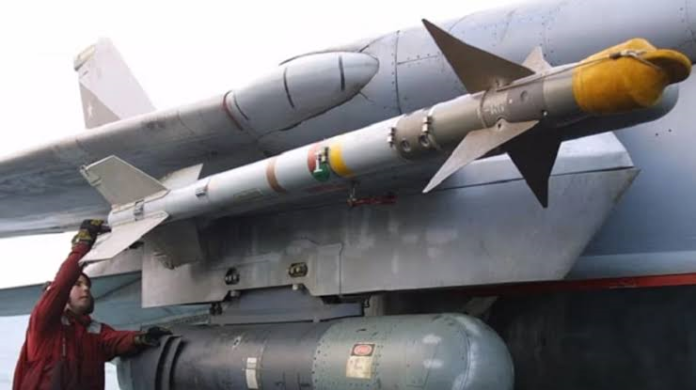
The nature of warfare is changing, as seen in ongoing conflicts. In the Indian context, despite both its adversaries being nuclear powers, there is ample scope for prolonged conflicts under a nuclear umbrella. It is also true that future wars will be dominated by drones and missiles, necessitating the need to ensure sufficient stocks of munitions essential to meet this challenge, as well as the availability of drones. This has been aptly proved in ongoing conflicts. Artillery and armour will still operate, with changes in tactics and operational concepts, as seen in the latest Ukrainian offensive. Thus, the need for sufficient munitions is evident.
In the Iran war, Trump was forced to admit that the US is running short of critical missiles, after claiming on multiple occasions that inputs on this were fake. He recently acknowledged that supplies of some munitions ‘are a little bit lower’ as a result of the Iran war but vowed to replenish them to “levels we’ve never done before.” The Pentagon was compelled to transfer munitions stored in Asia and Europe to the Middle East.

Russia has been able to sustain its munition needs by enhancing domestic production and also importing munitions from allies like North Korea. It currently manufactures 100 ballistic missiles per month. It also outsources its jet engines for its Geran series of drones to China
The US manufactures almost all its munitions domestically, but there have been two shortcomings in its strategy. The first is that its advanced weapon systems are dependent on rare earths from China. The second, as per Michael Horowitz, is a shift in US policy from quantity in munitions to quality, for which the US has almost no global competitors. This led to the US utilising multi-million-dollar interceptors, which are produced in limited numbers, against cheap drones, resulting in shortages that would take years to recover. It has been compelled to reconsider its strategy of employing costly missiles against cheap drones.
Ukraine is also short of critical missiles. Almost half its F-16 fleet is grounded due to shortfalls in AIM-9 Sidewinder and AIM-120 AMRAAM missiles and maintenance issues. The missiles are manufactured by the US, which is facing its own production shortfalls. Ukrainian pilots have been forced to rely on F-16 cannon munitions against Russian drones as missiles run out.
Ukraine has ordered large quantities of cannon rounds from European manufacturers. For maintenance, it is dependent on Sabena Aerospace in Belgium. F-16s need an inspection every 300 hours. The inspection, which could be completed in 2-4 weeks, currently takes up to 40 weeks, forcing a number of planes to be grounded in the midst of the ongoing conflict.
It is also running short of its PAC-3 interceptors for its Patriot missiles. It is forced to consider alternatives, including importing the Franco-Italian SAMP/T systems, which employ Aster missiles, which come at half the cost of Patriot missiles. Germany, which manufactures Patriot missiles, is looking at ramping production to meet Ukrainian needs.

Russia has been able to sustain its munition needs by enhancing domestic production and also importing munitions from allies like North Korea. It currently manufactures 100 ballistic missiles per month. It also outsources its jet engines for its Geran series of drones to China. Russia, however, needs to import a few strategic minerals, which it obtains from China, Central Asian nations, and the Global South.
In 1999, during the Kargil War, India faced a shortage of artillery ammunition after expending thousands of rounds in the initial phases of the operation. It was compelled to import 50,000 rounds from South Africa and also mortar ammunition from Israel
India, dependent on the Russian S-400 missile systems, has placed orders for an additional 288 missiles, comprising both short- and long-range variants, following their utilisation in Operation Sindoor. It has also ordered 216 Excalibur artillery rounds from the US at $47.1 million. It is also seeking co-production of Javelin anti-tank missiles in India.

India was largely dependent, for its munitions till a decade ago, on either PSUs (Public Sector Undertakings) or imports. Dependence on imported weapons and munitions has major disadvantages. Supplies may be delayed, as has been happening with Russia; at critical moments, supplies of ammunition will not be forthcoming. Further, foreign exchange is spent, impacting strategic autonomy, as technology remains a shortcoming.
In 1999, during the Kargil war, India was short of artillery ammunition after expending thousands of rounds in the initial phases of the operation. It was compelled to import 50,000 rounds from South Africa and also mortar ammunition from Israel. Still, it did not take the requisite steps to rectify the system. The same changed only post-2014.
Realising the need to reduce dependence on imports for munitions, India shifted towards Aatmanirbharta. In its initial stages, it also changed its policies on PSUs. India corporatised its loss-making PSUs by converting them into profit-making enterprises, a bold reform. It met initial resistance but settled soon after. It also opened this sector to private industry and shifted procurement from imports to domestic sources.
In a major decision, the Indian government has approved sharing of technology for the manufacture of conventional missile systems with the private sector. These include surface-to-air missiles, air-to-air missiles, anti-radiation missiles, anti-tank systems, among others
It also began involving academia to collaborate in the development of smart munitions. The impact has been satisfactory. Today India produces over 150 of the 175 munitions used by the army, which is roughly 90-91% of its needs. This is a profound change from just 32% of production needs met in 2014. There was a time when India’s holdings of its war reserves of ammunition were low and adversely commented upon by the Comptroller and Auditor General.
With future conflicts being dominated by drones, Indian industry has begun concentrating on building drones and anti-drone systems. It is producing its own multi-layer micro-missile counter-drone systems, anti-drone EW systems and direct-energy systems. It is also producing drones needed for various operations. Among those under development are long-range attack and loitering systems with up to a 1000 km range, jet-powered loitering munitions, logistics and interceptor drones and surveillance drones, among others. The problem is the use of Chinese parts in them, for which stringent testing is in progress.
In another major decision, the government has approved sharing of technology for the manufacture of conventional missile systems with the private sector. These include surface-to-air missiles, air-to-air missiles, anti-radiation missiles, anti-tank systems, among others. It will subsequently also include cruise missiles. The reason is to enhance domestic production capabilities. These have flowed from lessons emanating from ongoing conflicts. Further, as exports increase, India needs to enhance production.
Wars are won by the availability of ammunition and, in the current scenario, drones and anti-drone systems. These cannot be outsourced, especially during conflict. Over the years, India has concentrated on importing weapon systems from different nations, with little emphasis on producing ammunition to meet its requirements. It never learnt from its own experiences. With dependence on imports, India faced shortfalls during conflicts, the last being in 1999. With an emphasis on creating domestic production facilities, this scenario will not emerge in the future. India will also become a major exporter of munitions.

The writer is a strategic analyst and a motivator. He can be reached at @kakar_harsha. The views expressed are of the writer and do not necessarily reflect the views of Raksha Anirveda





