


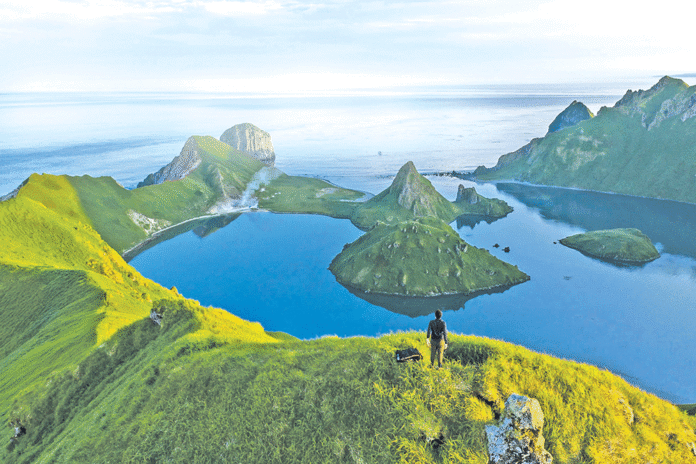
In May 2025, Russian President Vladimir Putin, extended a rare personal gesture to Akie Abe, wife of late Japanese Prime Minister Shinzo Abe, by facilitating her visit to Moscow’s Bolshoi Theatre in his own luxury limousine, ‘Aurus Senat’. During a meeting with teary-eyed Akie Abe at the Kremlin, visibly moved President Putin acknowledged the late Prime Minister’s persistent efforts to secure a post-World War II peace treaty between Russia and Japan. Despite 27 meetings between the two leaders, no treaty was signed (John 2022). By facilitating her visit, this exceptional act of diplomacy demonstrated the respect Putin held for the late Japanese leader and emphasised the ongoing complexities surrounding the territorial dispute over the Kuril Islands, referred to as the Northern Territories in Japan (Reuters, 2025). The dispute over the Kuril Islands has remained a significant impediment in Russo-Japanese relations, preventing the formal conclusion of World War II hostilities and obstructing the development of a comprehensive bilateral peace agreement.
Following the start of Russia’s Special Military Operation against Ukraine in Feb of 2022, there has been a radical shift in the relationship between Russia and Japan. In a swift move in consonance with the US and other G-7 Nations, Japan imposed strict sanctions against Russia. It not only emerged as one of the largest aid donors to Ukraine in its fight against the Russians but a few months earlier, had eased its rules to export to United States missiles manufactured in Japan for American Patriot anti-aircraft systems. This has drawn sharp reaction from the Russians and closed any further prospects of reconciliation between the two nations in the foreseeable future.

Shinzo Abe’s Legacy
During Shinzo Abe’s tenure as Japan’s longest-serving Prime Minister, relations between Japan and Russia showed signs of improvement, and rapprochement appeared feasible. Abe had committed himself to resolve this longstanding dispute by negotiating a peace treaty with Russia, his foreign policy priority (Brown 2019). He aimed to shift Japan’s security focus towards challenges originating from the South, particularly those posed by an increasingly assertive China. Stable relations between Japan and Russia were also important for Russia, as it sought to develop its Far East regions while shifting its focus from Greater Europe to Greater Eurasia. However, the firm stance of Russia during negotiations, Abe’s assassination in 2022, and Russia’s special operations against Ukraine ultimately ended hopes of resolution.
Strategic Significance of Kuril Islands
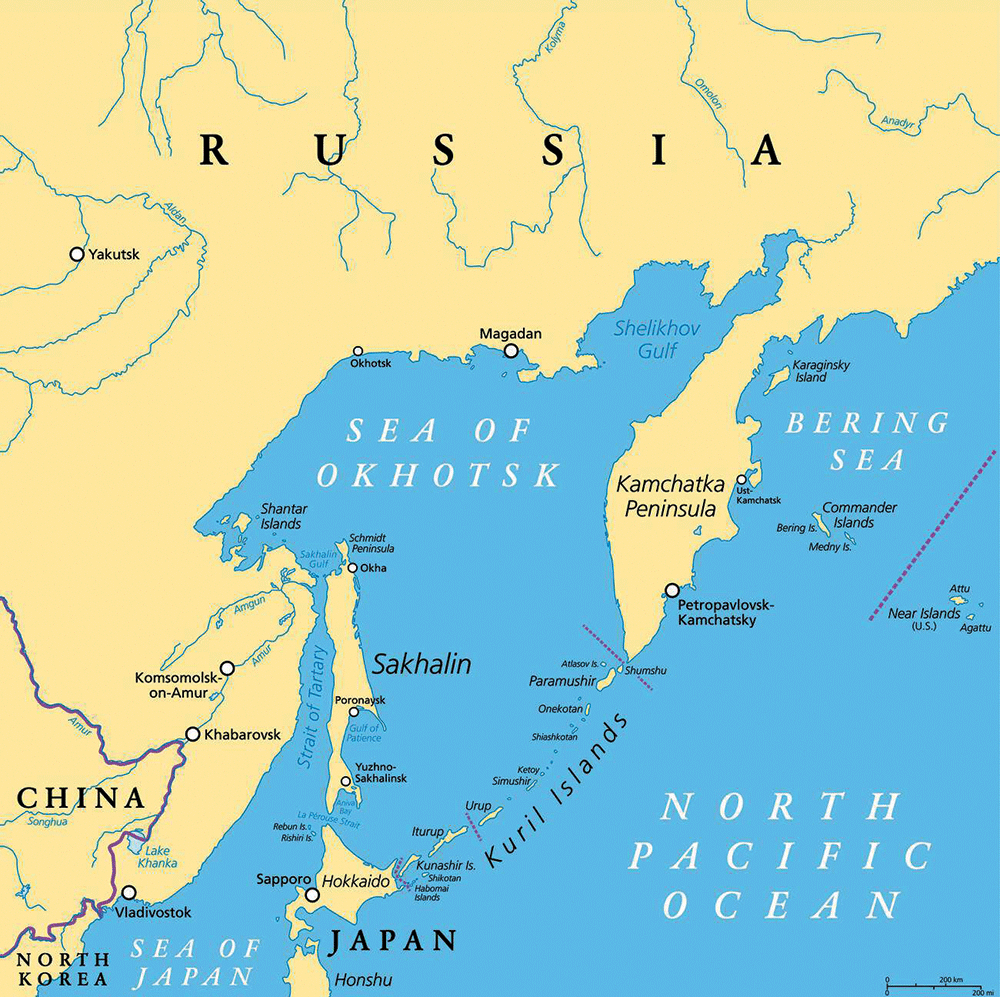
The Kuril Islands, which separates the Sea of Okhotsk from the North Pacific ocean, consists of 56 islands stretching from South of Kamchatka Peninsula in the far east of Russia to the Island of Hokkaido, the northernmost island of Japan (The Week 2019a). Four Southernmost Islands of the Kuril Archipelago namely; Kunshier, IIturup, Habomai, and Shikotan, are under dispute between Russia and Japan. Entire Island chain is sparsely populated with total population of only about 20,000 residents.
Japan’s $7.3 billion aid to Ukraine and Patriot missile exports to the US sparked Moscow’s fury, burying Abe’s dream of using Russia as a buffer against China
The four southernmost Islands however, have significant strategic importance for Russia. Control of these islands by Russia ensures all the year round access to the Pacific Ocean by the Russian Navy’s Pacific Fleet based in Vladivostok, as the straits between the Kunashir and Iturup Islands does not freeze in winter (The Week 2019b). The vast area of the Sea of Okhotsk for the Russian Navy protect the Russia’s Eastern Coast & its nuclear submarines from a sudden first strike by the adversary. Islands also act as valuable forward base for the deployment of weapons and intelligence collection systems for the Russians. During the Cold War, the containment strategy of the US Navy envisaged denial of access to the Soviet Navy of the Pacific Ocean by launching operations in the Kamchatka Peninsula, blocking the Southern Kuril Islands, and taking over of oil rich Sakhalin Island. Control over Kuril islands by Japan would allow it to extend the encirclement of Russia along the eastern periphery of the Eurasian continent stretching all the way from the South China Sea to the Sea of Okhotsk in the North (Diesen Glenn 2017). Apart from the abundant marine life, these islands are also rich in minerals, and special metals like Rhenium, used in aircraft production.
The Kuril Knot: Russo-Japanese Imbroglio
At the end of the Second World War Kuril islands were transferred to Russia and confirmed in 1945 by the Yalta Agreement(Yalta Protocol 1945) and Potsdam Declaration (Potsdam Declaration 1945). Japan did not agree to the Yalta conference as it was not represented however, in 1951, vide Article 2 of the San Francisco treaty (San Francisco Treaty 1951), Tokyo renounced its sovereignty over these islands. Out of four islands under dispute between Russia and Japan, two major islands Kunshier and Iturup have strategic significance and the other two islands Habomai and Shikotan are minor islands. During the subsequent negotiations, Japan and Russia had agreed to settle the dispute, with Japan gaining control over the two minor islands on conditions that a peace agreement must be signed between Japan and USSR and Japan’s military alliance with the United States would not be directed against the Soviet Union (Elleman, Nichols, and Ouimet 1998). In the year 1956 during the visit of Japanese Prime Minister Ichiro Hatoyama to the Soviet Union, a Joint Declaration ending the state of war and restoring diplomatic relations between the two countries was signed. In Paragraph nine of the Declaration, both the countries had agreed to “continue negotiations for the conclusion of a peace treaty”. Soviet Union at that time agreed to hand over the Habomai and Shikotan Islands to Japan and the actual handover was to take place after the conclusion of the peace treaty (MOFA Japan 2014).

Meanwhile, Conservatives in Tokyo, emboldened by the United States, rejected the same raising the issues of sovereignty. It is believed that United States, to preserve its leadership in the region, maintain the territorial dispute and fuel animosity between the Soviet Union and Japan, had threatened to keep Okinawa if Japan signed the agreement (Clark 2018). Over a period of time, Japanese position hardened and got entrenched as a nationalistic sentiment. At the dawn of the new millennium in 2001, Prime Minister of Japan, Yoshiro Mori met the newly crowned President of Russia, Vladimir Putin at Irkutsk in Russia. In a joint statement the two premiers reaffirmed the Japan-Soviet Joint Declaration of 1956 as the basis of the commencement of negotiation process between the two countries. The two sides assented that the said document established the legal basis for the conclusion of a peace treaty and agreed to continue future negotiations to realise the normalisation of Japan-Russia relations.
In the second decade of the new Millennium the relations, despite the 2014 annexation of Crimea by Russia, continued to improve between Russia and Japan under the carefully crafted strategy of Prime Minister Shinzo Abe and President Vladimir Putin. Abe and Putin, between 2012 and 2020 met in person over 27 times and held about ten phone calls (Corbin Michael 2024). Apart from Japanese participation in the Sochi Olympics in 2014 and Russia supporting Tokyo’s bid for the Olympic Games, Japanese firms Mitsui and JOGMEC with the support of the Government of Japan, acquired a 10 percent stake in the Arctic LNG 2 project in northern Siberia (Brown D.J. James 2023). During these years’ main drivers for Japan to forge a closer relationship with Russia were: utilise Russia as a buffer against increasingly assertive China; Japan’s energy security concerns and; mutual interest in increased trade.

Russia’s Special Operation in Ukraine & Japan-US Alliance
With the onset of the Russian Special operation in Ukraine, Russo-Japanese relations deteriorated. As part of the Western sanctions, Japan froze assets of Russian Nationals and removed the most favoured nation status of Russia leading to substantial drop in trade between the two countries. Till late 2023, as per the Kiel Institute, Germany, Japan had made almost 7.269 Billion Euro contribution to Ukraine war effort (Biadun 2024) which mostly consisted of financial and humanitarian aid and provision of mostly non-lethal weapons. Along with the December 2023 declaration by Japan of supplying United States missiles for Patriot anti-aircraft systems, Japanese agencies and companies have pledged another 15.8 billion yen ($105 million) for Ukraine for demining and urgent reconstruction projects in the field of energy and transportation sectors. This has led to renewed chill in the relations between Russia and Japan. On the other hand, as the Western sanctions are gaining momentum and the Ukrainian conflict continues, the cooperation between Russia and China has reached historical heights, leading to isolation of Japan between two unfriendly giants.
President Trump’s 2025 steel tariffs and quip— ‘they don’t have to protect us’— have rattled Japan’s bonhomie with the US
Tokyo now faces disputes across the Indo-Pacific with most of its neighbours, be it Russia, China, North Korea or South Korea. With the onset of Russia’s special operations in Ukraine and Tokyo joining the West imposed sanctions against Russia, late Prime Minister Abe’s hope of utilising Russia as a buffer against China seems to be a distant dream. In its National Security Strategy of 2013, Japan had a conciliatory stance towards Russia with the focus on advancing cooperation and enhancing bilateral relations in order to ensure its security (PM Japan & Cabinet 2013). Russia’s Special Military Operation in Ukraine has shaken the Security Establishment mandarins in Tokyo and in its NSS of 2022 Kshida administration has adopted a tougher stance stating that Russia’s actions, in strategic coordination with China, are of strong security concern to Japan (PM Japan & Cabinet 2022). To overcome the twin security concerns posed by Russia and China, Japan apart from focussing on proactive diplomatic efforts and acquisition of counterstrike capabilities, continues to strengthen the Japan-US alliance for the realisation of peace and stability in the region.
Trumponomics and Japan-US Alliance
International relations are inherently unpredictable and can shift rapidly due to changes in leadership, security concerns or global events. This was visible in case of Japan-US relations too. Close on the heels of Prime Minister Shigeru Ishiba and President Trump declaring a ‘A New Golden Age’ between Japan-US ties in February 2025, US announced 25 percent tariffs on the imports of Japanese steel. Not only tariffs, President Trump while addressing the reporters at the White House on 07 Mar 2025 stated “I love Japan. We have a great relationship with Japan, but we have an interesting deal with Japan that we have to protect them, but they don’t have to protect us”, raising a question mark over Japan’s role as a trusted ally (Abe and Yomiuri 2025). Some damage control was evident with the visit of US Secretary of Defence, Pete Hegseth to Japan where he described Japan as an ‘indispensable partner’ against China and sought to dispel the transactional approach of US Administration towards its allies. However, the damage had been done!
While Trump’s comments have not directly altered Japan-Russia relations, they underscore the complexities of Japan’s foreign policy decisions. It has forced Japan to reflect on the resoluteness of the US to uphold the current liberal World Order and, question the legitimacy of its security commitments. Off late Japan seem to be adopting a more pragmatic approach to protect its national interests. It has started mending its ties with China and after a long hiatus, high level delegations from both the countries have visited each other. Japanese Prime Minister even hinted at visiting China in near future which has been welcomed by China.
On the Russian front, the visit of Akie Abe to Russia in May 2025 may not be a direct response to Trump’s remarks however, the shifting geopolitical landscape has enhanced its significance. Though the visit was termed as private, the timing amidst evolving security dynamics in the region, could prompt both sides to reaffirm and strengthen diplomatic ties and build on the goodwill created during Shinzo Abe’s time. Japan while navigating its security commitments and tariff war with the United States appears to be managing its diplomatic relations with Russia, particularly concerning the territorial dispute and regional security dynamics.
Prognosis
Today, Russia-Japan relations may be at the lowest trajectory but they seem to be retrievable. Russia does offer favourable market conditions for Japanese firms. Despite the downward trajectory of trade between the two nations, the survey by the Japan External Trade Organization (JETRO) in February 2024 confirms that many of the Japanese firms have continued their trade with Russia (Golubkova 2024). Energy dependent Japanese Government has also encouraged companies to ‘Positively Consider’ continuing their investments in Sakhalin-1 and Sakhalin-2 oil and gas extraction projects in the Russia’s Far East (Eguchi Satoru et al. 2023). With time, as the Western sanctions on Russia continue to bite, the economic incentives offered by Tokyo, which Moscow considered insufficient during Late Prime Minister Shinzo Abe’s time, may also become more appealing. Japan and Russia have far too much to gain from each other. Going forward, keeping each other sensitivities in view, a joint management and development model for the islands under dispute could be a middle path, should both the sides agree.
India enjoys close ties with Russia and Japan. Russia has been India’s time-tested partner and the relationship between the two countries has been elevated to the level of a “Special and Privileged Strategic Partnership”. On the other hand with Japan, India shares “Special Strategic and Global Partnership” and has an unwavering commitment to working together towards a “Free and Open Indo-Pacific”. From the Indian point of view, it may be more beneficial for the World and especially for the Indo-Pacific, if Japan stays focused on the long shadow that China is casting in its neighbourhood, rather than looking over its shoulder towards Russia. Prime Minister Fumio Kishida statement in Washington on April 11, 2024 “As I often say, Ukraine of today may be East Asia of tomorrow,”(Kishida 2024) might as well for the sake of Japan and Russia, be modified to read as “Ukraine of today may be Taiwan, Senkaku or even Vladivostok of tomorrow”.

The writer, Kirti Chakra, AVSM, VSM, is an Indian Army veteran. He has also served as the Indian Military Attaché in Moscow. He is the Founding Director and CEO of ThorSec Global. An accomplished scholar, he specialises in Geopolitics with a focus on Russian Studies and is currently pursuing his PhD in the field, further enriching his depth of knowledge and global perspective. He can be reached at deepakmehra67@yahoo.co.uk and deepak.mehra@thorsecglobal.com. The views expressed are of the writer and do not necessarily reflect that of Raksha Anirveda





