


The newly awarded contract tasks Avantel Limited with the comprehensive design, development, installation and commissioning of a dedicated Ground Segment Hub. This critical platform will serve as a secure core infrastructure for national defence voice and data communications. Slated for completion by February 2029, the agreement highlights the government’s unwavering commitment to building indigenous, highly resilient defence architecture through specialised domestic technology partners.
Long-Term Reliability Assurance
To ensure uninterrupted operational efficiency across mission-critical networks, the contract incorporates a robust 36-month warranty period directly following installation and operational commissioning. This mandatory multi-year coverage framework ensures long-term maintenance, strategic resilience, and continuous system optimisation for defence platforms. It establishes a dependable operational lifespan while greatly minimising lifecycle operational risks for military ground infrastructure.

The DRDO contract tasks Avantel Limited with the comprehensive design, development, installation and commissioning of a dedicated Ground Segment Hub. This critical platform will serve as a secure core infrastructure for national defence voice and data communications
Strengthening Commercial Portfolios
This latest DRDO contract substantially expands Avantel’s growing commercial order pipeline.It builds upon previous key defence industry wins, including a major ₹459.9 crore long-term agreement signed with Zetwerk Manufacturing Businesses for the specialised supply and maintenance of satellite communication gear.These sequential multi-crore wins underscore the firm’s rising market dominance, solidifying its strategic reputation as a top-tier provider of critical aerospace and defence electronics.
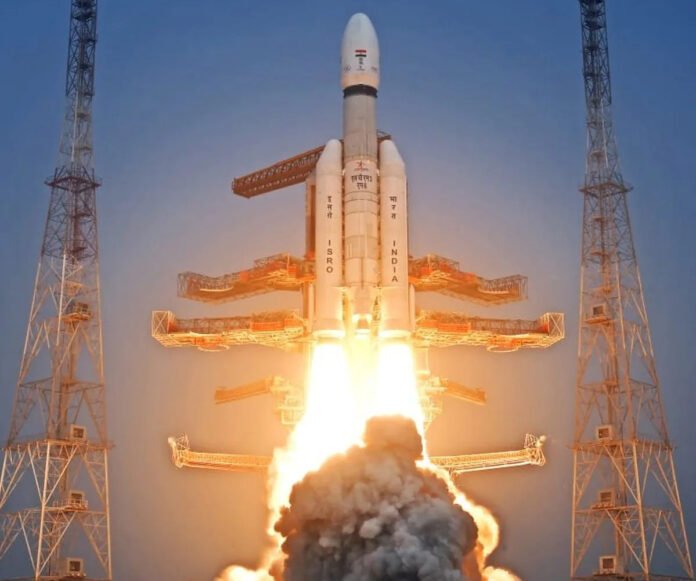
Simultaneously, India’s broader space sector is witnessing unprecedented commercial expansion as ISRO prepares to transfer technology for its flag carrier launch vehicle. Known affectionately as “Bahubali”, the Launch Vehicle Mark-3 (LVM3) is ISRO’s heaviest operational rocket, capable of placing heavy payloads into orbit. Transitioning this heavy-lift system to private operators represents a transformative shift in the nation’s high-tech industrial policy.
Larsen & Toubro, JSW, Adani Group and Mahindra are among a growing list of Indian companies and consortiums weighing bids to take over ISRO’s Launch Vehicle Mark-3, popularly nicknamed “Bahubali” for its heavy-lift muscle. Other reported contenders include a JSW-Ethereal Exploration Guild alliance and a Nagpur-based Solar Industries consortium teamed with Bharat Forge and Inox India, taking the total field to at least half a dozen serious bidders.
Larsen & Toubro, JSW, Adani Group and Mahindra are among a growing list of Indian companies and consortiums weighing bids to take over ISRO’s Launch Vehicle Mark-3, popularly nicknamed “Bahubali” for its heavy-lift muscle
What’s on Offer
The winning entity would gain full technology transfer for ISRO’s heaviest operational launch vehicle, one capable of hauling satellites weighing up to four tonnes into orbit. The scope spans design, propulsion, avionics, navigation, manufacturing, testing, vehicle integration and launch operations – effectively the entire lifecycle of building and flying the rocket, not just a component or two. Rather than starting from scratch, the selected bidder gets a flight-proven platform and ISRO’s accumulated technical know-how, a shortcut that sharply lowers technological risk and could open a path into the global commercial launch market.

A Landmark Handover
The LVM3 transfer is significant because it would push three of ISRO’s four operational launch vehicles – SSLV, PSLV and now LVM3 – into private-sector hands. India’s space regulator, IN-SPACe, has formally invited industry to take over the rocket’s end-to-end realisation, operation and commercialisation, marking one of the clearest signals yet that New Delhi wants routine launches run by companies while ISRO concentrates on frontier research, human spaceflight and deep-space missions.
Process and Timeline
Companies must first submit expressions of interest, before formal bidding opens in October. The final process will weigh both technical capability and price, though only bidders clearing a minimum technical threshold will have their commercial bids considered at all. Whoever is chosen gets 42 months, or two completed and launched rockets – whichever comes first – to fully absorb the technology before setting up independent manufacturing infrastructure.

The LVM3 transfer is significant because it would push three of ISRO’s four operational launch vehicles – SSLV, PSLV and now LVM3 – into private-sector hands. A clear signal yet that New Delhi wants routine launches run by companies while ISRO concentrates on frontier research, human spaceflight and deep-space missions
The Prize on the Table
IN-SPACe chairman Pawan Kumar Goenka has said the government has cleared production of more than 60 LVM3 rockets involving private industry over the next 12-14 years, an opportunity worth roughly ₹25,000 crore. The move fits India’s broader ambition to grow its space economy from $8.4 billion in 2022 to $44 billion by 2033, targeting an 8% slice of the global market. A human-rated variant of the LVM3 also underpins the Gaganyaan crewed spaceflight programme, adding further strategic weight to whoever eventually controls its production line.
Industry Players are Already Positioning
The interest isn’t coming out of nowhere. L&T has been building India’s first privately assembled PSLV in Coimbatore through a consortium with Hindustan Aeronautics, and has separately pursued small satellite launch vehicle technology transfer.
Adani Defence & Aerospace, though new to space manufacturing, already builds missiles, ammunition, drones, counter-drone systems and avionics out of facilities in Kanpur, Gwalior and Hyderabad – capabilities that could plausibly extend to rocket systems. Established aerospace names like Tata Advanced Systems, Hindustan Aeronautics and Godrej Aerospace are also seen as strong contenders given their existing roles supplying ISRO’s rocket and satellite programmes.
With EoIs closing within days and formal bids due in October, the coming weeks will reveal just how far India’s private sector is willing to go to own a piece of the country’s rocket-launch future – and whether ISRO’s most powerful workhorse ends up in the hands of an industrial conglomerate for the first time.






