


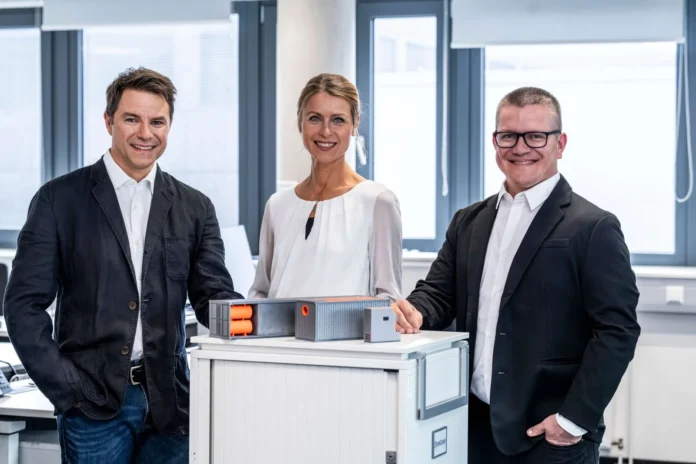
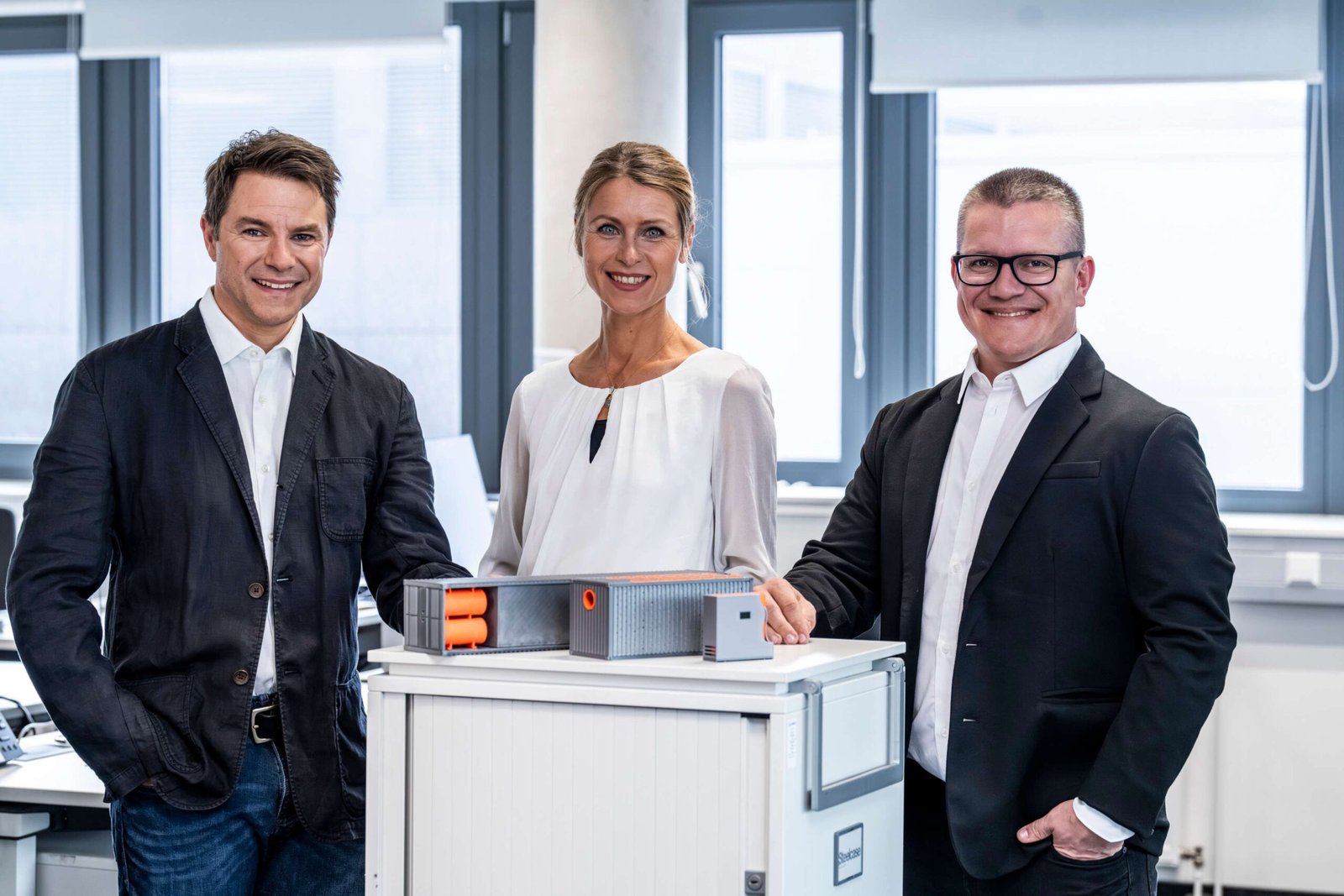
Munich. A team of two engineers and a developer is one of the three shortlisted teams to win the German Future Prize (Deutscher Zukunftspreis) 2023 with its entry of the development of Direct Air Capture technology to remove CO2 from the atmosphere. The prize is awarded by the German Federal President in recognition of scientific excellence, coupled with scientific application, that benefits society. The Direct Air Capture (DAC) process extracts carbon dioxide (CO2 ) directly from ambient air and stores or reuses it for industrial purposes. DAC is one of several complementary technologies that Airbus is embracing in its efforts to decarbonise and reduce CO2 emissions in the aviation industry.
“I would like to congratulate the team: Antje Bulmann, Viktor Fetter and Tobias Horn. The trio’s achievement in producing the DAC modules is a perfect example of how technologies from the space industry can be refined for use on Earth and help to reduce CO2 emissions,” said Airbus Chief Technical Officer, Dr Sabine Klauke.

The Airbus team’s DAC modules are an adaptation of an adsorber technology that is used on the International Space Station (ISS), where it is needed to reliably remove the CO2 exhaled by astronauts from the atmosphere on board. These new DAC modules are now performing the same task here on Earth. The CO2 is extracted from the air by means of an absorptive DAC process. To achieve this, Airbus has cooperated on the development of an amine resin that efficiently captures CO2 even at low concentrations. First, a fan draws in air, which flows over a solid amine filter that selectively binds the CO2. The processed air that is then released contains practically no CO2 . This phase lasts until the resin is saturated with the greenhouse gas. The second stage involves heating the filter, regenerating it and desorbing a concentrated stream of CO2, which can either be repurposed or sequestered (stored underground).

Airbus is working in parallel on a series of technologies in its efforts to reduce CO2 emissions in the aviation industry. In addition to fleet modernisation and more efficient air traffic management, these include Sustainable Aviation Fuels (SAF) and, in the long term, DAC and hydrogen.






