


NEW DELHI: The ongoing conflict involving the United States, Israel, and Iran has drawn worldwide concern. To examine the rapidly shifting geopolitical and economic landscapes in West Asia, the think-tank Greater West Asia Forum, India (GWAFI) organised a seminar titled “Impact of the West Asia War: Regional Order, Stability and New Alignments” on June 1 at The Claridges, New Delhi. The event, with Raksha Anirveda as media partner, served as a critical platform for strategic dialogue among diplomatic, military, and academic experts from India, Israel, and the wider international community.
The seminar aimed to leverage expert analyses to dissect how evolving regional dynamics are fundamentally transforming bilateral relationships, particularly the growing strategic partnership between India and Israel. The opening observations highlighted the significance of creating an informed dialogue to parse the core security needs and deep-rooted tensions behind media narratives.

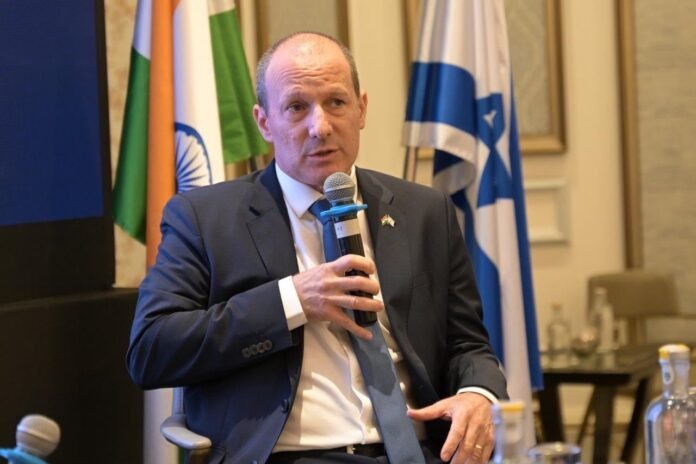
Keynote Interaction: Ambassador Reuven Azar
The keynote interaction with Reuven Azar, Ambassador of Israel to India, was conducted by Hem Kaur Saroya, the host of Vantage on Firstpost. She started with urgent inquiries regarding Israel’s recent military operations in Lebanon, specifically its control over strategic positions like the historic Beaufort Castle.
Ambassador Azar vehemently rejected accusations of “expansionist ambitions” from countries like France, clarifying that Israel’s actions are strictly defensive in nature. He detailed how Israel has faced unprovoked aggression from Hezbollah. Following the October 7, 2023, Hamas attacks, Hezbollah accumulated over 150,000 rockets and built massive underground infrastructure directly on the border to launch a terrestrial invasion. Despite a subsequent ceasefire, Hezbollah repeatedly violated the terms by continuing advanced drone attacks that evaded conventional electronic warfare systems.
The seminar aimed to leverage expert analyses to dissect how evolving regional dynamics are fundamentally transforming bilateral relationships, particularly the growing strategic partnership between India and Israel
The Ambassador explained the operational necessity of Israel establishing an 8-to-10-kilometre buffer zone to neutralise direct anti-tank missile threats aimed at civilian homes in northern Israel. Using the topography of the high ground near the border, he demonstrated that holding these positions allows vital oversight for the protection of Israeli communities like Metula.
Ambassador Azar confirmed that Israel is in lockstep with the US administration, noting that any sustainable ceasefire mediated by Secretary of State Marco Rubio requires Hezbollah to completely cease attacks on Israeli communities or face heavy strikes in Beirut. He noted that the primary obstacle to peace is the Iranian regime’s persistent re-arming of its proxies. Israel’s objective remains fixed: the complete dismantling of Iran’s military nuclear program and the removal of ballistic missile threats.

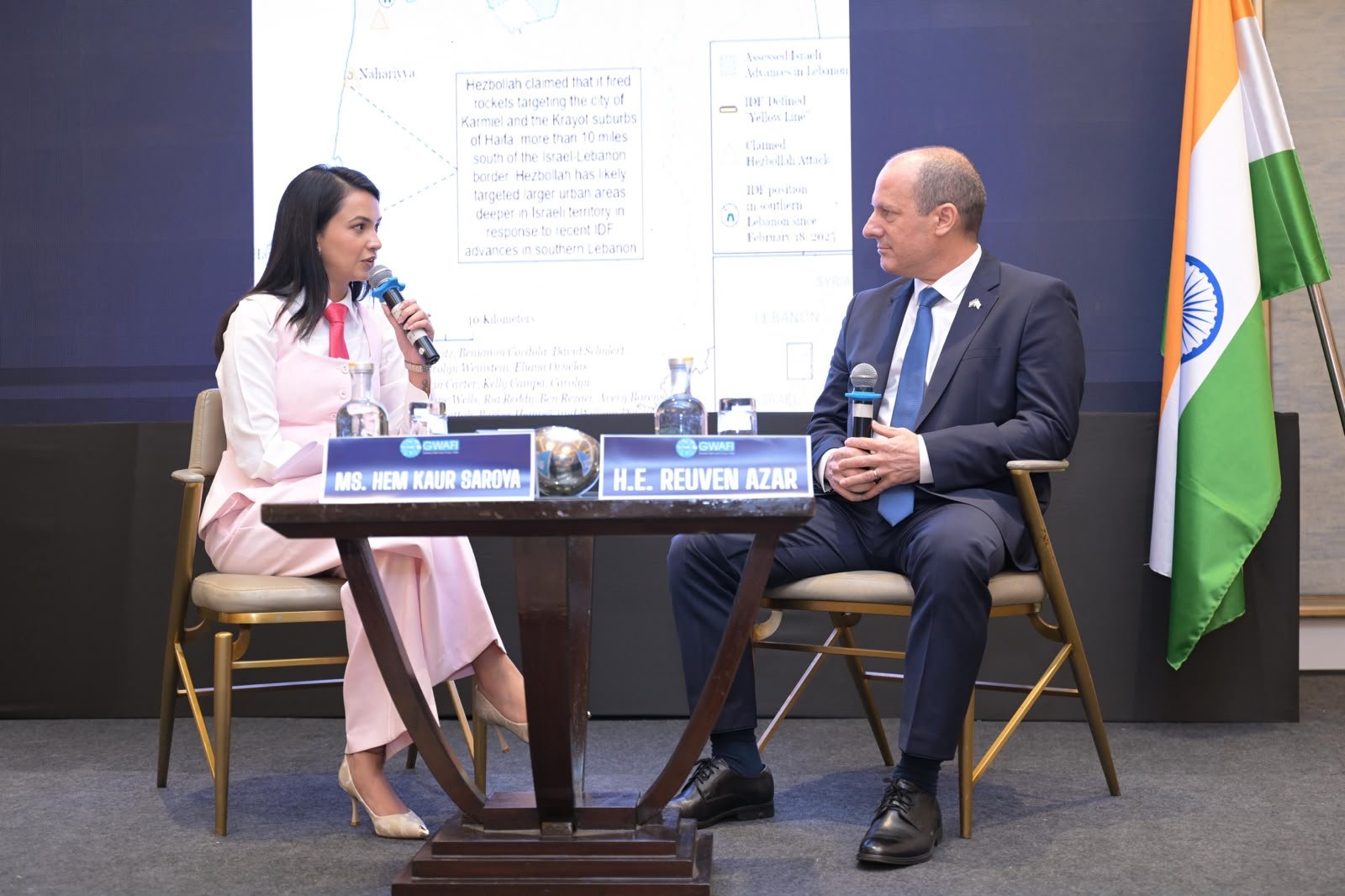
“We changed the balance of power in our region… The Iranians were planning by 2027 to have a terrestrial invasion of Israel from the south and the north, covered with thousands of ballistic missiles, and immune from retaliation by having a nuclear arsenal. We have thwarted that plan,” the Ambassador said.

Regarding Gaza, the Ambassador stated that Prime Minister Benjamin Netanyahu’s directive to increase operational control is intended to force Hamas to comply with internationally supported peace frameworks. He emphasised that Israel has no long-term territorial claims or settlement plans inside Gaza. Furthermore, he noted that international financiers refuse to fund reconstruction as long as Hamas retains control. The solution lies in empowering a separate, non-terrorist, democratic government—already designated under President Donald Trump’s 20-point peace plan—to manage humanitarian assistance and rebuilding, provided Hamas relinquishes power.
“We changed the balance of power in our region… The Iranians were planning by 2027 to have a terrestrial invasion of Israel from the south and the north, covered with thousands of ballistic missiles, and immune from retaliation by having a nuclear arsenal. We have thwarted that plan,” Ambassador Reuven Azar
Commenting on President Trump’s advice to countries like Pakistan to recognise Israel under the Abraham Accords, the Ambassador described it as “calling their bluff”. He sharply criticised the anti-Semitic statements originating from Pakistan, stating that regional de-radicalisation requires acknowledging Israel’s historical, indigenous legitimacy. Conversely, he lauded Muslim-majority nations like Azerbaijan for maintaining pragmatic, respectful ties with Israel.
Crucially, the Ambassador highlighted that the security architecture built under the United States Central Command (CENTCOM) to defend Middle Eastern skies directly safeguards the 10 million Indian nationals living and working in the Gulf, ensuring long-term regional stability and economic prosperity.
Session I: Conflict in West Asia—Security and Political Realignments
This session underlined the direct, state-to-state confrontation between Israel and Iran as distinct from the long-standing “shadow war” previously fought between them. From a military perspective, while Iran’s “Axis of Resistance” proxies (Hamas, Hezbollah, the Houthis in Yemen, and factions in Syria) remain standing, their military capabilities have been severely degraded by Israel’s precise counter-operations.
The conflict has also led to a pragmatic alignment between the US, Israel, and moderate Arab states. While Arab regimes must balance domestic public sympathy for Gaza, they are quietly taking defensive steps to secure themselves against Iran’s overt threats to trade routes and regional oil infrastructure. Concurrently, the global security order is experiencing a “recess,” as the vulnerability of sophisticated defence platforms raises questions about whether the US can remain the sole net security provider. This has prompted states like Saudi Arabia to diversify their security dependencies.
For energy-dependent economies like India, fluctuations in oil prices driven by anxieties over the Strait of Hormuz directly trigger domestic inflation and affect GDP growth targets. The conflict serves as a double-edged sword: it forces countries to accelerate alternative green energy adoption while temporarily making them reliant on costly traditional fossil fuel reserves to shield against sudden supply shocks
The session pointed out the shifting behaviour of the Gulf Cooperation Council (GCC) states. Historically, Oman maintained balanced neutrality with Iran to preserve regional stability. However, during this war, Muscat has drifted closer to the Iranian camp, refusing to publicly dismiss Iran’s proposed transit tolls through the Strait of Hormuz, thereby causing significant friction with Washington. In contrast, countries like the UAE are doubling down on their strategic alignments with the US and Israel. Interestingly, Saudi Arabia and Qatar are operating closely despite their historical rifts. Meanwhile, Iranian-backed Popular Mobilisation Forces in Iraq are fracturing between state-loyal elements and those answering directly to Tehran. While Lebanon and Israel have engaged in historic bilateral talks, deep internal fractures driven by Hezbollah continue to threaten long-term stability.
The Maritime Dimension
The session delivered a blunt assessment of the maritime dimension, characterising the current situation in the Strait of Hormuz and the Red Sea as an “absolute mess”. It contextualised the severe economic threat to India by presenting key commercial data:
| Maritime Metric | India’s Regional Vulnerability Status |
| Commercial Trade Fleet Reliance | 95.5 per cent of India’s commercial trade is carried on foreign-flagged vessels. |
| Oil Import Dependency | 89 per cent of India’s domestic oil demand is imported (with 25 per cent re-exported). |
| Traffic Destination | 10–12 per cent of all cargo passing through the Gulf of Aden is directly bound for India. |
| Seafarer Risk | Indians make up one-sixth of global seafarers and one-third of crews in the Indian Ocean. |
The discussion during the session highlighted that since November, the maritime dimension has escalated dramatically as the Houthis have utilised anti-ship ballistic missiles and advanced long-range drones (operating up to 2,000 km at sea via cloned satellite links) to target merchant vessels. This has diverted over 50 per cent of typical Red Sea traffic around Africa. Furthermore, the sudden resurgence of Somali piracy was heavily state-sponsored to exploit the chaos.
In response, the Indian Navy deployed its entire fleet at a ratio of 10:1 compared to other international navies, successfully throttling the piracy spike and demonstrating India’s capability as a frontline security provider in its maritime neighbourhood.
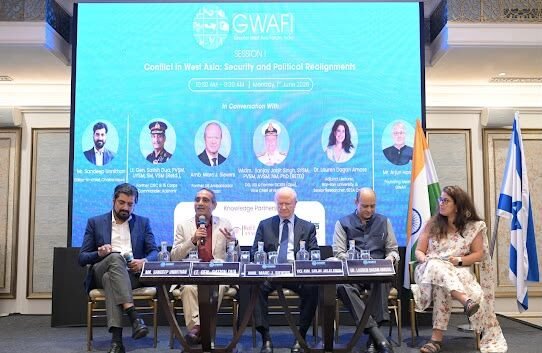
The session noted that while “regime change” was never formally declared by Israel or the US, the sheer scale of the strikes severely degraded Iran’s command infrastructure, maritime capabilities, and nuclear assets. India, as part of its “multi-alignment doctrine,” has maintained distinct, pragmatic relationships with Israel, the UAE, and Iran simultaneously. India’s continued diplomatic engagement with Iran remains vital to securing transit access to Central Asia, even as it deepens high-value defence and technological partnerships with Israel and Arab nations.
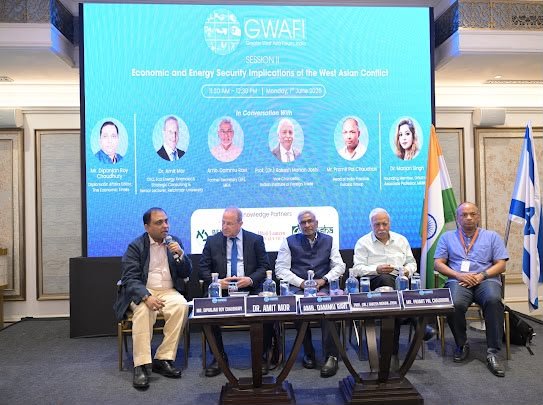
Session II: Economic and Energy Security Implications of the West Asian Conflict
This session detailed how the tactical shifts discussed in the previous panel impact macroeconomics, trade security, and energy infrastructure, with a particular focus on India. The session addressed the volatility of global energy markets, noting that while traditional diplomatic mechanisms like the IAEA have spent 25 years attempting to manage Iran’s nuclear files, the threat of real-time infrastructure warfare disrupts commercial stability. For energy-dependent economies like India, fluctuations in oil prices driven by anxieties over the Strait of Hormuz directly trigger domestic inflation and affect GDP growth targets. The conflict serves as a double-edged sword: it forces countries to accelerate alternative green energy adoption while temporarily making them reliant on costly traditional fossil fuel reserves to shield against sudden supply shocks.
The discussion during the session noted that maintaining stable relationships with the GCC remains a priority to safeguard the livelihoods and remittances of millions of Indian workers. While the conflict has complicated the implementation of the India-Middle East-Europe Economic Corridor (IMEC), India continues to engage in steady, long-term economic planning, viewing temporary pauses as an opportunity to reinforce supply-chain resilience rather than abandon cross-continental connectivity.
The primary risk for India is an escalation into an open, regional war involving Iran and its neighbours. A broader conflict would not only impact energy prices but could also trigger a humanitarian and evacuation crisis for the Indian diaspora. The region’s shifting power dynamics mean India must prepare for a West Asia where traditional security guarantees are fragile and trade routes require active diplomatic and naval protection
It discussed the microeconomic challenges confronting Indian traders. The shift in maritime shipping lanes, combined with chokepoint warfare, has led to a steep increase in freight costs and insurance premiums for Indian exporters. As sustained regional instability threatens to expand India’s trade deficit due to costlier oil imports, experts suggest the country should implement long-term structural changes, reduce its vulnerability to a single maritime corridor, and establish diversified institutional trade mechanisms.
Risk Analysis of the Political Economy
The session also provided a risk analysis of the conflict’s political economy, noting that the primary risk for India is an escalation into an open, regional war involving Iran and its neighbours. A broader conflict would not only impact energy prices but could also trigger a humanitarian and evacuation crisis for the Indian diaspora. The region’s shifting power dynamics mean India must prepare for a West Asia where traditional security guarantees are fragile and trade routes require active diplomatic and naval protection.
Takeaways
The seminar concluded by emphasising that the West Asian conflict has permanently altered the regional order, transforming it from a quiet shadow war into an overt struggle for dominance. Navigating this “absolute mess” requires India to balance its vital energy and diaspora interests in the Gulf, its logistical access via Iran, and its deep technology and defence ties with Israel. Concurrently, the proactive deployment of the Indian Navy highlights India’s evolving role as a dependable, independent security actor capable of protecting critical sea lanes amid shifting global alliances.

–The writer is a senior journalist and Consulting Editor of Raksha Anirveda





