


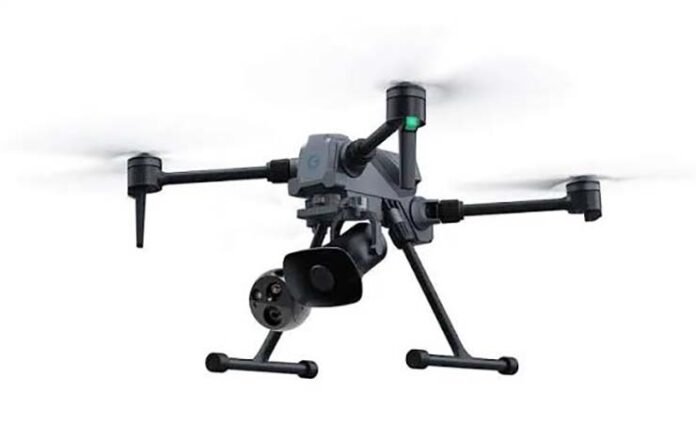
The ITBP procurement process attracted 27 bidders, reflecting the intense competition in India’s defence drone sector. While Tunga Aerospace’s financial bid is the lowest, official records clarify that the quoted amount represents an offered price, and the formal contract award has not yet been publicly confirmed.
The disqualification of giants like Adani Defence and Reliance-backed Asteria Aerospace highlights the ITBP’s strict adherence to technical criteria over brand stature. If finalised, this deal marks a significant milestone for IIT Madras-incubated startups in the defence manufacturing space.

The tender, issued by the Indo-Tibetan Border Police (ITBP), mandates rugged UAV systems capable of operating along the 3,488 km India-China border. The winning system must meet stringent requirements, such as:
Portability: Total system weight under 40 kg, transportable in three waterproof backpacks (max 15 kg each), and deployable by two personnel within 20 minutes.
Performance: Vertical take-off and landing (VTOL) in a 15×15 metre area, with launch capability from altitudes exceeding 5,000 metres.
Endurance: Minimum flight time of 60 minutes (including 30 minutes loitering) and a mission range of at least 7 km.

Resilience: Operational in temperatures ranging from -20°C to 55°C and wind speeds up to 20 knots.
Payload: Stabilised day-and-night cameras with auto-tracking, capable of detecting human-sized targets up to 2 km away.

The emergence of Tunga Aerospace as the lowest bidder (L1) for the Indo-Tibetan Border Police (ITBP) tender represents a significant shift in India’s defence procurement landscape, favouring specialised deep-tech startups over established giants.
The bid value of ₹21.82 crore for 78 UAV systems translates to approximately ₹28 lakh per system, roughly half the cost of the nearest competitors (ideaForge distributors quoted ~₹44 crore).
Reasons for Disqualification of Major Players
Prominent industry leaders, including Adani Defence and Asteria Aerospace, were eliminated during the technical evaluation stage, preventing their financial bids from even being opened. While the ITBP has not released a granular public report on specific technical failures, the disqualifications in such high-altitude tenders typically stem from:
Failure to Meet Extreme Environmental Specs: Inability to guarantee operation at 5,000+ metres launch altitude and -20°C temperatures without performance degradation.
Portability Constraints: Failure to meet the strict requirement of the entire system (drone, ground control station, batteries) being carried in three backpacks under 15 kg each.
Deployment Speed: Inability to demonstrate deployment by two personnel within 20 minutes in simulated high-altitude conditions.
Payload Integration: Lack of integrated stabilised day/night cameras with specific auto-tracking ranges (2km detection) within the weight limit.
This rigorous filtering underscores the ITBP’s prioritisation of field-proven capability in the Himalayan terrain over brand reputation or financial muscle.
Tunga Aerospace’s Likely Solution: The “Sanjay” UAV
Based on Tunga Aerospace’s existing product portfolio, the bid likely features their Sanjay Fixed Wing VTOL UAV, which is specifically engineered for the requirements outlined in the tender:
High-Altitude Performance: The Sanjay is rated for launch altitudes up to 3,000 meters AMSL (Above Mean Sea Level) in standard configuration, with specialised variants likely pushed to meet the 5,000-metre requirement for this tender.
Endurance & Range: It offers an endurance of >120 minutes and a range of >15 km, exceeding the tender’s minimums of 60 minutes and 7 km.
VTOL Capability: As a fixed-wing VTOL, it combines the long-range efficiency of a plane with the vertical take-off/landing capability of a multirotor, essential for rugged, runway-less border posts.
Payload: It supports dual payloads (EO/IR) for day/night surveillance, matching the ITBP’s reconnaissance needs.
Contract Status and Implications
It is critical to note that while Tunga Aerospace is the L1 (lowest bidder), the formal contract award has not yet been officially announced. The procurement records indicate the quoted amount is an “offered bid price.” The next steps involve:
Negotiation: The ITBP may enter into final negotiations with Tunga Aerospace to finalise the price and delivery schedule.
Field Trials: Final validation trials in actual high-altitude conditions along the border may be conducted before the signing.
Approval: Final financial sanctions from the Ministry of Home Affairs.
If finalised, this deal validates the “Make in India” push for startups, proving that IIT-incubated firms can outperform established defence conglomerates in highly specialised, extreme-environment niches.






