


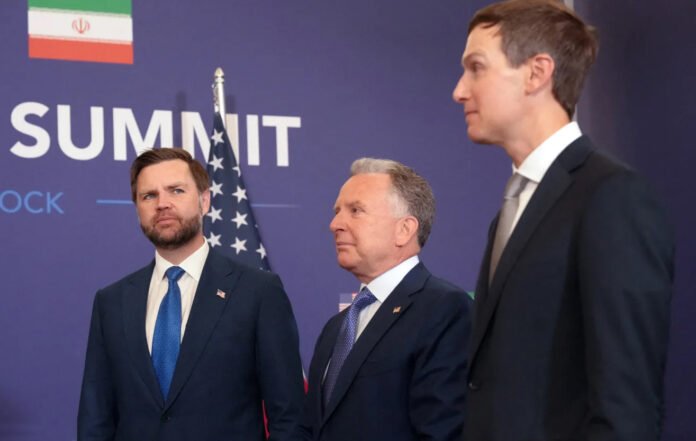
The signing of the landmark United States-Iran Memorandum of Understanding (MoU) on June 17–18, 2026, marks a critical turning point in a high-stakes conflict that has pushed West Asia to the brink of collapse. Brokered via intensive mediation and culminating in direct engagements between US Vice President JD Vance and Iranian officials, the initial 14-point agreement halts over three months of active warfare that began on February 28, 2026.
For New Delhi, this war was an existential challenge to its core doctrine of “calibrated multi-alignment” and strategic autonomy. India’s response during the hostilities—characterised by a calculated quietude and tacit geopolitical balancing—reveals its deeply intertwined defence, economic, and maritime security calculations. The resulting ceasefire framework provides India with a crucial tactical window to stabilise its energy vulnerabilities and reassess its defence posture in a changing West Asian security architecture.

The Anatomy of Strategic Silence: Balancing Washington and Tehran
When the United States and Israel launched coordinated strikes against Iranian targets in early 2026, New Delhi was forced into an intense diplomatic and defensive balancing act. Structurally, India’s grand strategy has grown increasingly aligned with Washington, driven by deep foundational defence pacts, technology-sharing initiatives, and a shared concern over maritime security. Concurrently, India maintains a legacy of strategic cooperation with Iran, anchored by long-term regional connectivity projects like the Chabahar Port and the International North-South Transport Corridor (INSTC).
During the active phase of the 2026 Iran War, India chose a path of calculated neutrality. Officially, the Ministry of External Affairs (MEA) limited its public statements to calling for de-escalation, dialogue, and diplomacy. However, its tactical behaviour indicated a nuanced shift. New Delhi repeatedly condemned attacks on American military bases and shipping lanes, but carefully avoided directly naming or condemning Tehran for its retaliatory operations.
This strategic silence was heavily scrutinised. Critics pointed to India’s reluctance to support Iran’s call for a unified BRICS intervention as evidence of its growing integration into the US security orbit. Yet, this quietude allowed India to protect its core assets. Even as Iran enforced a highly disruptive naval blockade on the region, it notably exempted a select few partners—including India—from the harshest dimensions of its maritime restrictions. New Delhi successfully insulated its core diplomatic channels by maintaining a non-adversarial, independent stance toward Tehran while quietly intensifying intelligence and defensive cooperation with the US and partner navies in the Arabian Sea.
The Maritime Security Imperative and the Strait of Hormuz
The primary flashpoint for Indian defence planners during the conflict was the weaponisation of maritime choke points, specifically the Strait of Hormuz. Nearly 20 per cent of global petroleum traffic transits this narrow waterway, and it serves as the primary artery for India’s crude oil and liquefied petroleum gas (LPG) imports.

When Iran restricted access through the Strait, followed by a retaliatory US Navy counter-blockade of Iranian ports, India faced immediate domestic economic pressure, characterised by volatile energy pricing and long logs in commercial supply logistics.
From a defence perspective, this friction altered Indian naval deployment patterns in the North Arabian Sea and Gulf of Oman. The Indian Navy adjusted its operational framework, deploying guided-missile destroyers and maritime surveillance aircraft to conduct standalone escort operations for Indian-flagged merchant vessels.

India’s defence posture remained focused on protecting commercial shipping and maintaining the freedom of navigation without becoming entangled in the kinetic exchanges between US-led forces and Iranian assets. By using its naval presence purely for trade defence and regional stabilisation, India reinforced its role as a responsible net security provider in the Indian Ocean, separate from the primary combatants.
Deconstructing the Ceasefire: Structural Benefits for New Delhi
The signing of the US-Iran MOU brings immediate relief to India’s security and economic interests. The agreement contains several core pillars that match New Delhi’s regional goals:
- Restoration of Maritime Traffic: The deal mandates the immediate lifting of the US naval blockade and an agreement from Iran to ensure the toll-free, safe passage of commercial vessels through the Strait of Hormuz for a 60-day negotiating window. For India, this removes an immediate shipping threat and stabilises domestic energy supply lines.
- The Oil Sanctions Waiver: A major component of the MOU instructs the US Department of the Treasury to issue immediate waivers for the export of Iranian crude oil and associated banking services. Previously, Indian state refiners had drastically scaled back Iranian crude purchases due to secondary US sanctions. The introduction of these clear waivers allows India to explore a resumption of energy imports from Iran, diversifying its energy basket and giving it added leverage in global crude markets.
- Regional De-escalation and Non-State Actors: The agreement includes provisions for the permanent termination of military operations on multiple fronts, including Lebanon. By binding Iran to rein in its regional network of proxy groups, the ceasefire reduces the risk of asymmetric drone and missile attacks on commercial shipping across the wider Red Sea and Bab-el-Mandeb strait, directly benefiting India’s export trade to Europe.
Remaining Vulnerabilities and India’s Long-Term Posture: Despite the optimism surrounding the June 2026 truce, Indian defence planners view this development as a tactical pause rather than a permanent resolution. The ultimate fate of Iran’s nuclear program remains unresolved, with both sides deferring the most contentious verification and enrichment issues to a volatile 60-day negotiation timeline. Furthermore, regional actors like Israel are not formal parties to the bilateral MOU, creating an ongoing risk that sudden external strikes could disrupt the fragile truce.
Consequently, India’s defence posture treats this ceasefire as an opportunity to build resilience and deepen strategic preparedness. Rather than returning to business-as-usual, New Delhi is focused on three strategic priorities:
Accelerating Alternate Trade Corridors: The vulnerability of the Strait of Hormuz has highlighted the need to fast-track alternate supply lines. India is expanding its investment in the Chabahar Port in Iran and coordinating with Central Asian partners to build resilient supply chains that bypass traditional maritime chokepoints during future crises.
Upgrading Naval Anti-Asymmetric Capabilities: The extensive use of autonomous loitering munitions, low-cost attack drones, and anti-ship ballistic missiles during the conflict has changed the requirements for maritime defence. The Indian Navy is prioritising the acquisition and domestic production of advanced shipborne electronic warfare suites, directed-energy weapons, and fleet-wide close-in weapon systems (CIWS) to counter asymmetric threats in littoral waters.
Refining Multi-Alignment Coordination: The crisis proved that India’s policy of maintaining working defence relationships with competing global powers is sustainable, but requires constant diplomatic work. Moving forward, India will continue to deepen its foundational defence integration with the United States via initiatives like INDUS-X, while firmly maintaining independent diplomatic autonomy with Tehran to preserve its footprints in Eurasia.
Conclusion
The 2026 Iran War demonstrated that conflicts in West Asia quickly impact India’s internal economic and defensive security. Through a combination of deliberate diplomatic quietude, independent maritime protection, and a refusal to join competing military coalitions, New Delhi successfully protected its core strategic interests.
The newly signed US-Iran ceasefire provides a valuable window of regional stability. By treating this truce not as a permanent solution, but as a critical opportunity to harden its supply lines, upgrade its naval capabilities, and reinforce its strategic autonomy, India can ensure it is well-positioned to navigate any future geopolitical shifts in West Asia.

–The writer is Assistant Professor, ICFAI School of Liberal Arts, ICFAI University, Jaipur. The views expressed are of the writer and do not necessarily reflect the views of Raksha Anirveda





